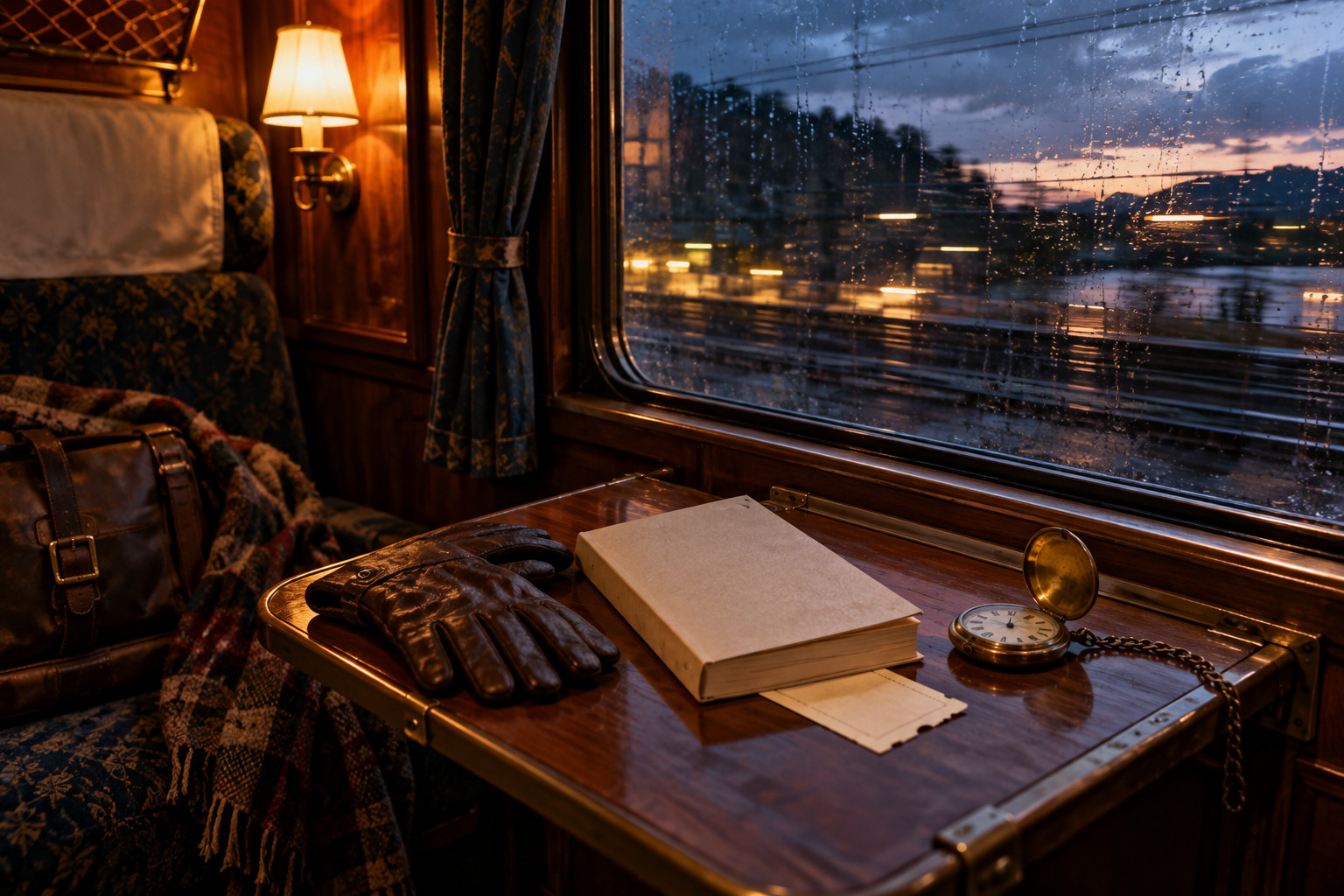
There’s something about trains that writers keep returning to: the gentle rumble underfoot, the thin intimacy of strangers in a carriage, the slow slide of landscape that turns private thoughts into plot. If you like your reading with motion and a sense that any small encounter might tilt into danger, tenderness, or revelation, these five books put railway travel at the center of the story.
Murder on the Orient Express — Agatha Christie
A locked-carriage mystery elevated by atmosphere. Hercule Poirot’s investigation aboard a luxurious express stuck in snow is a masterclass in observation and constraint — the train’s sealed world turns each passenger into a suspect and every detail into a clue. Read it for the tight plotting and the way the confined setting shapes the moral questions at the heart of the book.
Strangers on a Train — Patricia Highsmith
Highsmith turns a casual seatmate conversation into a cold, psychological experiment. Two men meet on a train and discuss a macabre, hypothetical exchange; what follows is a slow-burn of guilt, obsession, and slippery logic. The story is as much about the mind as it is about motion — perfect if you like suspense that nests inside character study.
The Girl on the Train — Paula Hawkins
Set on a commuter route, this contemporary thriller uses the repetitive view from a carriage window to build tension. An unreliable narrator watches neighbors from her seat, pieces together what she thinks she knows, and drifts into danger. It’s an effective pick for readers who want modern psychology, domestic suspense, and the claustrophobic feel of familiar journeys.
The Great Railway Bazaar — Paul Theroux
Want the real-world counterpart to fictional train drama? Theroux’s travelogue is full of long-distance travel, vivid people-watching, and moments that remind you why trains remain such potent storytelling settings. The book is episodic, lively, and travel-forward; read it to taste the variety of life that unfolds beyond station platforms.
“The Signal-Man” — Charles Dickens (short story)
This short, chilling tale condenses railway eeriness into a single, unsettling conversation. Dickens places a solitary signal-man in a bleak cutting and lets fog, sound, and suggestion do the work. It’s the kind of quick, atmospheric read that proves a train can be a setting for uncanny dread as easily as for romance or adventure.
Conclusion
Whether you want puzzle, psychological pressure, modern domestic suspense, travel reportage, or a compact ghost story, trains shape storytelling in a unique way. Pick one for your next long ride or a rainy afternoon and let the journey carry the plot.