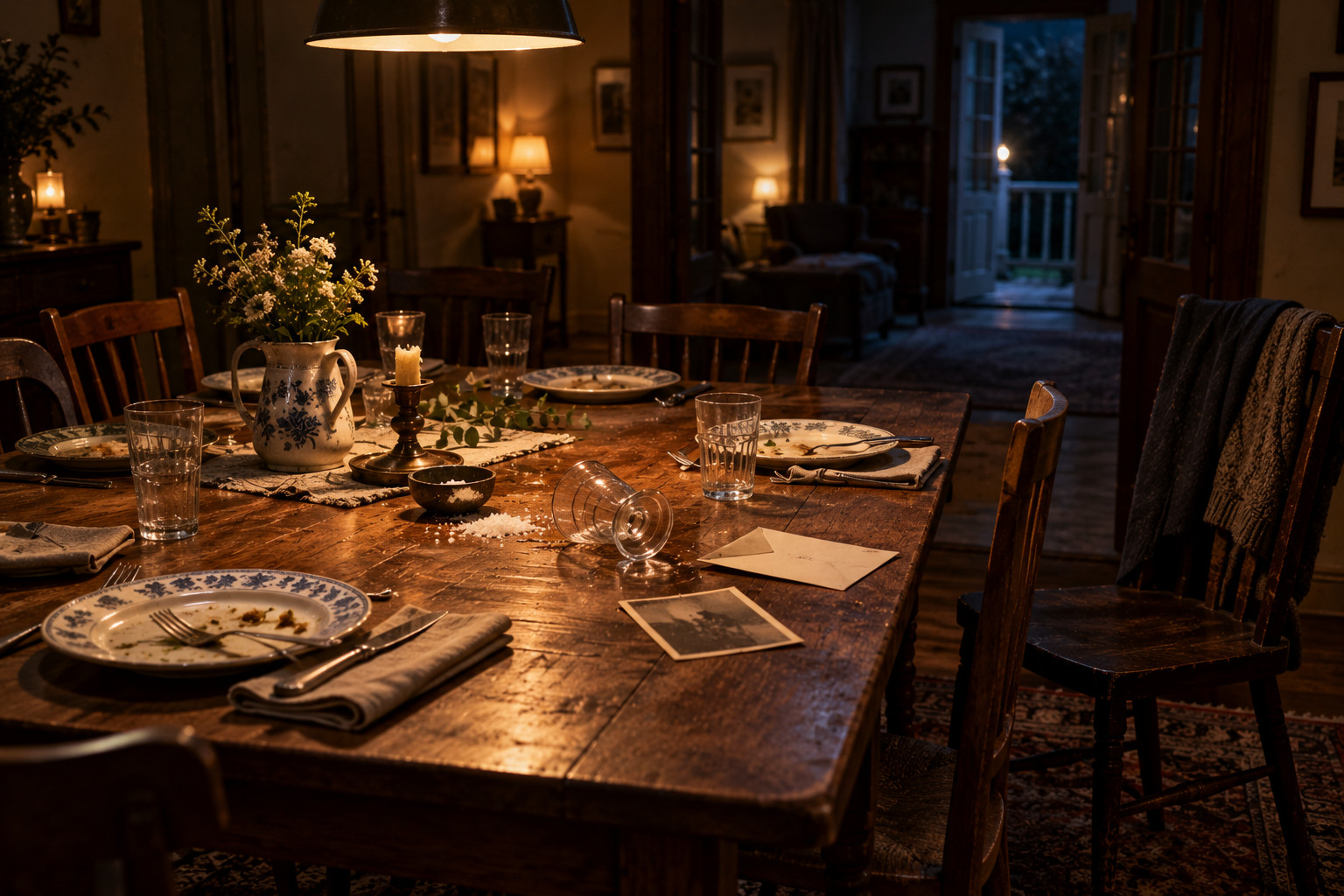
There’s a special strain of fiction that keeps its action inside kitchens, living rooms, and family gatherings, and then, as if by small choreography, the everyday fractures and a life tilts. These six novels make much of thresholds — porches, dinner tables, inherited houses — and use them to expose old resentments, secret decisions, or a slow, uncanny change. If you like books that feel intimate and then refuse to let the domestic remain comfortable, start here.
We Have Always Lived in the Castle — Shirley Jackson
Jackson’s novel is spare and strangely comic, and it lives in the claustrophobia of a family home. Two sisters and an uncle protect their routines from a suspicious town. The tension comes from what the household accepts and what it refuses to name. If you like atmosphere threaded with odd manners and moral ambiguity, this remains quietly devastating.
Olive Kitteridge — Elizabeth Strout
Technically a linked collection, Olive Kitteridge reads like a portrait of a small town and the people who live beside one woman’s life. Strout’s sentences are deceptively simple; the domestic scenes — teacher conferences, kitchen consolations, holiday dinners — reveal deep sudden shifts in understanding. Expect compassion and the sharp sting of regret.
The Nest — Cynthia D’Aprix Sweeney
This one centers on a single family’s inheritance and the way a shared expectation unravels. Sweeney writes with a comic eye, but the domestic setting—apartment, backyard, family meetings—slowly exposes long-simmering resentments between siblings. It’s a readable, precise study of how money and memory tangle.
The Little Stranger — Sarah Waters
Waters places a decaying English house at the center and lets domestic unease spread outward. The medical eye of the narrator and the household’s small rituals turn uncanny rather than sensational. It’s a slow-burn domestic gothic where creaking floorboards and stale meals start to carry meaning.
The Vanishing Half — Brit Bennett
Bennett’s novel follows sisters who choose very different domestic lives and shows how family history, inheritance, and private choices ripple forward. The novel’s quieter scenes — kitchen conversations, neighborhood gatherings, the routines of child-rearing — are where identity debates feel most human and consequential.
A Spool of Blue Thread — Anne Tyler
Tyler is a master of the family house as repository of memory. This multigenerational story tracks small domestic gestures — an afternoon of putting together old photographs, a meal that turns revealing — and lets them accumulate into something both tender and slightly brittle. It’s domestic fiction that honors the ordinary while watching the seams.
Conclusion
Each of these novels treats the home not as refuge but as a thinking place: a setting where the ordinary quietly presses on characters until something gives. If you want novels that begin in small, recognizable moments and end up troubling what you thought you knew, these six are good company.