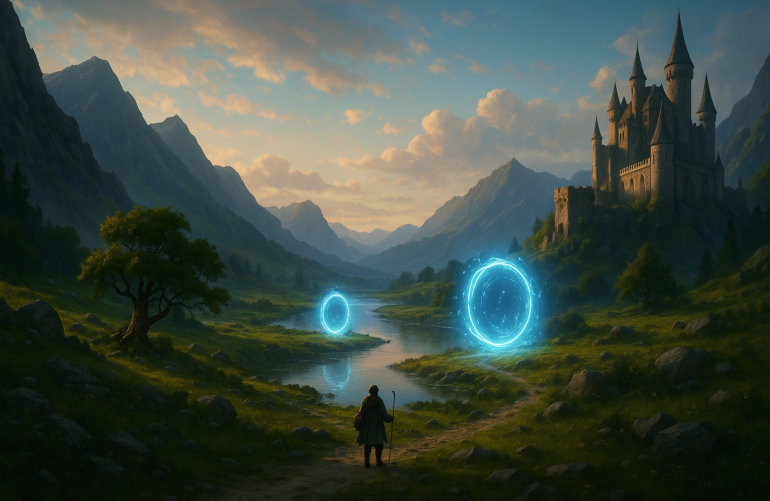
Science fiction has long been the bridge between imagination and innovation. What once seemed like fantasy — space travel, artificial intelligence, or virtual reality — is now part of everyday life. Through captivating storytelling, science fiction challenges the limits of human creativity and often inspires the very technologies it envisions. When science meets storytelling, the result is a genre that not only entertains but also shapes the future.
From Fiction to Fact: The Predictive Power of Sci-Fi
Many of today’s technological marvels first appeared in science fiction. Jules Verne imagined submarines and moon missions long before they became real. Arthur C. Clarke envisioned communication satellites, while Star Trek introduced handheld communicators similar to modern smartphones. These creative visions sparked scientific curiosity, driving inventors to turn speculation into achievement. In essence, science fiction acts as a testing ground for ideas that eventually redefine reality.
Exploring Ethics and Humanity Through Technology
Beyond futuristic gadgets, science fiction often explores how technology affects human behavior and society. Stories like Blade Runner or Ex Machina delve into the ethical implications of artificial intelligence. Similarly, Black Mirror raises questions about privacy, dependence, and morality in a tech-driven world. These narratives push audiences to consider not just what we can create, but whether we should — a conversation that grows more relevant with each scientific breakthrough.
The Role of Science in Storytelling
While imagination fuels science fiction, real science keeps it believable. Authors and filmmakers collaborate with scientists to ensure accuracy, grounding fantasy in plausible physics or biology. Movies like Interstellar and The Martian gained acclaim for blending entertainment with scientific precision. This balance between creativity and credibility deepens engagement, allowing audiences to dream big while respecting the boundaries of known science.
Inspiring the Next Generation of Innovators
Science fiction does more than entertain — it motivates. Visionary works encourage young minds to pursue careers in STEM fields, research, and exploration. Elon Musk, for example, credits science fiction with inspiring his dream of space travel. The genre fuels curiosity, creativity, and courage — qualities essential for solving real-world problems like climate change, space colonization, and sustainable technology.
Conclusion
Science fiction proves that imagination and science are not opposites but partners in progress. By transforming dreams into direction, it reminds us that every great innovation begins with a “what if.” When imagination meets reality, the future stops being fiction — it becomes our next chapter.