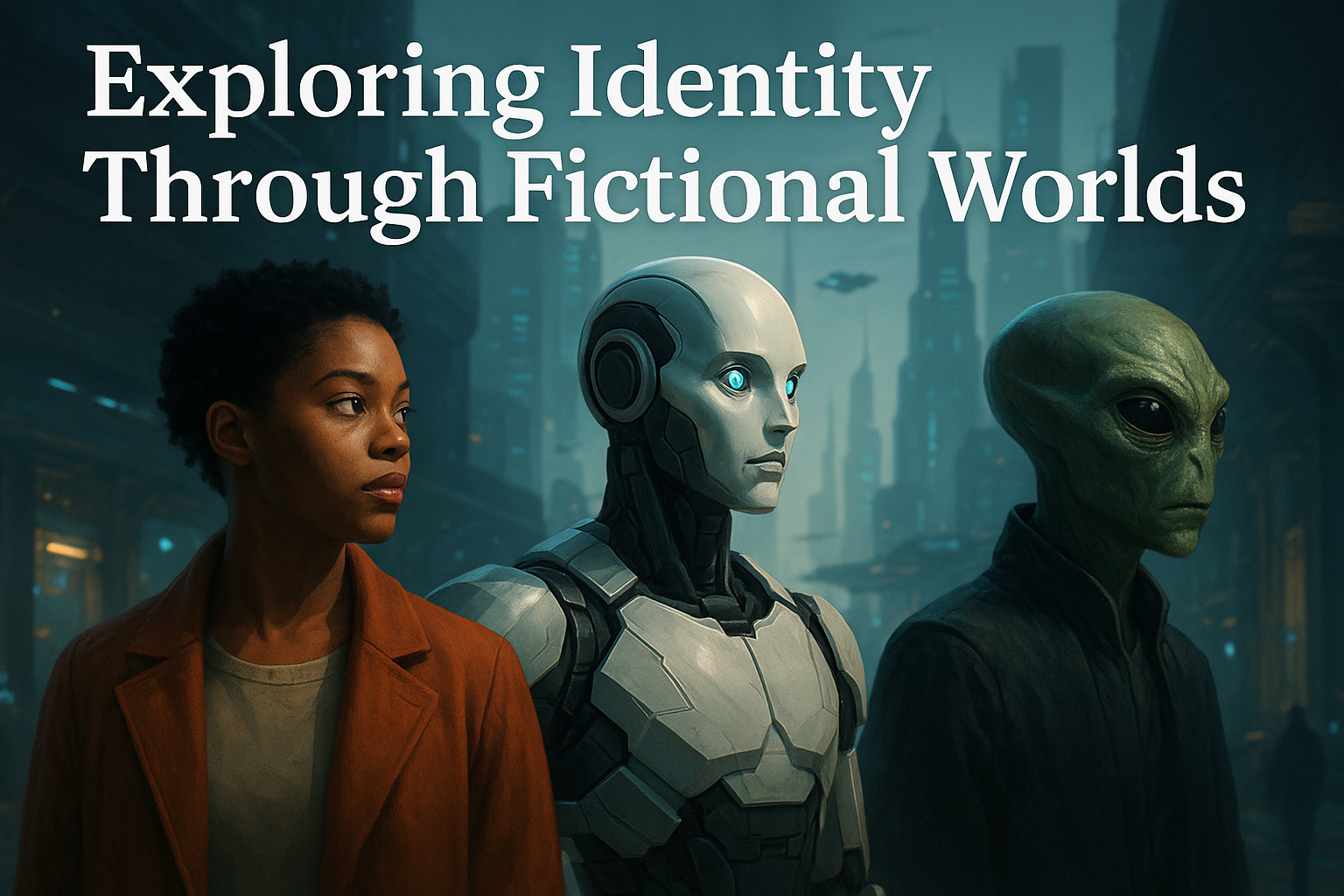
Fictional worlds offer more than just escape — they serve as mirrors that help us explore who we are. Through imaginative settings, diverse characters, and extraordinary challenges, stories allow readers and creators alike to examine identity in ways that reality sometimes limits. Whether it’s a hero questioning their destiny or a society redefining what it means to belong, fiction gives us the freedom to see ourselves from new perspectives.
Fiction as a Reflection of the Self
Every fictional world, no matter how fantastical, begins with human emotion. Characters wrestling with identity — from Frodo’s burden in The Lord of the Rings to Katniss’s defiance in The Hunger Games — reflect the internal struggles we face in real life. Through them, readers confront their own fears, hopes, and evolving sense of purpose. The safe distance of fiction allows us to examine parts of ourselves we might not otherwise acknowledge.
Reimagining Identity Through Fantasy and Sci-Fi
Speculative genres like fantasy and science fiction often push identity beyond human boundaries. Aliens, androids, and mythical beings ask timeless questions: What defines humanity? What does it mean to be “different”? Works such as Black Panther and Star Trek explore cultural pride, diversity, and inclusion through imaginative storytelling. In these narratives, identity becomes fluid — a concept shaped by empathy, experience, and perspective rather than biology or origin.
The Reader’s Journey of Self-Discovery
When we immerse ourselves in fictional worlds, we participate in a journey of self-discovery. We project our emotions onto characters, learn from their growth, and sometimes emerge with new insights into our own lives. Fiction fosters empathy, helping readers understand people and experiences beyond their own — a vital step in shaping identity in an increasingly interconnected world.
Conclusion
Fictional worlds are not escapes from reality but gateways into deeper understanding. They let us explore who we are, who we’ve been, and who we might become. Through imagination, we find reflection — and through storytelling, we discover ourselves anew.