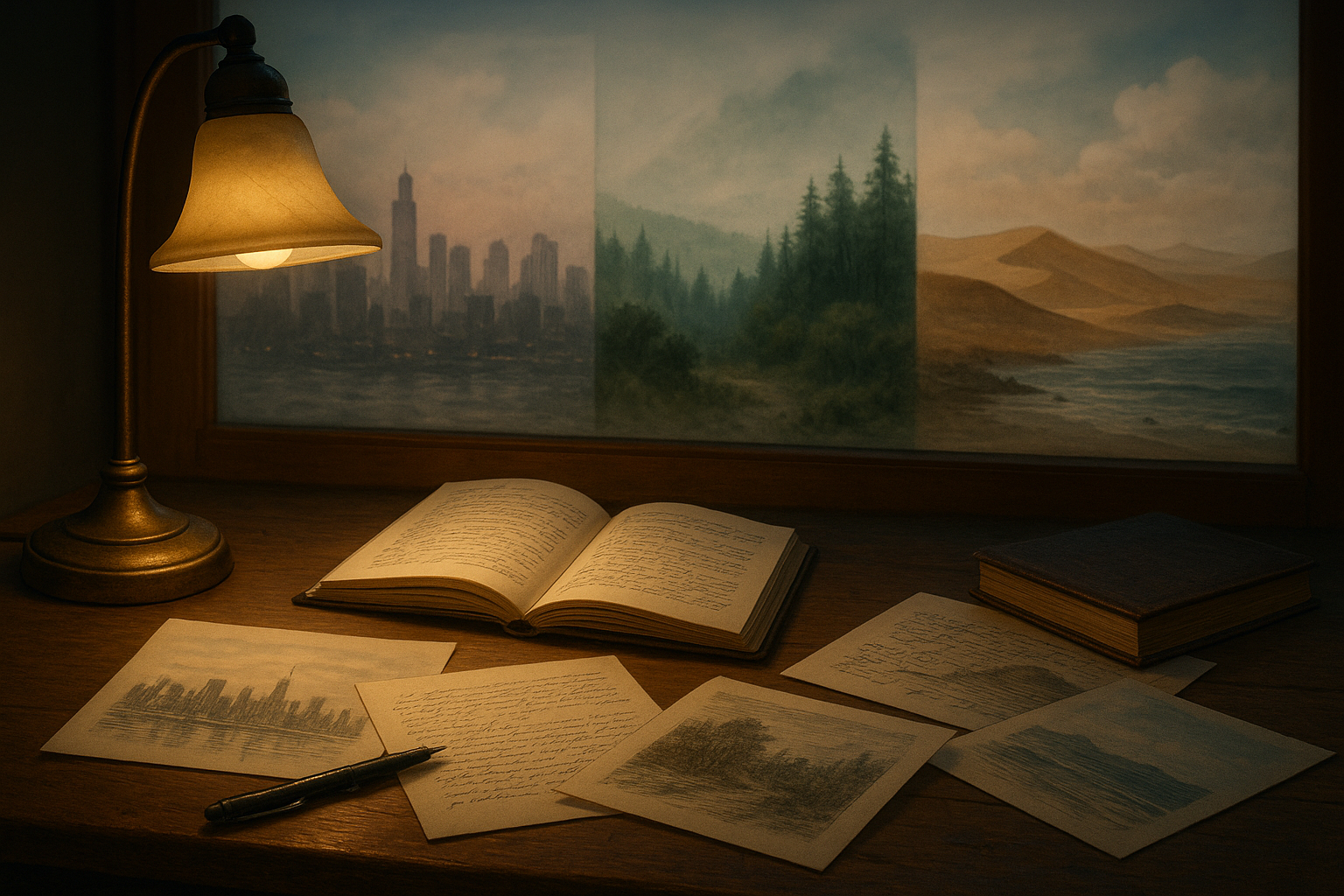
Every great story unfolds somewhere—a windswept battlefield, a bustling city, or a quiet kitchen. Setting is more than a backdrop; it’s a living force that shapes how characters behave, what they desire, and how readers feel. Whether it’s the foggy streets of Victorian London or the vast deserts of Arrakis in Dune, the world around a story often defines the story itself.
1. Setting as Character
In powerful narratives, the setting feels alive breathing, changing, and reacting to events. Think of Wuthering Heights, where the moors mirror the wild emotions of its characters, or Gotham City, whose darkness reflects Batman’s inner conflict. The setting can act as an antagonist, an ally, or even a silent narrator, influencing the choices and outcomes within the plot.
When writers treat the setting as a character, it gains depth—shaping the mood and the moral landscape of the story.
2. Building Mood and Atmosphere
A story’s emotional tone often stems directly from its environment. The oppressive heat in The Great Gatsby, the endless night of The Road, or the sterile coldness of a spaceship in Alien—each atmosphere shapes how readers experience tension, hope, and fear.
Writers use sensory details—sounds, scents, textures—to make the setting immersive. A thunderstorm might foreshadow danger, while a serene meadow might offer relief before chaos strikes. Setting, when used intentionally, becomes an emotional compass for the reader.
3. Driving Plot and Conflict
Setting can also determine what’s possible in a story. A dystopian city limits freedom, a small town hides secrets, and an isolated island amplifies fear. Physical and social environments create obstacles and opportunities, forcing characters to adapt.
For example, in The Hunger Games, the arenas aren’t just stages—they’re weapons that test human instinct and morality. Changing the setting would mean changing the story’s entire logic.
Conclusion
The best stories are inseparable from their settings. The world isn’t just where events happen—it’s why they happen. By shaping mood, conflict, and character growth, setting transforms words into experiences. Whether vast galaxies or small villages, every great story reminds us that place and plot are partners in storytelling magic.