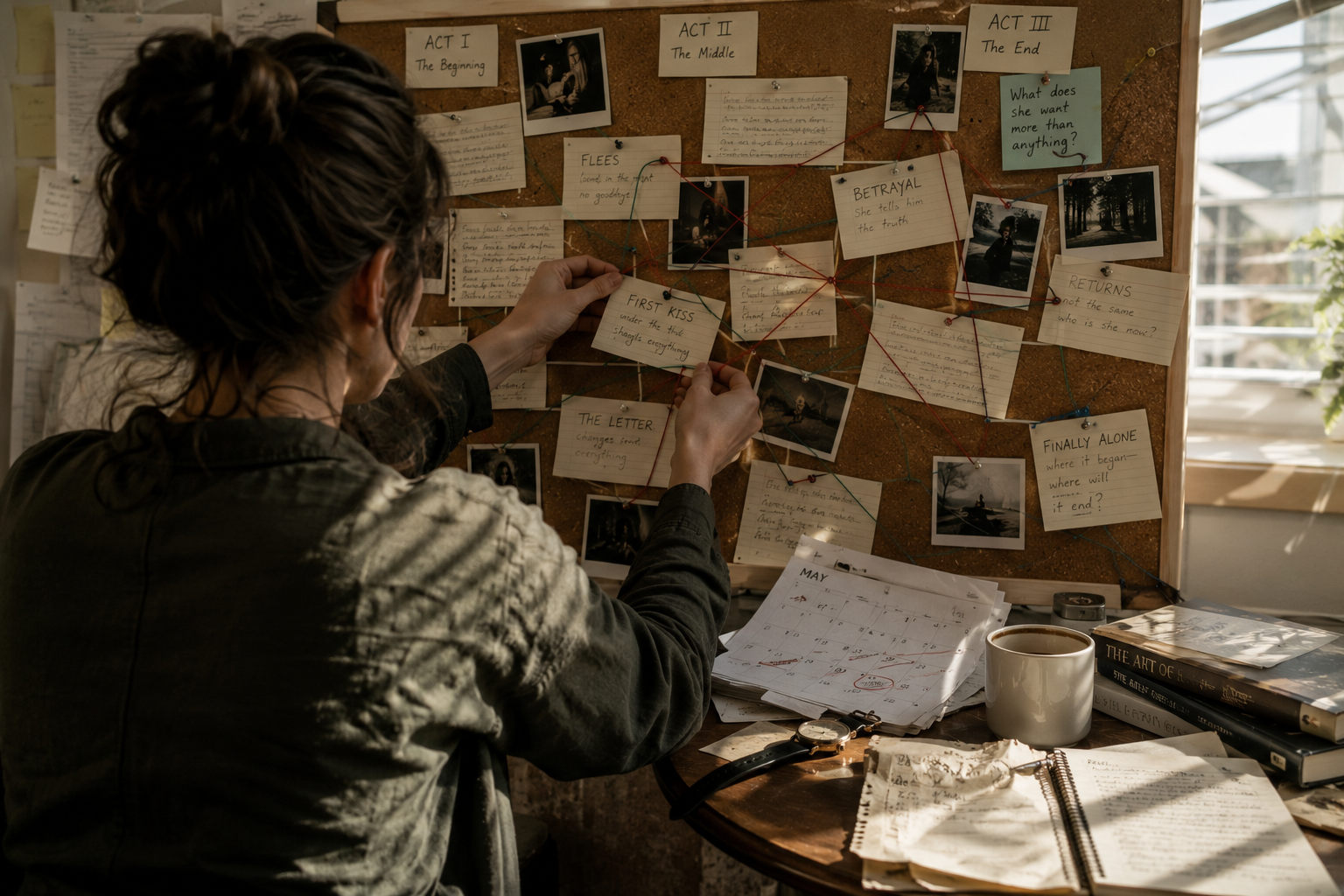
Time in short fiction is not just a backdrop; it is a tool for shaping what the reader knows about a character and when they know it. By choosing how to order events, linger on moments, or skip across years, a writer can reveal inner life without exposition. This approach asks writers to think of chronology as an expressive choice that reflects character priorities and emotional truth. When used deliberately, temporal structure amplifies voice and thematic weight.
What Structuring Time Means
Structuring time in a short story involves deciding which moments to present, how long to dwell on them, and how to sequence them for effect. You might compress a decade into a single image, or stretch a single hour into multiple scenes that progressively shift a reader’s perception. These choices determine what feels essential and what remains implied offstage, and they directly influence how sympathetic or inscrutable a character appears. Thoughtful temporal design helps the story feel shaped rather than merely told.
Consider how a non-linear sequence can mirror a character’s fractured memory, or how a tight present-tense focus can heighten immediacy and limit omniscience. Each tactic carries trade-offs for clarity, sympathy, and pacing, so pair structure with emotional intent.
Practical Techniques
Several practical techniques for manipulating time are especially useful in short fiction because they create depth without requiring a long plot. You can use an opening in media res to drop readers into a charged moment, then unfold backstory through selective flashbacks. Another tactic is the elliptical leap: skip uneventful years and land on turning points that show consequences. Repetition with variation—returning to the same scene at different emotional stages—also reveals change economically.
- In media res openings to establish stakes quickly.
- Ellipses to compress long spans and emphasize turning points.
- Repetition to show development through contrast.
These techniques are tools, not rules; experiment with combinations to discover which best serves a given character and theme. Keep in mind that clarity should not be sacrificed for cleverness.
Balancing Pace and Revelation
A key challenge is calibrating pace so revelations land with proper weight rather than feeling rushed or dragged out. Aim to align the tempo of scenes with what the reader needs to learn about the character at that moment, and use silence or omission strategically to invite inference. Small details can accumulate across a compressed timeframe to suggest a larger history without exhaustive explanation. Editing is where you refine that balance: cut what distracts, amplify what signals change.
Ultimately, a story’s temporal architecture should feel inevitable in hindsight; the arrangement of moments should illuminate character and theme in a way that feels both economical and inevitable.
Conclusion
Intentional manipulation of time lets short fiction reveal character with precision and emotional resonance. By choosing what to show, what to omit, and how to order moments, writers can create stories that feel both compact and expansive. Thoughtful temporal choices turn moments into meaningful arcs.