Introduction
In mystery and thriller fiction, the smallest object can redirect the entire narrative and reveal a character’s hidden priorities. Investigators and readers alike learn to treat everyday items as clues that accumulate into motive maps. Observing patterns among possessions, placements, and omissions offers a quiet method of deduction that often outpaces more dramatic revelations. This piece explores how objects function as narrative evidence and how writers can use them to shape tension and meaning.
Tracing the Unremarkable
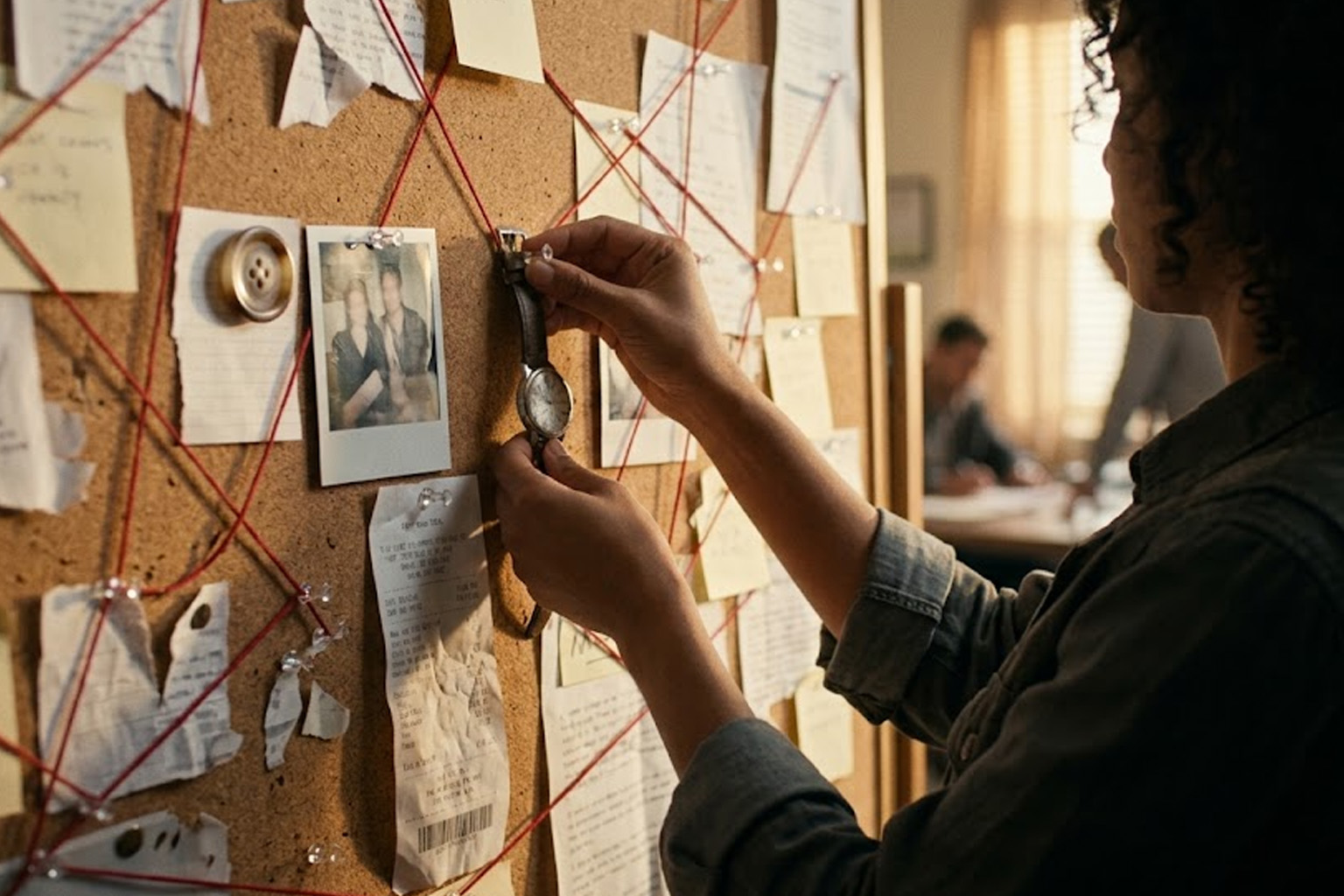
Often the most ordinary item—an unlisted receipt, a mismatched button, a scratched watch—anchors a line of inquiry that exposes relationships and timelines. These objects suggest routines, power dynamics, and secrets without overt explanation, inviting readers to assemble context from implication. In well-crafted scenes, small details act as silent witnesses, implying what characters say they did not do and hinting at contradictions. Paying attention to unremarkable things trains both protagonist and audience to notice absence as much as presence.
When building a mystery, place ordinary items deliberately to create believable misdirection and later payoff. Subtle repetition of a motif can signal significance before a reveal, strengthening coherence and reader satisfaction.
Objects as Narrative Anchors
An object can anchor memory and motive by linking a character to a particular event or place. It functions as a mnemonic device for the reader and as a trigger for character action, prompting confession, confrontation, or panic. Anchors can be emotional—like a photograph that reveals a past relationship—or practical, such as a tool whose ownership contradicts an alibi. Writers use these anchors to compress exposition into tangible pieces rather than relying on explanation-heavy passages.
- Use sensory detail to make objects feel immediate and significant.
- Vary the scale of objects to balance intimacy and plot utility.
In scenes of discovery, let characters interact with objects to reveal subtext and to deepen the story without didactic narration. This engagement keeps momentum moving forward.
Patterns and Contradictions
Motive often emerges from pattern recognition: what repeats, what is missing, and what contradicts presented facts. Patterns across different objects—placement in the same drawer, repeating inscriptions, similar damage—can reveal coordination or coercion. Contradictions, such as a clean pair of gloves among messy tools, highlight deliberate staging or concealment. Skilled plotters exploit these dynamics to mislead and then to realign reader expectations.
Effective mysteries allow readers to spot patterns before the protagonist does, creating a shared investigative experience. When contradictions culminate in a clear motive, the resolution feels earned rather than arbitrary.
Conclusion
Objects in mystery and thriller narratives are more than props; they are portable evidence that convey motive, memory, and misdirection. Thoughtful placement and recurring motifs transform ordinary items into narrative engines that drive plot and character. Readers who learn to read objects gain a richer, more immersive investigative experience.