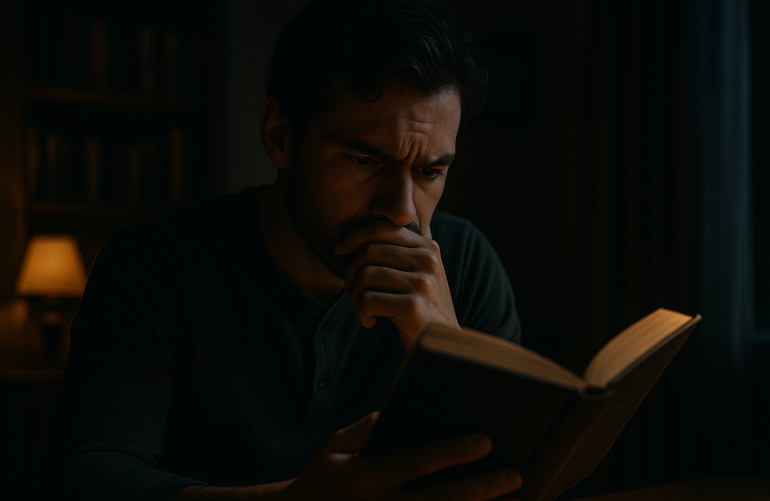
Crafting believable menace from everyday life is a hallmark of effective thrillers. When ordinary actions carry hidden implications, readers sense danger before facts arrive. That subtle dissonance deepens engagement and makes revelations feel earned rather than arbitrary. This piece explores practical techniques for converting mundane moments into escalating threat without melodrama. Writers will find concrete approaches to scene work, character behavior, and narrative focus.
Spotlighting the Ordinary
Pick small, repeatable details — a habit, a misplaced item, an offhand remark — and let them accumulate meaning across scenes. The trick is to treat those details like variables in a system: initially neutral, later consequential when the context shifts. By anchoring a thread to a seemingly trivial object or gesture, you create a throughline readers can follow and interrogate. Keep sensory specificity modest; suggest rather than over-explain so uncertainty grows organically.
Refrain from signaling significance too early; delay pays off. Each recurrence should slightly reshape a reader’s assumptions.
Staging Small Breaches
Threat often begins with ethical compromises and tiny breaches of trust. A character who lies to avoid embarrassment or skips a routine check introduces realistic vulnerability. Those minor transgressions can cascade into larger consequences when plot pressure increases, making the escalation feel plausible. Emphasize interior consequence as much as external fallout to maintain psychological realism.
Show how guilt, secrecy, or convenience influences later choices. Small breaches should ripple through relationships and decisions.
Using Pacing and Point of View
Pacing determines how quickly ordinary moments coalesce into menace. Slow reveals allow readers to collect clues; compressed scenes can turn a familiar object into a sudden threat. Choice of point of view shapes where tension sits — an intimate POV magnifies inner doubt, while multiple angles can create dramatic irony. Use sentence rhythm and scene length to mirror a protagonist’s mounting unease.
Vary tempo deliberately to let readers breathe then tighten focus. Tightening cadence at the right moment turns everyday detail into an immediate hazard. Small shifts in viewpoint can reframe an ordinary scene as menacing.
Leveraging Setting and Objects
Settings and props act as silent collaborators in building threat; a tidy kitchen, a flickering lamp, or a parked car can carry narrative weight. Describe textures and routines briefly so those elements feel lived-in before you twist their significance. When an everyday location changes subtly — a locked gate left open, a scent that no longer fits — it signals an internal or external shift. Use objects as catalysts for memory and suspicion rather than as mere wallpaper.
Small, well-timed changes to setting make danger believable. Let the environment reflect character choices and consequences.
Conclusion
Ordinary moments, handled with attention and restraint, are fertile ground for suspense. By stacking minor details, staging ethical slippages, and aligning pace with perspective, writers can coax dread from the mundane. These techniques keep thrillers grounded and emotionally convincing.