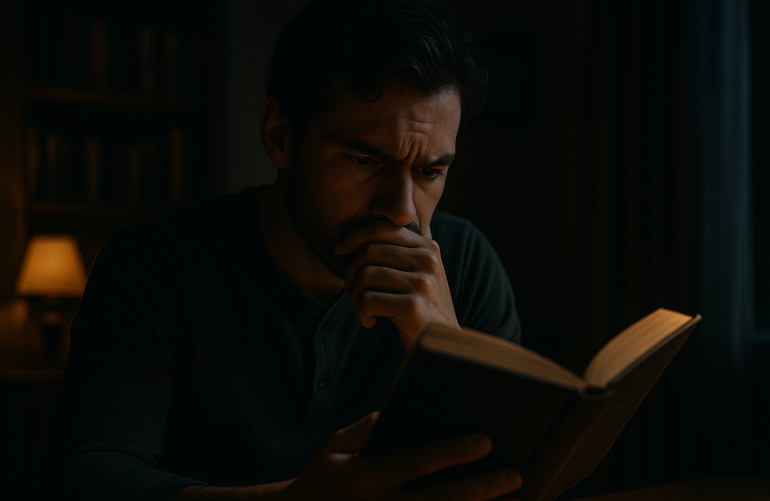
Quiet, simmering threats are some of the most effective tools in short mystery and thriller fiction because they invite readers to participate in the unease. With limited word counts, short forms require precision in implying danger rather than stating it outright, so every detail must earn its weight. Authors who learn to suggest rather than explain let implication do the heavy lifting, creating stories that linger beyond the final sentence. This piece offers practical approaches to atmosphere, misdirection, and pacing to help writers craft subtle suspense that feels inevitable and earned.
Setting and Atmosphere
The setting should function as more than a backdrop; it acts as an emotional cue that amplifies tension and suggests hidden threats through texture and repetition. Select sensory anchors—a persistent drip of water, a flickering streetlamp, the metallic taste of a memory—and allow them to recur so readers begin to associate them with unease. Resist the urge to exhaustively describe; instead let implication do the work so that a single image becomes charged with meaning. When setting and mood operate together, ordinary moments accumulate dread by association rather than exposition.
Consider how silence and absence can be as revealing as action, and use negative space to give readers room to imagine danger. Small, precise details will often be more effective than sweeping descriptions because brevity forces focus and intensifies perception.
Seeds of Suspicion
Suspicion grows from a pattern of small anomalies rather than an overt announcement of threat, so plant contradictions that make readers question motives and memory. Layer unreliable perceptions, partial eyewitness details, and subtle inconsistencies in dialogue to create a web that feels plausible yet unsettling. Give each character a plausible justification for strange behavior so the reader must weigh options rather than be directed to a single truth. That tension between plausible explanations keeps engagement high and curiosity persistent.
Use point of view strategically: limited perspectives conceal as much as they reveal, and a narrator’s blind spots can be the engine of suspense. Let readers assemble the truth from fragments rather than handing it to them wholesale.
Controlled Reveal and Pace
In short fiction, timing is everything; decide which facts to release and when to allow micro-revelations that reframe what came before without resolving everything immediately. Vary sentence and paragraph length to manipulate tempo—short, clipped lines accelerate urgency, while longer, descriptive sentences slow the reader and deepen unease. Anchor shifts in pace to sensory details or small actions so that each turn feels motivated and credible. This control over information flow preserves mystery while building toward a satisfying, compact payoff.
Think of the ending as a lens that clarifies some aspects while leaving other shadows, rewarding attentive readers without over-explaining. A restrained resolution often leaves a stronger impression than a complete disclosure.
Conclusion
Subtle suspense in short fiction relies on economy of detail, strategic withholding, and an atmosphere that suggests danger without naming it. By planting small, repeating cues and controlling the pace of revelation, writers can create stories that feel taut and inevitable while still surprising the reader. Practice these techniques deliberately and revise with attention to what each word implies, not just what it states.