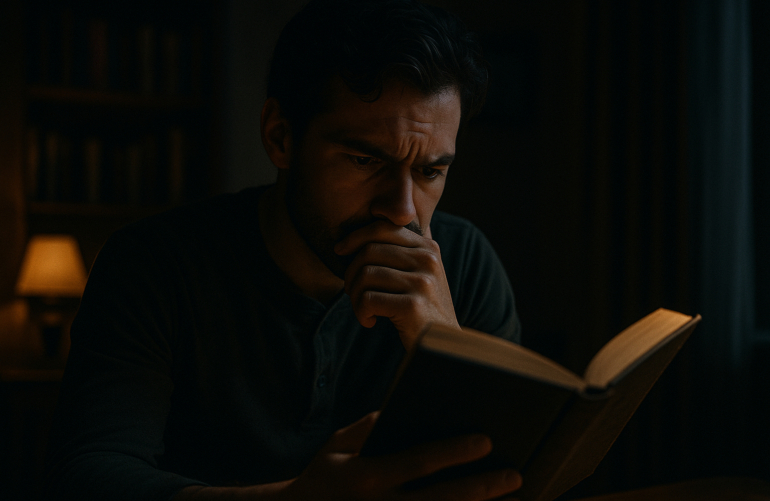
There’s a particular chill when a narrator’s memory is flaky or forbidden — ordinary days blur, evidence rearranges itself, and the reader learns to distrust what feels most intimate. These five novels use lapses, gaps, and intentional forgetting to keep you off balance without relying on cheap shocks. If you like tension that creeps up from the inside of a mind rather than from a ticking clock, start here.
The Girl on the Train — Paula Hawkins
Rachel’s daily commute turns into a voyeuristic lifeline: she watches a couple from the window and builds a private, tidy story about them. When a real-life disappearance intrudes, her drinking and fractured recollections make her both suspect and unreliable witness. Hawkins keeps the perspective claustrophobic and propulsive; the city’s commuter rhythms become part of the plot’s pressure.
Before I Go to Sleep — S.J. Watson
Every morning Christine wakes with no memory of her past, relying on notes and a doctor’s reports to stitch together her life. The novel’s power comes from the small, steady labor of remembrance: details matter, and the act of remembering becomes suspenseful in itself. The prose is intimate — you share the fear of relearning who you are.
Shutter Island — Dennis Lehane
Lehane sets his story on a remote psychiatric hospital where fog and locked doors do more than create mood. The protagonist’s investigations into a missing patient unspool against shifting recollections and questions about sanity. It’s a story that leans into atmosphere and the physicality of a place that seems to rearrange memory.
The Woman in the Window — A.J. Finn
Agoraphobic Anna lives by the view of her neighborhood and the films she rewatches. When she believes she has seen a crime, her isolation and unreliable perception complicate what should be straightforward evidence. Finn combines domestic detail and cinematic tension, making every ordinary object a potential clue or misdirection.
Sometimes I Lie — Alice Feeney
Feeney opens with a stark line that sets up a narrative built of half-truths and shifting timelines. The injured narrator’s confessions, journal entries, and flashbacks arrive like fragments; each new piece forces the reader to reassess earlier assumptions. The book is short on padding and long on claustrophobic, twisty momentum.
How these books differ
Some of these novels use memory loss as a structural device, others make perception itself the battleground of truth. Together they show how fragile personal history can become a plot engine: mismatched timelines, secondhand accounts, and solitary characters all amplify the sense that the past is not fixed but negotiable.
Conclusion
If you want a reading experience where doubt lives not in the villain but inside the head of someone you’re trying to trust, these five thrillers deliver sustained, unsettling tension without relying on cheap jump scares.