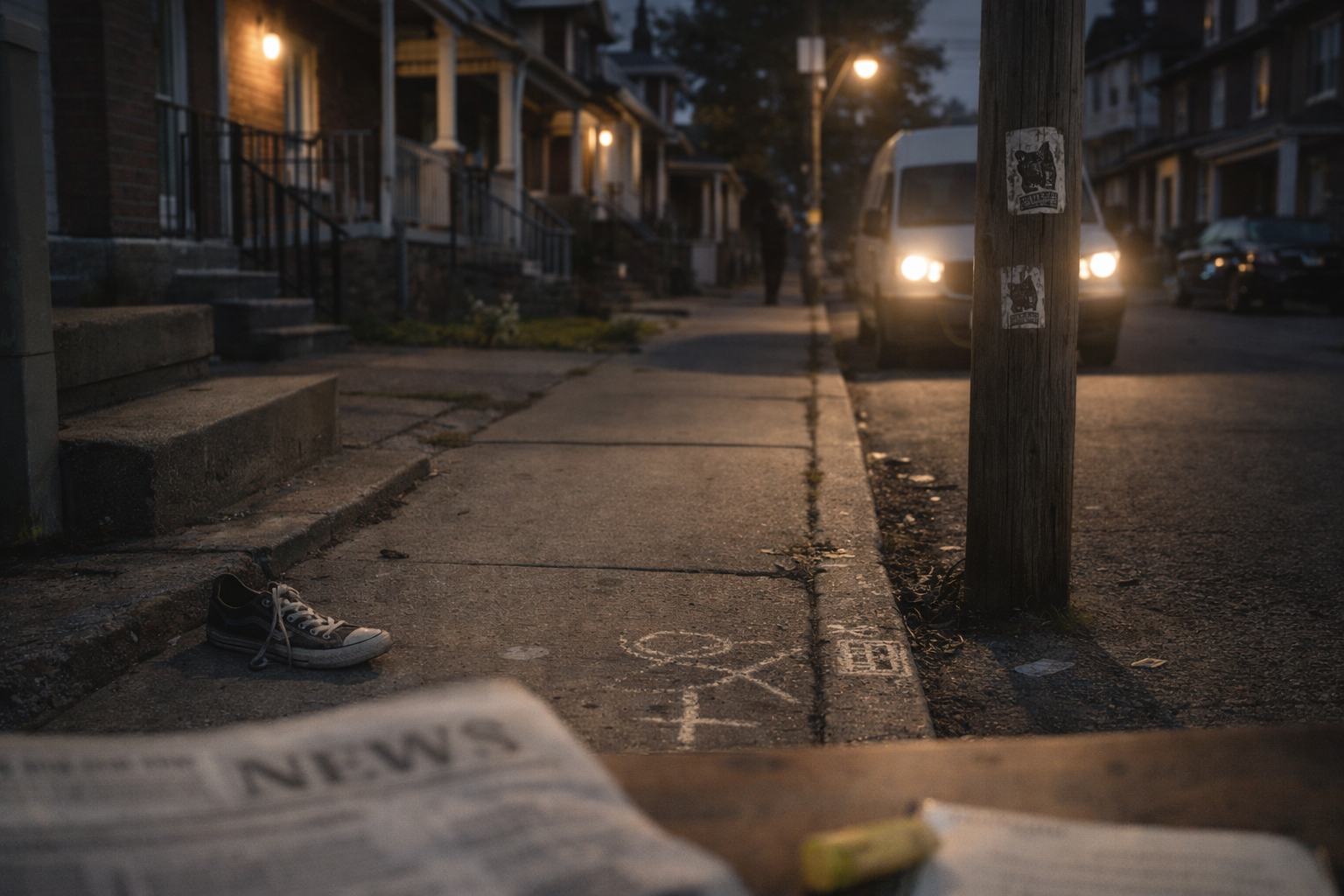
In the hush of ordinary streets, small signs begin to accumulate like secret witness marks.
They are not always dramatic — a misplaced shoe, a faded symbol on a lamppost, or a pattern of late-night deliveries.
Taken together, these trivialities form a grammar of intent that a careful reader can learn to decode.
This piece shows how noticing the minor residues of daily life can reveal an unfolding, often unsettling narrative.
Where Ordinary Becomes Evidence
A neighborhood is a layered text: gestures, routines, and minor disturbances that most people overlook. Observing these details requires slowing down and prioritizing patterns over single events. A single broken window or an unusual flyer pinned to a tree may mean little alone, but when similar marks repeat across blocks they become part of a larger signal. Developing the habit of noting frequency and context turns scattered incidents into meaningful evidence about who moves through a place and why.
The Pattern of Repetition
Repetition is the detective’s ally; recurring details expose intent and timeline in ways that dramatic incidents often obscure. Look for time-bound behaviors — the same car at odd hours, lights switched on in a precise sequence, or graffiti appearing in a sequence that maps a route. Repetition also reveals boundaries: when something repeats, it tells you where attention is concentrated and where it is absent. By cataloging how often and where a sign appears, you map a quiet choreography that might otherwise stay hidden.
– A repeated delivery schedule that skirts certain blocks
– Consistent small markings on utility poles or curbs
– Unexplained gatherings at the same corner after midnight
These kinds of details, when assembled, suggest motives and movement. They point to how secrets are maintained and where disruptions can be expected.
Turning Observations Into a Narrative
Once you have a collection of repeated signs, the work becomes assembling them into a coherent story rather than forcing a single interpretation. Ask what the pattern explains: safety compromises, territorial habits, or a logistical rhythm that supports illicit behavior. Consider the temporal sequence as much as the spatial one, because timing often reveals escalation or stabilization. The goal is not to invent drama but to create a plausible account that can guide further observation or alert authorities prudently.
Conclusion
Small, recurring details can be read as a language of place when you learn its rules. By cataloging repetition and context you turn scattered signs into a reliable narrative that reveals hidden activity. Staying observant and methodical transforms ordinary streets into a map of otherwise unseen intentions.