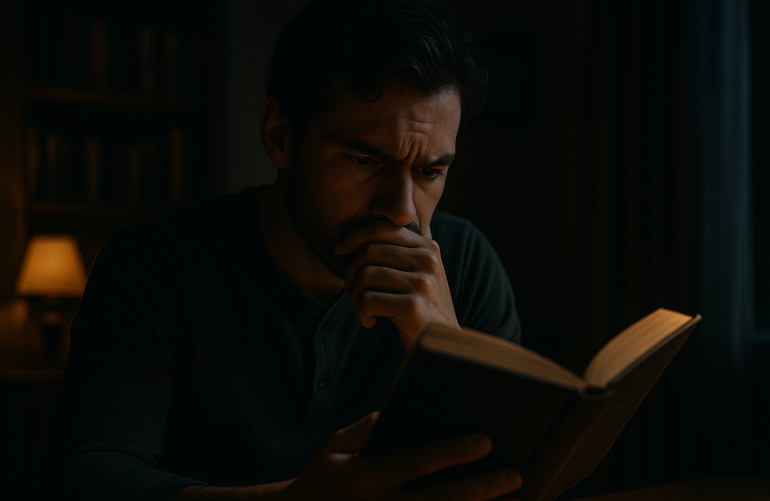
In mystery and thriller writing, the most potent danger is often what readers only sense rather than see. Building suspense through suggestion, pattern, and omission lets the imagination supply terror that explicit scenes cannot match. Small, consistent details—an unexplained sound, a misplaced item, a glance that lingers—become trust marks that escalate unease. Pacing those details, and resisting the urge to explain too quickly, keeps tension taut across chapters. This piece outlines practical techniques to stage unseen threats without sacrificing clarity or momentum.
Setting and Sensory Detail
Use setting to imply risk: a corridor kept at dusk, a houseplant that never gets watered, or a radio that cuts out mid-sentence. Sensory cues work differently than plot beats because they register emotionally first; smell or texture can trigger memory and dread. Anchor scenes with recurring sensory motifs so readers begin to expect danger when those cues appear. The goal is to make the environment a character that hints at threats rather than announcing them.
- a dripping tap
- a ticking clock
- a shadow at the window
When you choose which details to highlight, think about what most unsettles you and why. Those instincts often map to what will unsettle readers.
Strategic Information Release
Control what the reader knows and when to maintain mystery. Deliver facts in uneven rhythms: sometimes a single sentence, sometimes a page, which creates an unpredictable cadence that mirrors anxiety. Use unreliable narrators, incomplete documents, or interrupted conversations to withhold just enough to keep questions alive. Each withheld answer should amplify a stronger, more intriguing question.
Avoid withholding to the point of confusion; clarity anchors suspense rather than undermining it. Shape reveals so that payoff feels earned, not arbitrary.
Character Choices and Conflicting Goals
Characters escalate unseen threats by reacting imperfectly: they lie, they forget, they rationalize, and their choices ripple outward. Give characters plausible blind spots that create vulnerabilities readers can recognize but the protagonist cannot. Conflicting goals among characters generate tension because motivations obscure the truth and create misdirection without contrivance. In this way, interpersonal dynamics can suggest danger even when the actual threat remains offstage.
Let relationships carry subtext and unresolved history; these raise the stakes without extra plot machinery. Trust character behavior to do the heavy lifting of suspense.
Conclusion
Staging unseen threats asks writers to cultivate restraint, craft, and empathy for reader expectation. By using sensory signals, pacing information, and leveraging character blind spots, you can sustain a simmering suspense that pays off meaningfully. Practice these techniques in short scenes and build them into larger arcs so tension accumulates naturally.