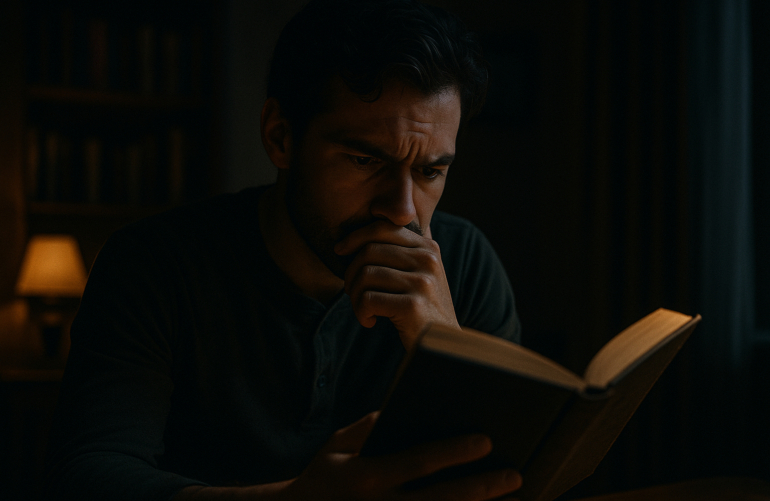
Sustaining a sense of unseen danger is a structural challenge that separates competent thrillers from memorable ones.
It relies less on shocks and more on how the narrative withholds, repeats, and repositions information to keep readers unsettled.
This piece outlines practical choices—about scene order, viewpoint, and timing—that build persistent unease without theatrical gestures.
Apply these techniques to make ordinary moments feel charged and to let revelations accrue into a pressure that finally must be released.
Anchor the Threat in Ordinary Scenes
Begin by embedding small anomalies in everyday scenes so the reader learns to mistrust normality. A misplaced object, a paused conversation, or inconsistent lighting can become recurring anchors that signal danger without announcing it. Describe these details with restraint; overemphasis turns a clue into a headline rather than a slow-burning radiator of tension. The goal is to make each ordinary scene a potential vector for threat when later context reassigns its meaning.
Treat these anchors as low-level background hums. They should intensify only as the plot rearranges the reader’s expectations. Readers should feel the thrum long before consequences arrive.
Layer Character Stakes and Unreliable Wants
Threat feels real when it touches desires and routines. Give your characters habits and ambitions that put them in situations where small disruptions have outsized consequences. An unreliable narrator or a character with hidden compromises creates tension because readers can anticipate self-inflicted traps. Build scenes where their choices incrementally raise the cost of normal behavior.
- Routine: morning rituals that a villain can exploit.
- Preference: what a character consistently avoids or tolerates.
- Lie: a small falsehood that compounds across encounters.
These layers make the consequences of everyday decisions accumulate into real jeopardy. The reader begins to calculate risk alongside the character, which deepens engagement.
Control Revelation Rhythm
Delay can be your principal tool; strategic postponement turns minor facts into detonators. Alternate moments of calm with subtle disclosures that reframe what came before. Use viewpoint shifts and selective free indirect discourse to reveal what one character knows and another misses. Pacing these reveals across scenes creates a cumulative effect that reads like escalating inevitability.
Avoid dumping answers; let them ripple outward so each discovery raises new questions. When the finally revealed threat lands, it should feel earned and inevitable.
Conclusion
Structural choices determine whether danger feels arbitrary or predestined.
By anchoring threat in ordinariness, layering character stakes, and controlling revelation timing and pacing, you quietly sustain unease.
These techniques help readers stay engaged until the final release.