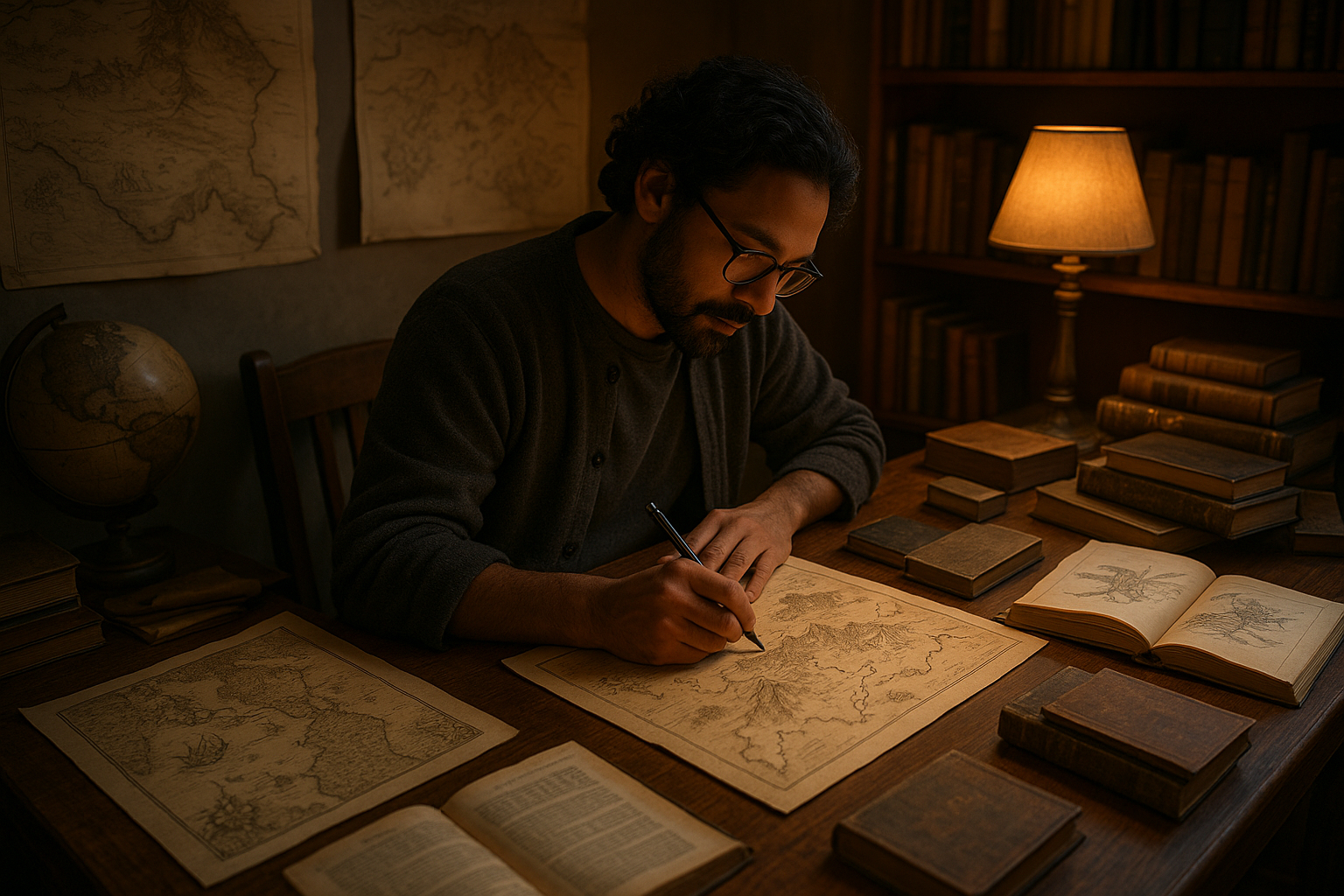
The magic of fantasy lies not just in dragons or spells but in the worlds that feel as alive as the characters who inhabit them. Great fantasy authors create universes that readers can lose themselves in—rich in history, geography, and imagination. From Tolkien’s Middle-earth to Rowling’s Wizarding World, the art of world-building transforms fiction into a living experience. Understanding how iconic authors construct these realms offers invaluable lessons for aspiring writers.
1. Building from the Ground Up
Legendary fantasy writers often start with the basics—maps, cultures, and ecosystems. J.R.R. Tolkien famously began Middle earth by inventing its languages, from which histories and kingdoms naturally evolved. This bottom-up approach creates consistency and realism. When readers can trace how geography influences politics or how culture shapes conflict, the world feels authentic rather than fabricated.
2. Creating Rules and Limits
A compelling world isn’t one where anything can happen—it’s one where everything has boundaries. George R.R. Martin’s A Song of Ice and Fire follows strict political and moral frameworks that drive tension and consequence. Magic systems, too, must follow internal logic; Brandon Sanderson’s “laws of magic” emphasize that defined limitations make fantasy more believable. Boundaries help readers suspend disbelief and stay invested.
3. Drawing from Real-World Inspiration
Fantasy doesn’t emerge from a vacuum. Authors borrow from real myths, cultures, and history to anchor their creations in familiarity. For instance, N.K. Jemisin’s Broken Earth trilogy weaves geological and cultural influences into a unique narrative, while Ursula K. Le Guin’s Earthsea draws from Taoist philosophy. Blending imagination with recognizable elements bridges the gap between the fantastic and the relatable.
4. The Power of Detail and Atmosphere
Every great fantasy world thrives on sensory depth—the smell of rain in a forest, the clinking of armor in a crowded city, or the taste of food in an unfamiliar land. Details breathe life into fiction. Patrick Rothfuss’s King killer Chronicle demonstrates how poetic language and small, vivid observations can make a world unforgettable. It’s not just about what exists, but how it feels to live there.
Conclusion
World-building is the invisible framework that makes fantasy unforgettable. Through language, culture, and structure, iconic authors craft realities that feel tangible and enduring. For any writer dreaming of creating their own realm, studying these masters reveals one timeless truth—great worlds aren’t just imagined; they’re built with purpose and heart.