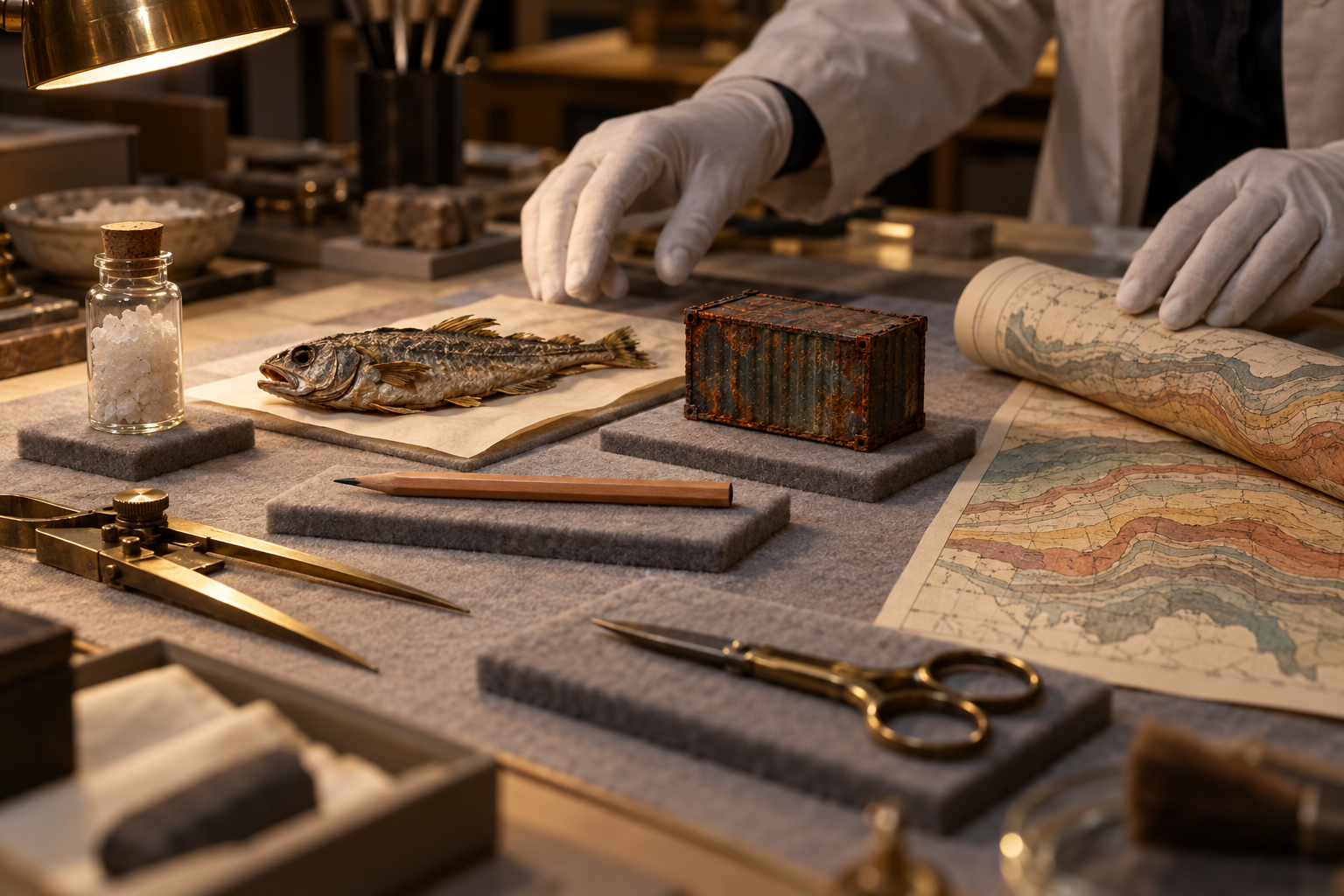
Sometimes the unremarkable—salt, a pencil, a shipping crate—carries the story of empires, inventions, and sudden cultural shifts. These five nonfiction books pick a single object and use it as a lens to explain trade, technology, and human behavior. They make big ideas feel close-up: concrete, surprising, and oddly readable.
The Box — Marc Levinson
Levinson shows how the shipping container quietly remade global trade. What begins as a story about metal boxes and cranes becomes an account of port cities, labor, and the price of everything we buy. If you like economic history served with brisk reporting and clear cause-and-effect, this book connects a physical innovation to the modern world.
Salt: A World History — Mark Kurlansky
Kurlansky treats salt the way a novelist might treat a character: central, stubborn, and full of contradictions. The book skips across centuries—wars, taxation, preservation techniques—yet always returns to that granular, crystalline substance. Expect a mix of anecdote and synthesis that makes you notice salt every time you pass the shaker.
Cod: A Biography of the Fish That Changed the World — Mark Kurlansky
Another Kurlansky entry, this one traces cod from northern seas to the tables and economies of Europe and the Americas. It’s part natural history, part economic tale, and part human drama about voyages, fisheries, and shifting diets. The narrative is surprisingly wide-ranging for a book about a single species.
The Pencil — Henry Petroski
Petroski argues that the pencil’s simplicity is deceptive: design choices, manufacturing methods, and small failures all shaped its form. Reading this is a reminder that everyday tools are the results of engineering, commerce, and taste. It’s a gentle, thoughtful look at how practical problems produce the objects we take for granted.
The Map That Changed the World — Simon Winchester
Winchester tells the story of William Smith and his geological map, an object that altered how people understood the Earth. The book combines biography and scientific history, following fieldwork, discovery, and the slow acceptance of a new idea. It’s a good pick for readers who enjoy historical detective work grounded in physical artifacts.
Conclusion
These books prove a useful habit: pick an object, follow its trail, and you’ll find whole histories. Each title here turns small, familiar things into keys for understanding larger social and economic shifts—perfect for readers who like history tied to the tangible.