Introduction Nonfiction storytelling bridges facts and feeling to help readers understand complex truths in memorable ways. A strong narrative gives context and invites empathy without sacrificing accuracy or nuance. Writers who balance evidence with human detail create work that…

Introduction True-life narratives have power when they balance honesty with craft and restraint. Readers connect to stories that reveal insight, not merely chronological events. This article offers practical strategies to tighten structure, sharpen detail, and preserve a trustworthy voice.…
Introduction Short fiction demands a different kind of honesty than longer forms, compressing emotion into a narrow space. With limited room, every image, gesture, and line of dialogue must earn its place and carry weight. Writers who aim for…
Introduction Short fiction offers a concentrated emotional and intellectual experience that fits into busy lives. It invites readers to engage deeply with a compact narrative, while offering writers a disciplined space to sharpen craft. The form encourages experimentation with…
Introduction The old streets sleep under sodium lamps, but the town never feels empty. Small routines mask the rhythm of secrets that pulse after midnight. Neighbors nod in daylight and close their curtains when conversations become too close. This…
Introduction In a part of town that most pass without a second thought, an old library keeps its own calendar of shadows. Bookcases bend light into alleys where whispers gather and a misplaced volume can change how neighbors remember…
Introduction Short fiction succeeds when every scene carries purpose and momentum. Writers must learn to make small moments reveal character and theme without excess explanation. Tight narratives depend on decisive choices about what to show and what to leave…
Short fiction demands precision: every sentence must carry weight and forward motion. Writers who learn to compress character, plot, and emotion into a small space create stories that linger. This introduction outlines practical approaches to sharpen a short story’s…
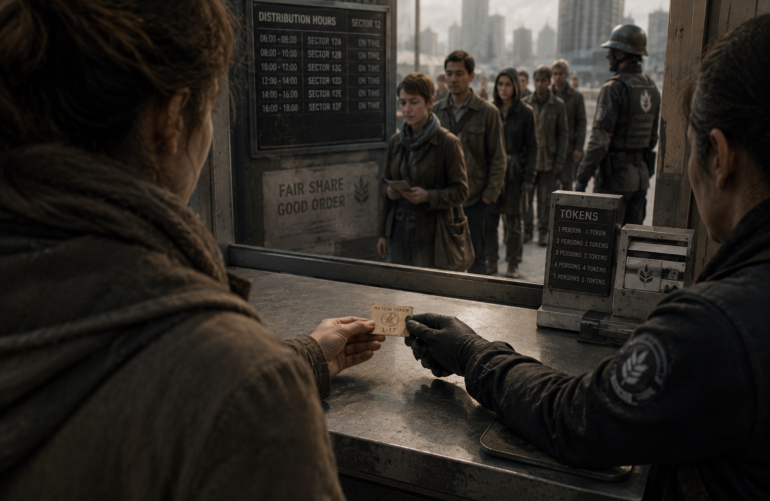
Every believable speculative world depends on ordinary systems as much as on spectacular elements. Public services, markets, and shared schedules shape daily life and reveal deeper values. When writers invent modest routines—waste collection, transit timetables, ration tokens—they anchor scale…
Small, often overlooked systems give speculative worlds gravity and logic. They are the municipal details that determine how characters move, trade, and remember. When writers design these quiet mechanisms deliberately, plot and culture grow from believable constraints. This piece…