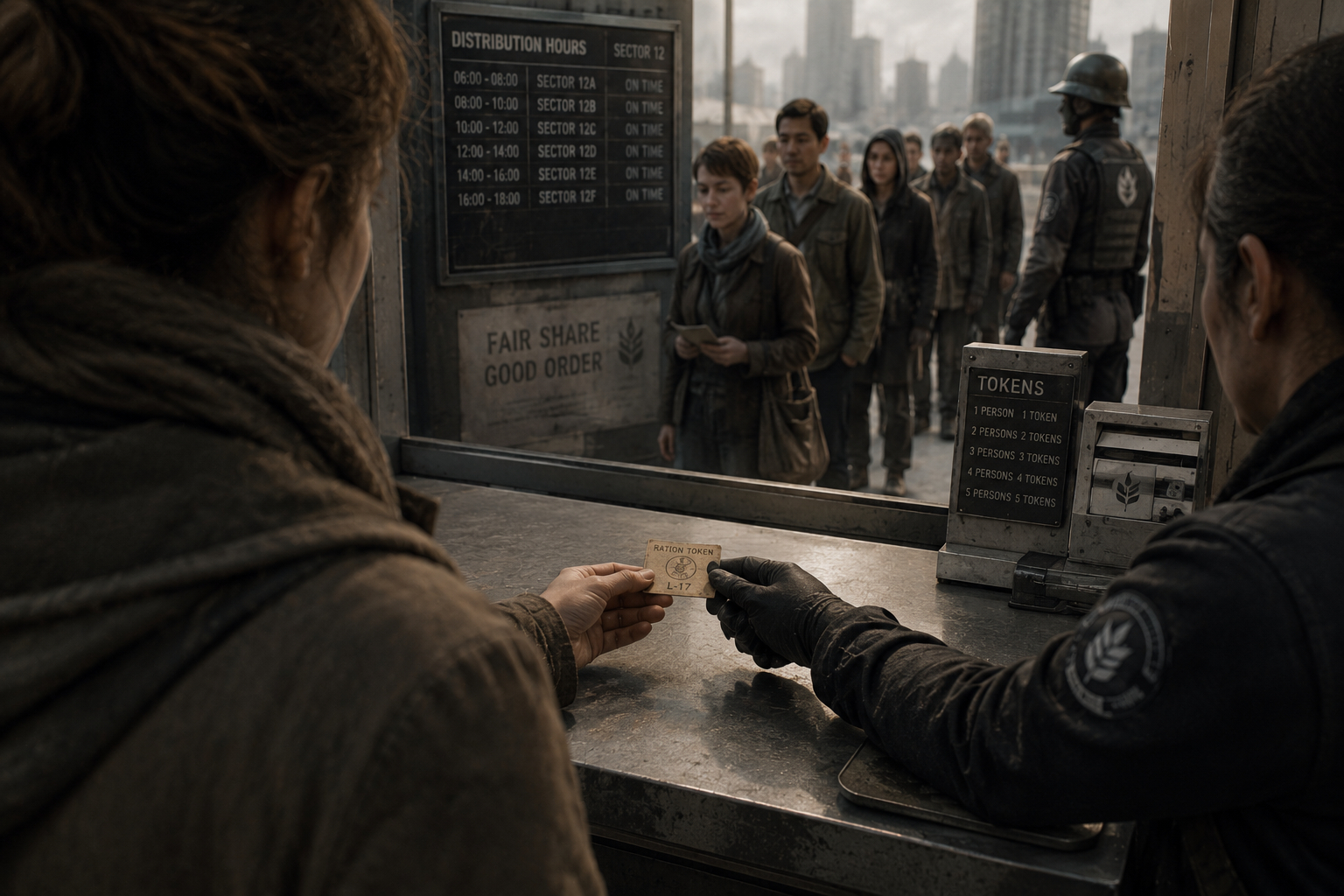
Every believable speculative world depends on ordinary systems as much as on spectacular elements.
Public services, markets, and shared schedules shape daily life and reveal deeper values.
When writers invent modest routines—waste collection, transit timetables, ration tokens—they anchor scale and consequence.
This piece outlines practical ways to turn small systems into story engines without overwhelming spectacle.
Visible Routines, Invisible Power
Visible routines act as shorthand for who holds authority and how power flows in a society. A daily muster, a curfew bell, or the pattern of patrols can tell readers about governance without explicit exposition. These routines also provide predictable beats that characters react to, subvert, or exploit, which is useful for plotting. Consider how a simple queueing system or permit process shapes behavior across classes and neighborhoods.
- Use recurring public events to reveal enforcement and resistance.
- Make small rituals discriminatory in covert ways to suggest inequality.
Concrete routines also supply sensory touchpoints: noises, smells, and timing that readers remember. Grounding scenes in recurring schedules makes worlds feel lived-in and credible.
Artifacts, Language, and Local Logistics
Everyday objects and the words people use to describe them encode history and values. A city that values mobility may have compact cards, stamped tokens, or spoken passphrases; a society shaped by scarcity will produce clever reuse practices and vernacular shortcuts. Detailing how these artifacts function in practice—who repairs them, who controls access—adds depth. Small logistics like fuel depot locations, post schedules, or informal barter circuits flesh out setting without long expository blocks.
- Introduce one small device with unique rules and show its social role.
- Let slang and proverbs hint at past events or institutions.
Readers infer larger systems from these details, so choose items that reflect conflict and continuity. Language tied to objects helps embed culture in dialogue.
Plotting Conflict Through Daily Systems
Conflicts often begin in the mundane: a disrupted delivery, a ration error, or a transit strike can cascade into larger crises. By linking character goals to these systems, you generate stakes that feel inevitable and logical. Use bottlenecks and dependencies—single bridges, monopolized resources, or timed signals—to create tension and force choices. Small failures reveal vulnerabilities in institutions and give protagonists practical obstacles to overcome.
- Plan scenes where routine breakdowns trigger investigation or rebellion.
- Turn procedural steps into checkpoints for character development.
Daily systems also create opportunities for subtle worldbuilding through problem-solving and adaptation. Characters’ responses to routine disruptions tell readers who they are and what the society values.
Conclusion
Small public systems make imagined societies tactile and believable.
They offer motifs for plot, conflict, and character choices.
Layer these routines thoughtfully to let world and story emerge together.