Climate and eco-literature has emerged as one of the most urgent and influential movements in modern writing. As environmental challenges become impossible to ignore, writers are increasingly using stories, essays, and narratives to explore humanity’s relationship with the natural…
Contemporary writing increasingly reflects a renewed interest in spirituality, not as doctrine, but as personal exploration. Modern authors often move beyond traditional religious frameworks to examine meaning, purpose, and inner life in ways that resonate with diverse readers. These…
Technology has fundamentally reshaped how non-fiction is researched, written, published, and consumed. What was once a slow, linear process driven by physical archives and long publishing cycles has become faster, more interactive, and increasingly data-driven. Today’s non-fiction writers operate…
Sharing personal experiences can make writing feel authentic, relatable, and emotionally powerful. Readers are often drawn to stories that feel honest and grounded in real life. At the same time, there is a delicate balance between meaningful self-expression and…
Few moments in storytelling are as satisfying as a twist that lands perfectly—one that surprises readers while feeling inevitable in hindsight. A great twist doesn’t come from shock alone; it grows organically from character choices, subtle clues, and carefully…
Stories about serial killers occupy a unique and unsettling space in popular culture. Despite their dark subject matter, these narratives consistently attract readers across genres—from true crime to psychological fiction. The fascination isn’t rooted in admiration, but in curiosity…
Stories become far more powerful when the characters within them refuse to fit neatly into “good” or “evil.” Complex characters challenge readers to think deeply about choices, consequences, and the shifting nature of morality. Their motivations aren’t always pure,…
Experimental fiction challenges the boundaries of traditional storytelling, inviting readers into a world where structure, language, and form are reshaped with intention. Instead of following linear plots or familiar narrative patterns, this style embraces creativity that pushes beyond convention.…
Fantasy stories have always offered a window into human nature, allowing readers to explore morality, identity, and personal values through larger-than-life characters. Heroes and villains in these worlds represent more than archetypes—they reflect internal struggles, ambitions, fears, and desires…
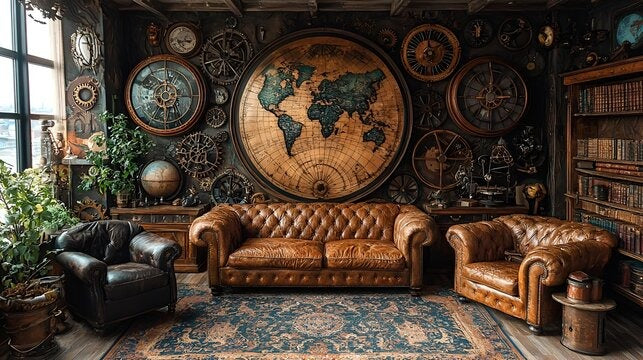
Steampunk has evolved from a niche artistic style into a captivating cultural movement that blends Victorian-era elegance with futuristic imagination. Its visual universe is filled with brass machinery, handcrafted gadgets, and a sense of adventure that feels both nostalgic…