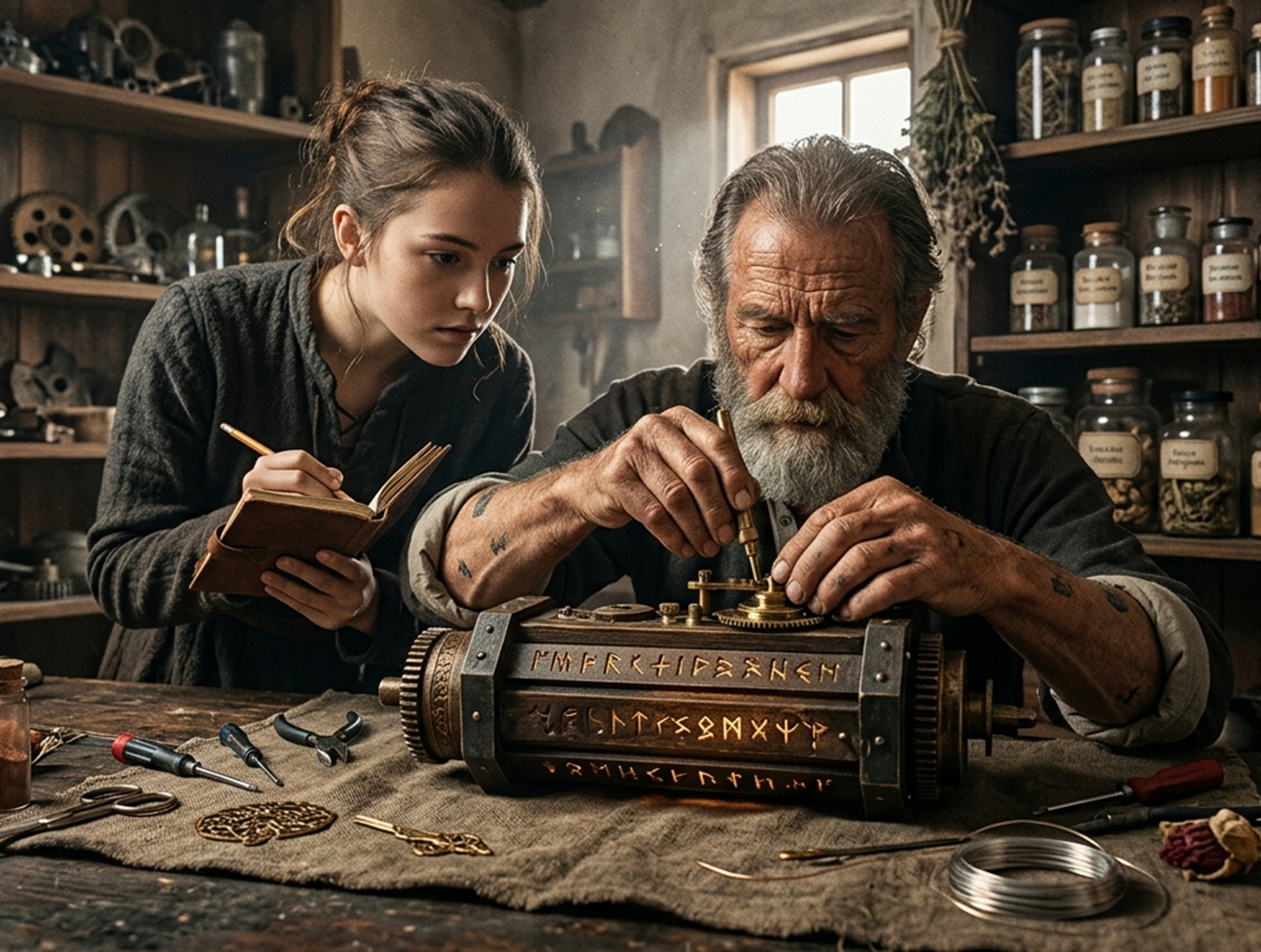
When fantasy and science fiction intertwine, devices and sorceries should feel inevitable rather than decorative.
Good worldbuilding ties inventions to culture, environment, and consequence so readers accept the extraordinary.
This piece outlines practical approaches to designing technology that reads like organic mythology rather than a plot crutch.
You will find methods to balance rules, mystery, and narrative hooks that keep speculative elements believable and compelling.
Designing Technology that Feels Legendary
Start by defining a clear origin story for the technology or magic in your setting; even fragmentary myths or lost manuals establish depth. Consider who created it, why it was developed, and how its existence reshaped daily life, governance, and power structures. Detail constraints and costs: scarcity of materials, ritual requirements, maintenance, or social taboos create believable limits. Avoid unexplained conveniences that resolve plot tension without cost or consequence.
Embed artifacts into routines to make them feel mundane and real, such as market stalls selling cracked power cores or priests calibrating household wards. Those small touches convince readers that the speculative is woven into the fabric of the world.
Balancing Rules and Mystery
Consistency is crucial: establish a set of internal rules and adhere to them to prevent readers from feeling cheated. However, retain a degree of mystery to preserve wonder and narrative flexibility; not every mechanism needs exhaustive explanation. Use perspective characters to reveal rules through usage and failure rather than exposition-heavy lectures. Failure modes are powerful tools—show how misuse or miscalculation leads to unexpected outcomes to underline the system’s reality.
Strategically reveal limitations across the story to maintain stakes and curiosity, ensuring that withheld explanations serve thematic or plot purposes rather than obscuring sloppy design.
Integrating Culture, Ecology, and Ethics
Technology and magic should influence and reflect cultural practices, economies, and ecological relationships. Consider how resources required for functioning affect trade, migration, and social inequality, or how rituals surrounding devices shape identity and law. Think through ethical dilemmas: who controls the technology, who profits, and who suffers? These questions anchor speculative devices in human reality and generate narrative conflict.
Incorporate environmental consequences and cultural adaptations so that readers perceive the technology as part of an ecosystem of choices and compromises rather than a neutral tool.
Conclusion
Create origins, costs, and cultural echoes for every speculative device to make it believable.
Keep rules consistent but allow mystery to preserve wonder and narrative tension.
Anchor technology in social and ecological consequences to give your world meaning and stakes.