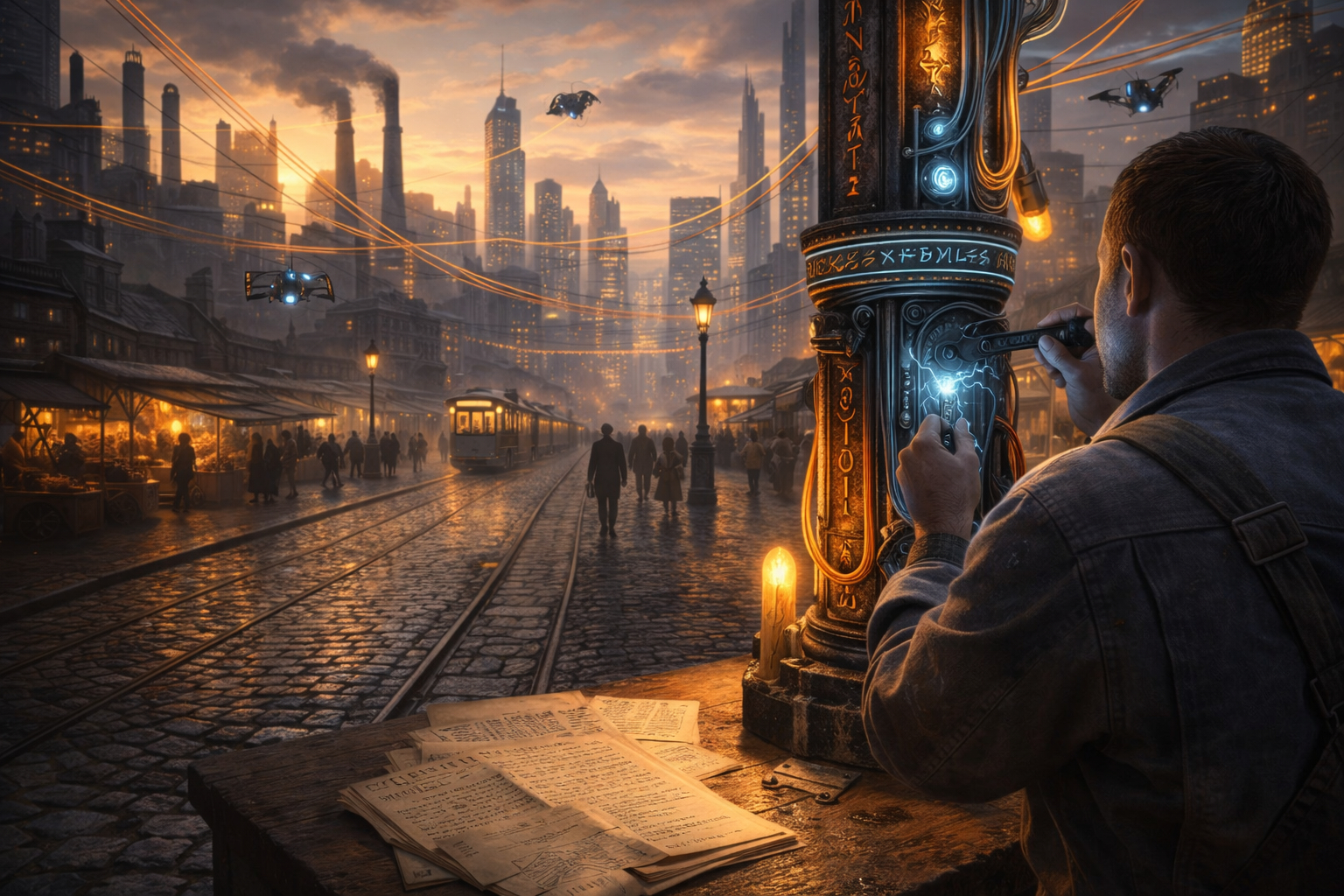
In speculative fiction, urban landscapes that combine arcane forces with advanced engineering invite readers into worlds that feel both wondrous and plausible. Success depends on clear rules, visible tradeoffs, and believable everyday routines shaped by those rules. This article outlines practical approaches to grounding hybrid cities so their contradictions feel intentional and narratively rich. Apply these techniques to deepen setting, inform plot, and motivate character choices.
Establish Rules for Each System
Begin by defining the internal logic of magic and technology separately, then map points of overlap where they might influence one another. Determine limits, costs, and required inputs for both systems so scenes carry tension instead of arbitrary convenience. Consistent constraints help readers predict consequences and engage emotionally when characters test boundaries. Make sure the rules are discoverable through action rather than exposition alone.
– Decide whether magic follows conservation principles like energy or belief, and whether machines obey equivalent constraints such as resource scarcity or maintenance cycles.
– Define how each system perceives and measures failure, so breakdowns feel meaningful and consequential.
Close scenes with small demonstrations of rule interaction to reinforce learning for the reader. When characters exploit loopholes or suffer setbacks, those moments should reveal the system rather than merely advance plot.
Consider Infrastructure and Daily Life
Focus on the visible infrastructure that results when sorcery and engineering meet: transit, power distribution, sanitation, and communication all change under dual influences. Think through supply chains, who controls access, and what specialized professions arise to keep both networks running. Layer mundane details—billing, training, regulations—into scenes so the setting matures beyond spectacle into lived experience. This anchors fantastical elements in predictable civic rhythms readers recognize.
– Sketch typical city services: enchanted streetlights tied to ley lines versus battery grids, hybrid repair crews with both arcane tools and drones.
– Explore socioeconomic effects, like neighborhoods dependent on ritual energy versus those favoring industrial power.
End these considerations by using daily-life conflicts to seed larger plotlines, such as strikes, blackouts, or illicit magic-tech markets.
Use Conflict and Culture to Show Interactions
Culture determines how people value, fear, or fetishize each system, and conflict provides the clearest lens through which readers understand tradeoffs. Rituals, laws, guilds, and underground movements will spring from who benefits and who is excluded by hybrid infrastructure. Show cultural adaptation through festivals, slang, or aesthetic choices blending runes with circuitry to make the world feel lived-in. These choices create stakes: when a cultural practice collapses, the story gains emotional weight.
Conclusion
Balancing believable rules, infrastructure detail, and cultural response turns a gimmick into a functioning cityscape that supports story. Ground fantastical elements in procedural logic and everyday practices to help readers accept surprising developments. Use small, concrete scenes to teach the world and let conflict reveal deeper tensions.