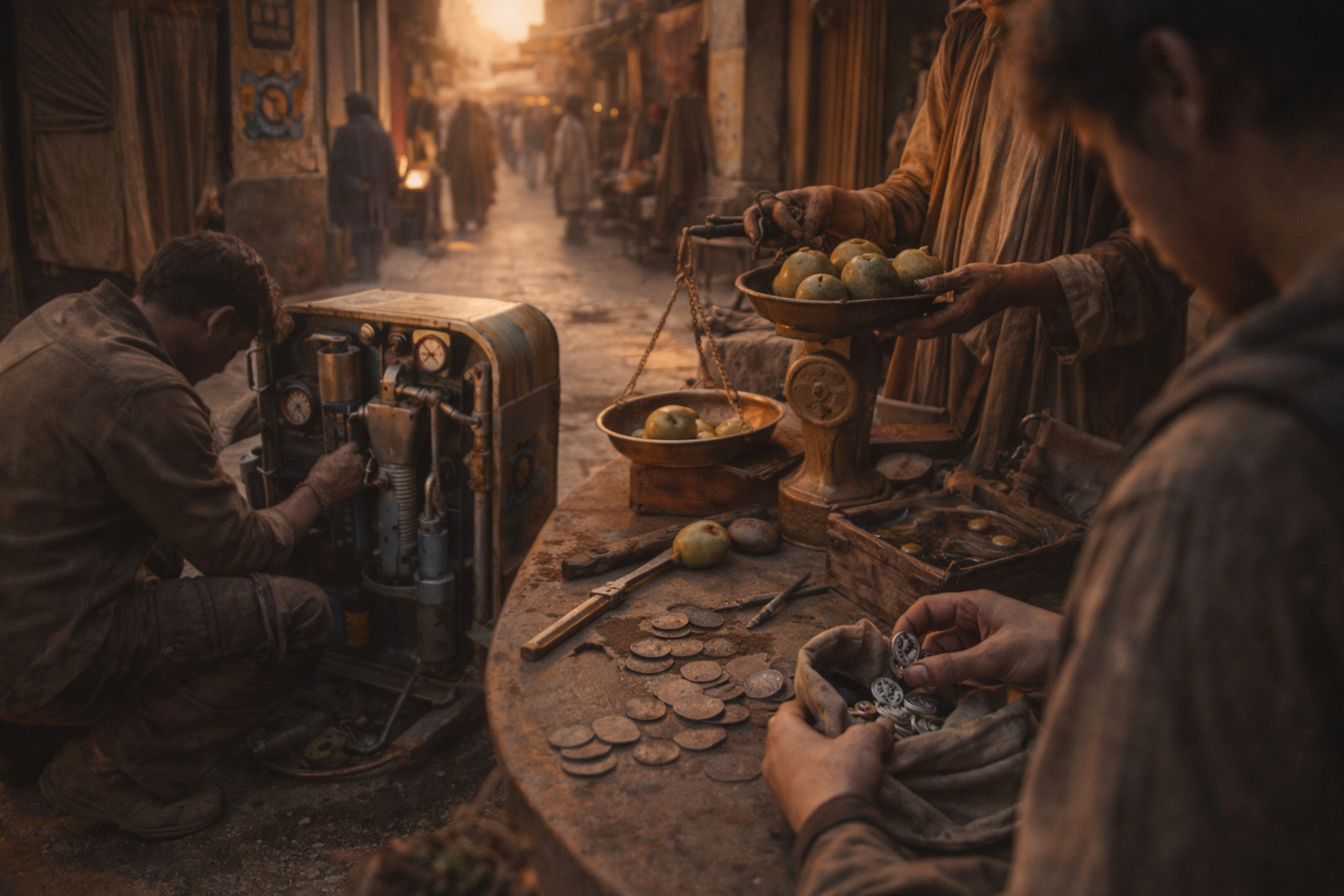
When readers step into a speculative world, the familiar rhythms of daily life often make the fantastic feel believable. Small systems — the way people trade, eat, speak, and move — act like scaffolding for larger imaginative leaps. Focusing on routine interactions lets authors anchor strange technologies or magics in recognizable human behavior. This approach builds trust with the audience and opens space for surprising contrasts.
By designing those mundane systems with intention, writers can deepen immersion without heavy exposition. The result is a setting that feels lived in and logically coherent.
Mechanics and Domestic Routines
Domestic routines reveal how societies adapt to their technologies and constraints; they also expose social hierarchies and values. Consider how waste is managed, how heating is handled, or who maintains public infrastructure. These details suggest underlying engineering and cultural priorities without needing diagrams or long explanations. A kitchen ritual, a repair practice, or a school routine can imply entire systems of production and belief.
Grounding scenes in mechanical detail makes the setting tangible while allowing larger speculative elements to remain wondrous yet plausible. Small, repeatable actions create narrative anchors readers recognize.
Language and Small Signals
Language encodes history, taboo topics, and daily priorities, and it can subtly reveal power structures. Slang, honorifics, measurements, and common metaphors all hint at what a culture notices most. Thoughtful use of linguistic texture lets an author reveal differences without heavy-handed exposition. Dialogue rhythm and the presence or absence of translated idioms can shape a reader’s perception of intimacy.
Paying attention to these small signals adds layers to character interactions and builds believable social worlds. They nudge readers to infer rather than be told.
Resource Flow and Object Economies
How resources move through a society defines its strengths and vulnerabilities, whether those resources are water, data, mana, or fuel. Tracking everyday objects — currency types, common tools, wearable tech, or ritual tokens — helps construct an economy readers can visualize. Simple supply constraints or quirky trade practices create conflict and drive plot. Objects that change hands frequently make excellent devices for revealing relationships and backstory.
- Map a few staple goods and their routes.
- Decide who controls access and who is excluded.
- Use scarcity to motivate choices and tensions.
These practical choices shape believable stakes and make speculative premises feel operational. The result is a world that behaves consistently under pressure.
Temporal Patterns and Urban Movement
How people structure their days and move through spaces reveals much about priorities and safety. Schedules, curfews, market hours, and transit patterns all give a city or frontier a distinctive tempo. The contrast between public and private movement exposes inequalities and hidden economies. Designing believable temporal structures also gives authors tools to pace scenes and escalate tension organically.
Intentional choreography of time and movement makes settings feel dynamic and alive. It also provides predictable beats for readers to latch onto amid speculative novelty.
Conclusion
Everyday systems are the invisible architecture of speculative worlds, converting imaginative ideas into lived reality. By attending to routines, language, resource flows, and temporal patterns, writers create settings that feel coherent and inhabited. Those grounded details invite readers to stay, explore, and care.