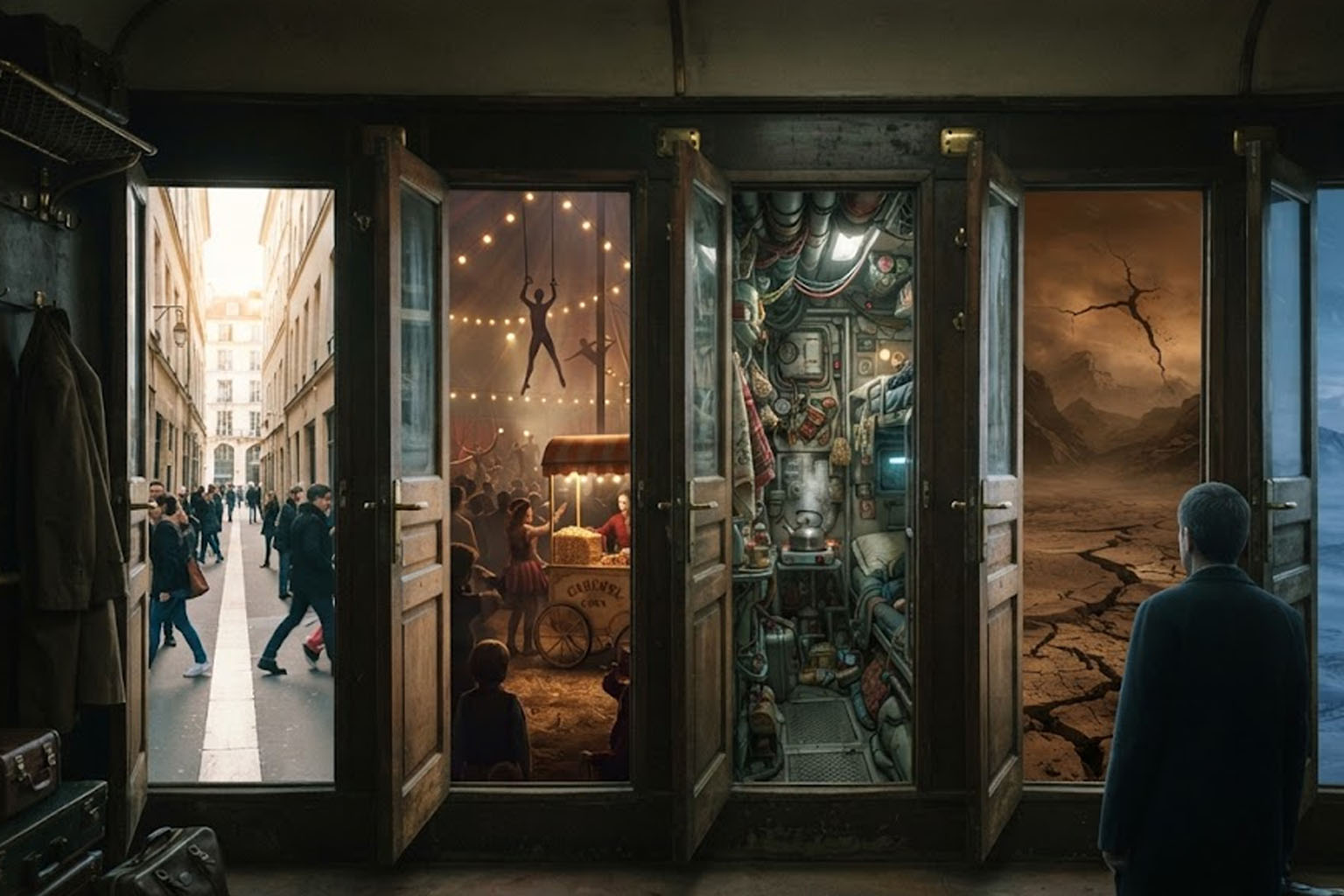
Some books live in your head because of characters, others because the places they describe keep turning over in your imagination. Below are five novels—across fantasy and science fiction—where setting does heavy lifting: cities, ships, planets, and strange geographies that feel like characters in their own right. These picks are about discovery, atmosphere, and scenes you’ll want to revisit.
The City & The City — China Miéville
Part mystery, part political fable, this novel centers on two cities that literally share the same physical space but are culturally and legally separate. Miéville’s idea is simple and uncanny: borders that are mental as much as geographic. If you like puzzles shaded with social commentary and a city that forces you to pay attention to how people look away, this one lingers.
The Night Circus — Erin Morgenstern
A traveling magical circus that arrives without warning and opens only at night. Morgenstern builds atmosphere with small, sensory details—the smell of caramel, a tent where time behaves differently—and crafts a setting that feels handcrafted and secret. The circus is less backdrop than ecosystem: it enfolds the story and rewards slow, immersive reading.
The Long Way to a Small, Angry Planet — Becky Chambers
Becky Chambers’ debut is a cozy, character-rich road trip through space. The ship on which most of the book takes place is less a prop and more a cramped, lived-in home where cultures meet and everyday life unfolds. If you enjoy gentle, human-scale science fiction where the universe is built through conversations and domestic detail, this is a comforting, expansive choice.
The Fifth Season — N. K. Jemisin
The first book in the Broken Earth trilogy introduces a world shaped by recurring geological apocalypse. Jemisin makes environment the engine of story: landscape, weather, and the way people survive define politics and personal loyalties. It’s intense and imaginative—readers who like setting that directly affects fate and social order will find it unforgettable. (Minor note: the book deals with violence; reader discretion advised.)
The Left Hand of Darkness — Ursula K. Le Guin
Le Guin’s classic sends a lone envoy to a cold, remote planet whose culture and climate force a different kind of thinking. The stark, icy environment shapes relationships and politics in ways that feel inevitable. It’s a quieter, philosophical work that rewards attention to place and mood rather than action-packed spectacle.
Conclusion
These five books offer very different pleasures but share a common trait: their settings stay with you. If you want to be transported by atmosphere—by cities, ships, planets, or geological forces—start with whichever premise draws you, and let the place do its work.