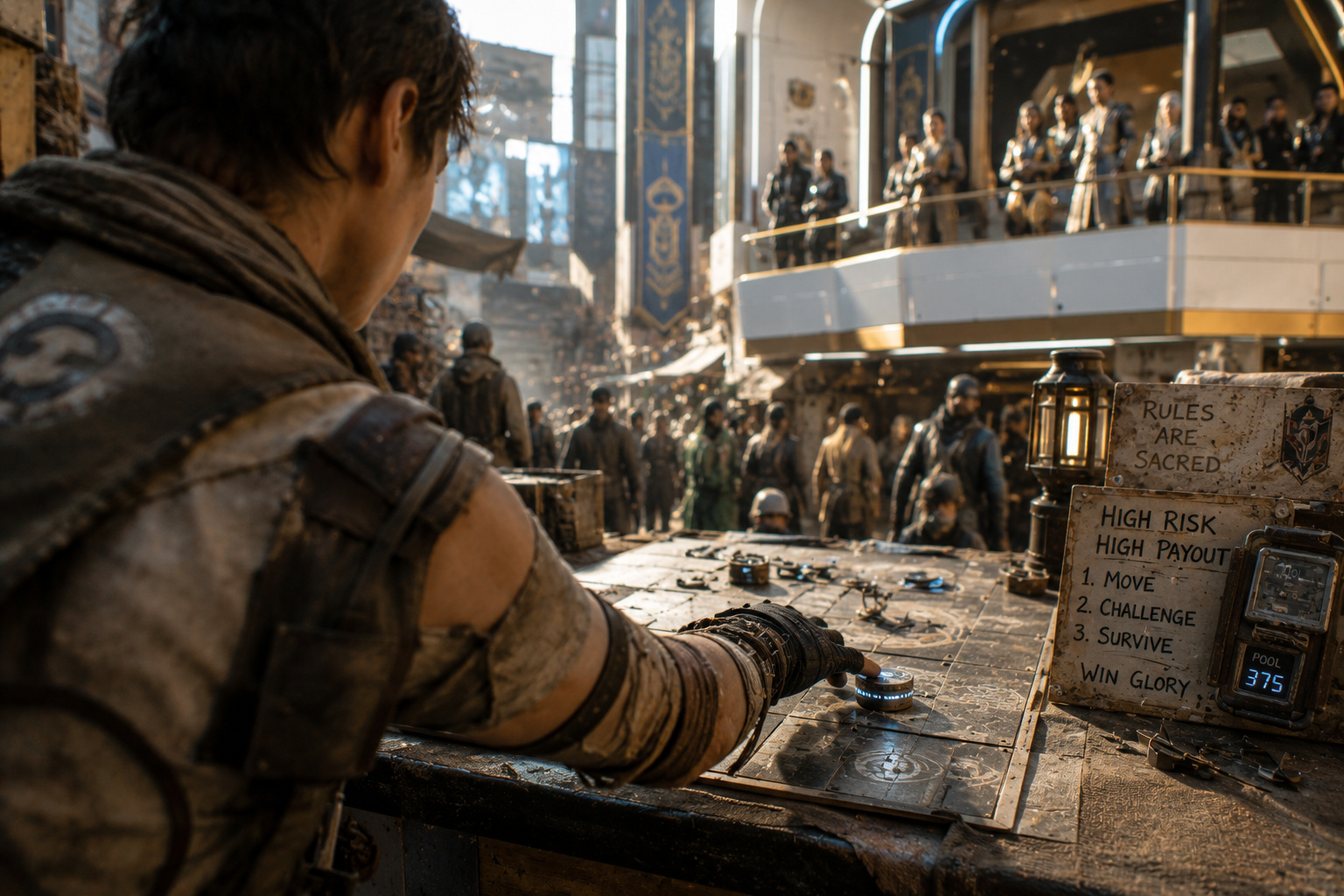
Games, play, and leisure activities are often the most overlooked tools in speculative worldbuilding, yet they reveal social priorities faster than many institutions. A community’s pastimes show what a culture values, fears, or dreams about technology and power. Through simple scenes of sport, ritualized competition, or recreational tech, writers can expose class, gender norms, and economic constraints without exposition. This article explores how to use play as a deliberate device to deepen fantasy and science fiction settings.
Play can be both subtle and dramatic, serving scenes and backstory at once. Below we examine practical approaches for integrating games and leisure into narrative.
Why Play Matters
Leisure choices signal scarcity, abundance, and the distribution of free time in a society. When citizens spend hours in simulated duels, communal festivals, or state-sponsored amusements, readers infer the presence of safety, surveillance, or propaganda. Play also provides low-stakes tension: competitions let characters reveal skill, cunning, or vulnerability without immediate mortal danger. Finally, recreational forms often preserve cultural memory, encoding myths and taboos within rules and rituals.
Thinking about play ethically and functionally helps you craft believable social texture. It also gives characters natural opportunities for conflict and connection.
Designing Games as Worldbuilding Tools
Designing a game or pastime requires asking practical questions: who participates, who profits, and what resources support it? A pastime requiring rare materials implies trade networks or elite monopolies; a street game played with reclaimed scraps suggests resilience and improvisation. Consider sensory detail, equipment, and vocabulary that make the activity feel lived-in. Small rules, scoring systems, and penalties can reflect legal or religious systems, creating coherence between public institutions and private life.
When you anchor a game in mundane logistics, it multiplies as evidence of broader world mechanics. Use short scenes to show rather than tell those mechanics.
Everyday Entertainment and Social Structure
Leisure often maps onto social hierarchies: who gets access to venues, who watches, and who is forced to perform. In some settings, entertainment channels dissent or reinforces authority through spectacle; in others, subversive games become sites of resistance and identity formation. Public gatherings for play can double as marketplaces, rumor centers, or recruitment grounds, connecting recreation to economics and politics. Observing who is excluded from play can be as revealing as describing the games themselves.
Layering leisure with social roles gives scenes immediate stakes and believability. Let restrictions and privileges around play illuminate your world.
Practical Tips for Writers
Start small: a child’s game, a tavern contest, or a commuter pastime can open a window into a larger society. Anchor rules to physical constraints and cultural logic rather than inventing arbitrary mechanics. Use dialogue and habit to reveal jargon and etiquette, and allow failure in play to drive character arcs. Keep sensory detail tight to avoid bogging down scenes.
- Invent one clear rule that reflects societal values.
- Use play to reveal class or technological disparities.
- Let leisure spaces double as political or economic nodes.
- Show consequences of loss, not just winning moments.
These small choices scale up, making worlds feel textured and inhabited. Integrate play deliberately to enrich plot and theme.
Conclusion
Games and leisure are compact, versatile tools for conveying social logic and cultural history in speculative fiction. By designing play that aligns with resource limits, power structures, and everyday habits, writers create immersive, believable worlds through action rather than exposition. Treat recreation as another facet of society and let it illuminate your characters and their stakes.