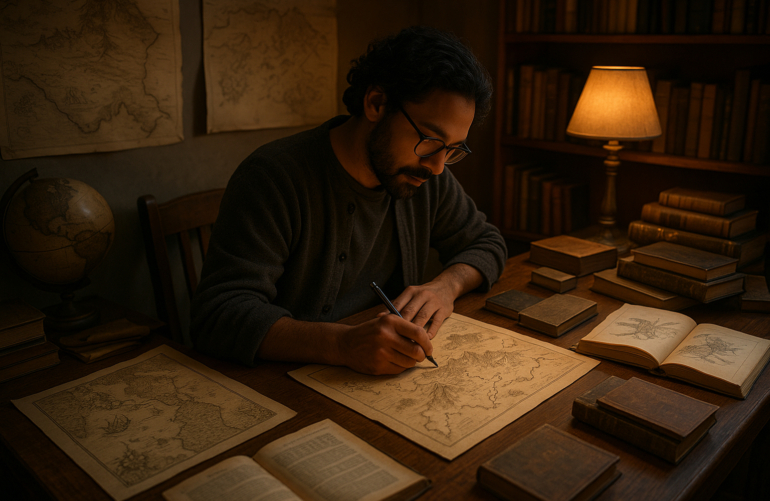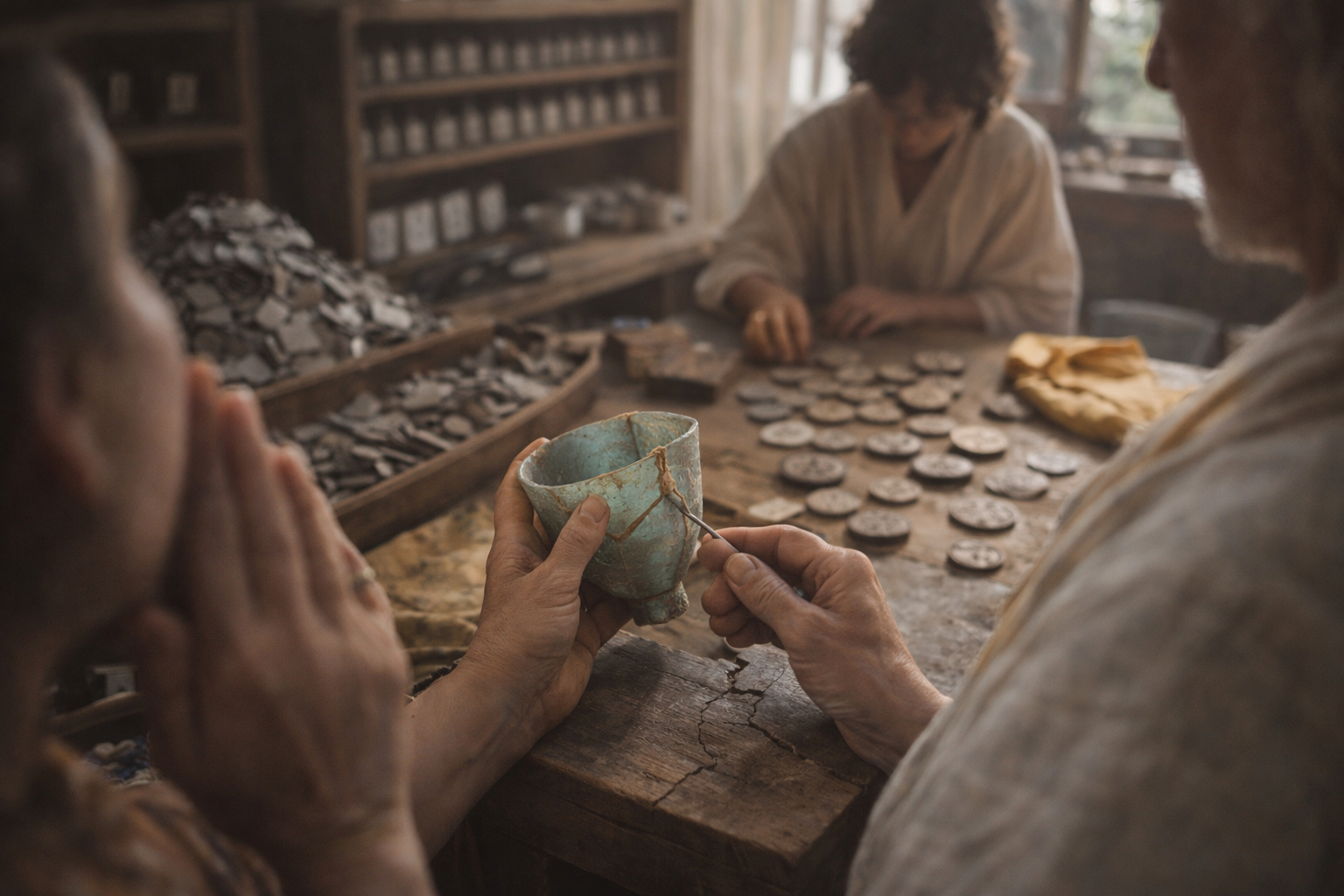
Everyday objects can be powerful anchors in speculative fiction, helping readers enter unfamiliar worlds.
A broken watch, a ritual cup, or a mass-produced talisman can convey history, class, and belief without heavy exposition.
When writers treat mundane items as meaningful, those items become shorthand for complex social systems and emotional states.
This piece outlines practical approaches to designing objects that enrich setting, character, and plot.
Objects as Cultural Anchors
Objects reveal what a society values and how it organizes labor, technology, and faith. A community that preserves stamped clay tokens tells a different story than one that discards single-use alloys, and those contrasts suggest trade systems, scarcity, or taboo. Materials, wear patterns, and rituals around objects show who controls resources and who is excluded. Even the language people use to name everyday items hints at history, conquest, or cross-cultural borrowing. Attending to these clues lets readers infer depth without long backstory dumps.
- Material: stone, polymer, bio-fabrication — each implies production methods.
- Use: ceremonial versus disposable use reflects value and ritual.
- Distribution: who owns and who crafts objects reveals power dynamics.
By weaving these signals into scenes, authors create believable social logic. Small, consistent details build a larger sense of coherence across the story.
Designing Everyday Artifacts
Start with purpose and constraint: why does this item exist and what limits its design? Consider environmental factors, available technologies, and the cultural taboos that shape form and ornament. Think through lifecycle: manufacture, maintenance, failure modes, and disposal, because those stages produce narrative hooks and worldbuilding texture. Give artifacts distinct sensory signatures — smell, weight, sound — so they register in character interactions and linger in readers’ minds. Avoid making every object iconic; reserve intense detail for items that matter to plot or character growth.
- Ask: Who made this? Who uses it? Who benefits when it breaks?
- Sketch a brief origin story for key items to anchor later references.
These steps keep designs purposeful and narratively useful rather than decorative. Thoughtful constraints often produce more believable creativity than unlimited invention.
Using Objects in Plot and Character
Objects can catalyze action, symbolize internal change, or function as unreliable narrators of culture. A character clinging to a childhood token can reveal a personal history that contrasts with public ideology, while a lost tool might expose a society’s hidden dependencies. Objects also serve as economical plot devices: a key, a map fragment, or a contaminated water vessel can propel scenes without exposition. When characters interact with familiar items, those moments reveal habit, status, and moral choices in tangible ways.
- Plot hooks: broken items that need repair, inherited objects with unknown purpose.
- Character beats: daily rituals around objects that show priorities and fear.
Integrating artifacts into arc and scene gives both emotional resonance and strategic utility. Well-placed items can transform worldbuilding into storytelling rather than mere backdrop.
Conclusion
Design objects with purpose, constraint, and sensory detail to make a speculative society feel lived-in.
Use artifacts to reveal power, history, and character without heavy exposition.
When objects carry consequence, the world around them becomes richer and more believable.