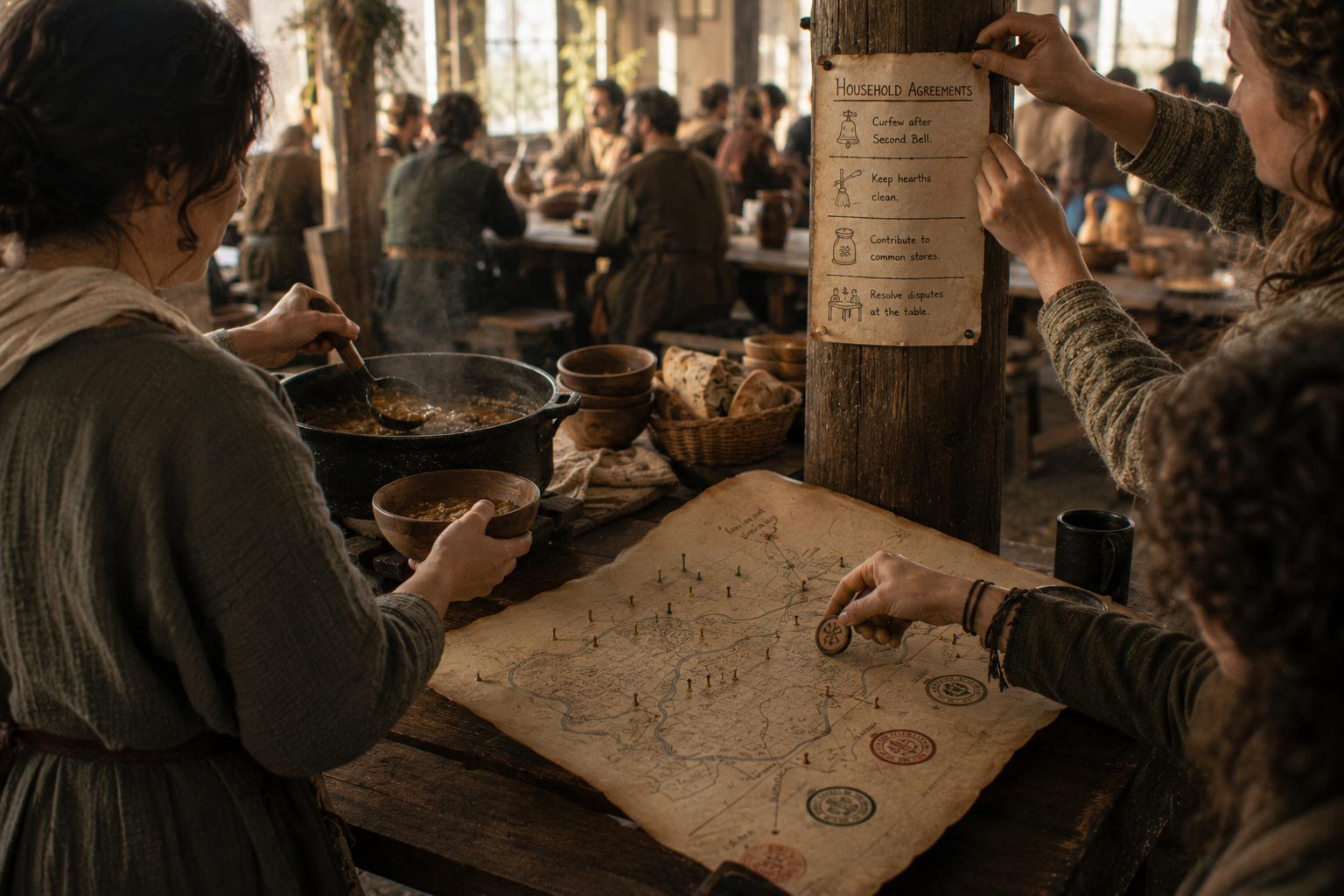
Worldbuilding often focuses on grand events and sweeping technologies, but the smallest elements can do the heaviest lifting for believability. Meals, local maps, and the tiny rules people live by give readers touchpoints to understand an imagined society. These details anchor culture, reveal status, and create everyday stakes that characters navigate. By treating mundane systems as purposeful design choices, authors make speculative worlds feel inhabited.
Meals as Cultural Signifiers
Food scenes are shorthand for social structure, ritual, and scarcity. A shared communal meal can signal kinship or obligation, while private rations reveal class division and political control. Describing what, when, and how people eat offers sensory clues and can foreshadow conflict: spoiled stores may mean failing supply chains, ceremonial dishes can hold encoded histories. Use meals to show relationships without heavy exposition.
When you craft menus and dining customs, think about resources and taboos. Small details like utensils, table placement, or serving order become narrative tools that characters react to and that readers remember. These choices also help with pacing and reveal priorities over time.
Maps, Movement, and Memory
Maps do more than orient; they encode power and perspective. The presence of roads, forbidden zones, or commemorative landmarks shapes travel, trade, and rumor. A map drawn by victors will erase villages, while one used in common households might include shortcuts only locals know. Showing how characters consult, own, or mistrust maps reveals lived experience and can generate plot-driven decisions about movement.
Physical routes also influence social networks and information flow. Consider how distance, terrain, and signage create advantages for some and barriers for others, then let those dynamics produce consequences in everyday life and larger conflicts. Map errors can become plot catalysts when assumptions fail.
Minor Rules and Daily Governance
Minor laws and social regulations regulate rhythm as much as order: laundry days, curfew bells, waste collection, and who must bow first. These rules teach characters where they fit in the hierarchy and provide friction points that reveal injustice or resistance. Even seemingly trivial ordinances can spark crises when resources change or outsiders ignore customs. Invent rules that make sense for your world’s ecology and economy so they feel inevitable rather than tacked-on.
Use violations, loopholes, and enforcement methods to create scenes that escalate. Small procedural details give plots momentum and make institutions tangible.
Conclusion
Focusing on meals, maps, and minor rules transforms abstract settings into communities readers can inhabit. These everyday elements compound to create motivations, conflicts, and emotional resonance. Thoughtful treatment of the mundane makes speculative worlds memorably plausible.