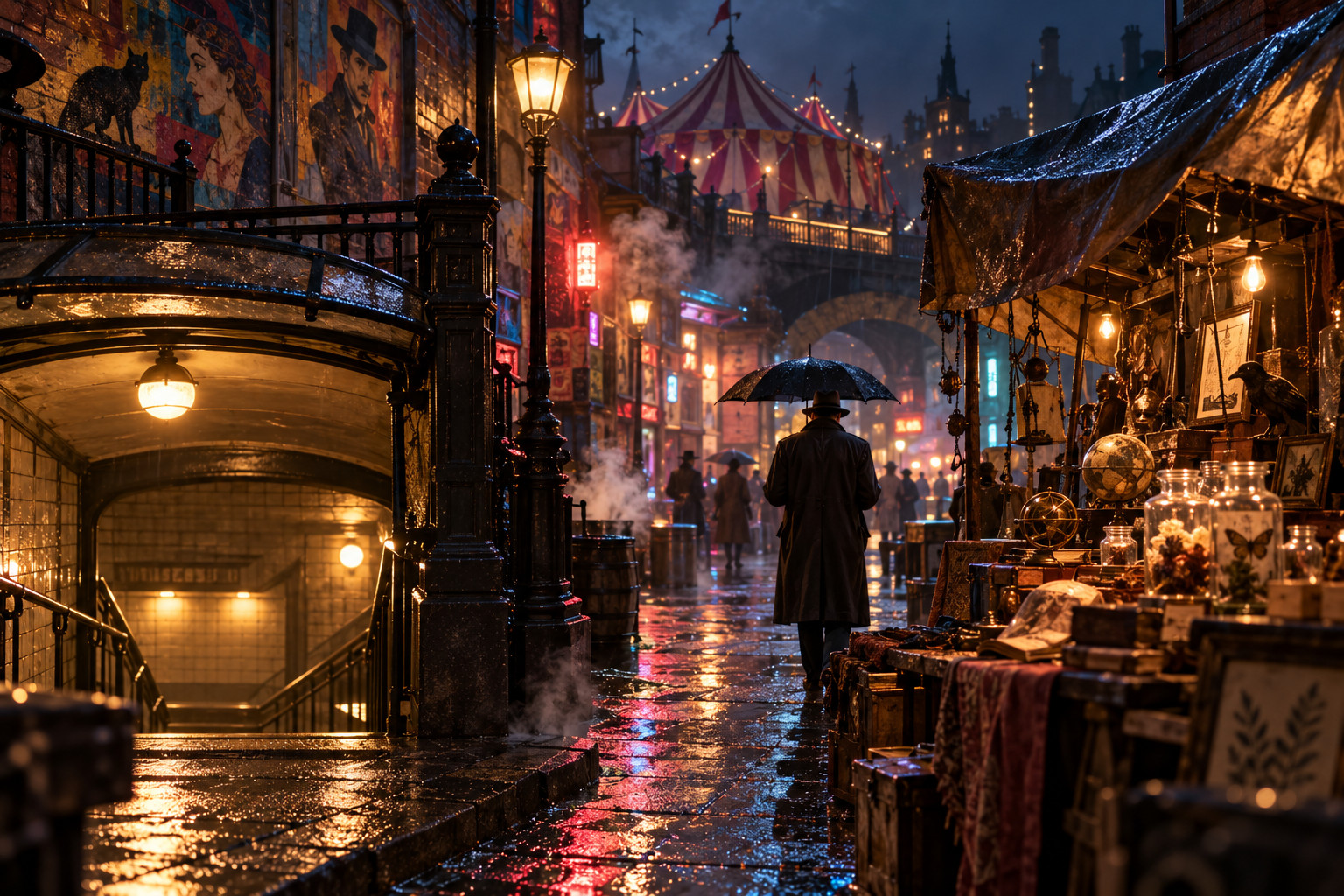
There’s a particular hum to cities after sunset: neon reflections in rain, markets that trade in secrets, alleys where the rules thin. These six novels treat night as more than backdrop — it’s a force that changes how streets behave, how magic moves, and how people survive. If you like your cityscapes shadowed, noisy, and alive in unexpected ways, these reads will keep you wandering long after lights go out.
Neverwhere — Neil Gaiman
London Below is a hidden underside of the metropolis where lost stations, strange markets, and dangerous bargains happen away from daytime commuters. Gaiman’s blend of myth and urban oddities makes the city itself feel like a character: liminal, dangerous, and oddly hospitable to those who belong to the night.
The City We Became — N. K. Jemisin
Jemisin personifies New York’s boroughs into living avatars, capturing the city’s restless energy, especially after dark. The book crackles with the politics and rhythms of urban life; nighttime scenes pulse with the voices and tensions that define a city that never truly sleeps.
Perdido Street Station — China Miéville
New Crobuzon is crowded, noisy, and often grotesquely beautiful by night. Miéville layers invention and grime so the streets feel tactile: markets, workshops, and creatures that prefer twilight. If you want a city that rewards attention to odd corners, this one will refuse to let you look away.
Night Watch — Sergei Lukyanenko
Set in contemporary Moscow, this urban fantasy centers on a supernatural police force that operates at night to keep uneasy accords between light and dark. The novel’s nocturnal patrols and city-lit confrontations make the nightscape an essential part of its moral and supernatural conflicts.
The Yiddish Policemen’s Union — Michael Chabon
Chabon reimagines a temporary Jewish settlement in Sitka, Alaska, and wraps it in noir atmosphere. The novel thrives on its rainy, neon night world — a place where displaced lives, private detectives, and soft-lit bars reveal the city’s fractured, human core.
The Night Circus — Erin Morgenstern
Although not anchored to a single city, Morgenstern’s traveling circus arrives under cover of night and transforms every town it visits. The tents, the performances, and the hush that falls on audiences create an intimate nocturnal theater where wonder feels possible and dangerous in equal measure.
Conclusion
Night changes what cities will let you see. These books offer different kinds of nocturnes — from mythic undercities to neon noir — each one a reminder that the most interesting streets are often the ones you only find after dark.