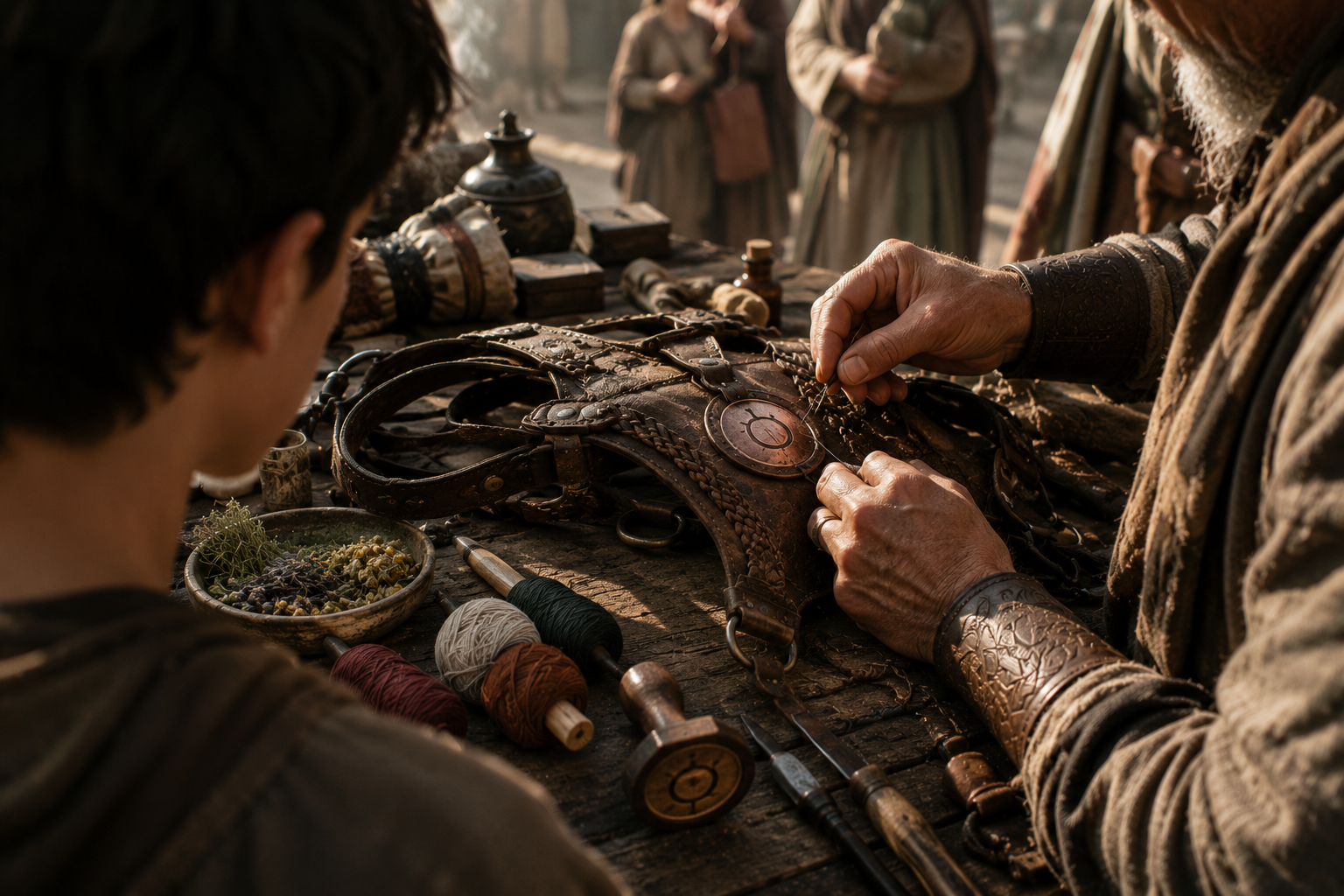
Every society keeps what it values — and the way people repair things reveals those values.
From communal patchwork on river barges to clandestine spellwrights stitching torn wards, repair practices encode status, skill, and belief.
As a writer, asking how objects are mended opens doors onto trade routes, labor structures, and private rituals.
This piece explains how to turn maintenance into a narrative engine for fantasy and science fiction settings.
Why Repair Matters
Repair binds the practical and the symbolic: a repaired heirloom carries history, while a functioning bridge sustains commerce and trust. Tradespeople who fix things often hold institutional knowledge that characters rely on, compete for, or try to control. Repair routines reveal what resources are scarce, which techniques are prized, and which failures are acceptable. Even magical or technological fixes have social consequences when they require rare materials or secret expertise.
Showing repair in detail gives a world texture without extra exposition. It demonstrates values through action: who is allowed to mend, what is hidden in repair rooms, and which repairs are public ceremonies versus private acts. Use repair to make institutions visible.
Designing Repair Rituals
Start with tools and training: who learns to wield the soldering wand, chisel, or charm-thread? Consider apprenticeships, guild oaths, and initiation tasks that teach both technique and etiquette. Define repair spaces — a sweaty forge, a sterile lab, a shrine of blessings — and the smells, sounds, and pace those places impose. Think about time: how long does a restoration take, and what social rhythms does that create? Finally, layer symbolic acts: offerings for cursed items, stamping a maker’s mark, or reciting a maintenance liturgy.
Concrete details make rituals believable. Invent a few distinctive implements, a term for botched fixes, and a short ritual that characters perform to placate objects or patrons. Those elements give readers something sensory and memorable to anchor the abstract rules of your setting.
Using Repair to Reveal Conflict
Repair can be a source of tension: scarcity turns menders into gatekeepers, competing factions vie for restoration rights, and clandestine fixes can mask crimes. Consider moral dilemmas: will a mechanic save a prized engine at the cost of someone else’s shelter? Sabotage and counterfeit repairs are excellent plot levers because they twist expected reliability into betrayal. Control of repair knowledge also maps onto power — whoever mends the city’s defenses controls its safety.
To dramatize these stakes, stage scenes around workshops, convoy stops, or ceremonial restorations. Let repairs reveal character — patience, pride, secrecy — and let failures push plots forward.
Conclusion
Small acts of fixing can reframe whole worlds.
Name the tools, map the training, and stage the rituals to give cultures depth.
Repair reveals care, control, and conflict; let it tell your story.