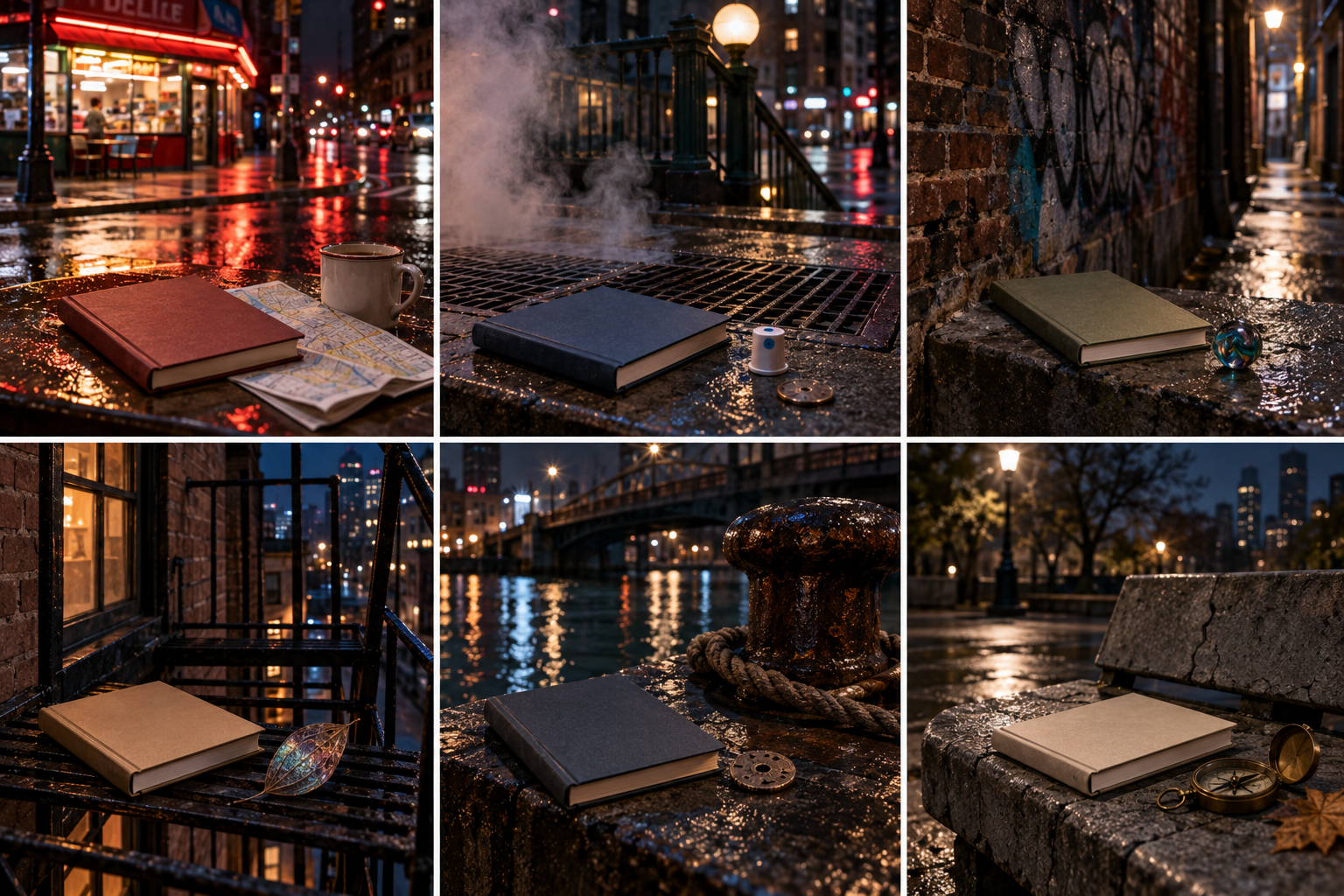
Some books treat cities as backdrops; these six treat cities as characters — stubborn, strange, seductive. If you like streets that decide outcomes, skylines that carry memory, or urban systems that shape the people inside them, each of these novels offers a different way a city can matter to a story.
The City & The City — China Miéville
Part murder mystery, part thought experiment: Two cities occupy the same physical space but are culturally and legally kept separate. Citizens “unsee” the other city; crossing its mental border is a civic crime. It’s a cool, sharp way of showing how political boundaries and social habits can be as real as brick and glass.
The City We Became — N. K. Jemisin
New York awakens as five living avatars, one for each borough, and an emergent force threatens their existence. Jemisin’s book is noisy, immediate, and joyous — a love letter to a metropolis’s textures, from subway graffiti to late-night delis — while making the city’s identity the novel’s central battleground.
Invisible Cities — Italo Calvino
Less a conventional novel and more a series of poetic city sketches, Calvino’s book is a conversation between Marco Polo and Kublai Khan. Each miniature city is a mirror or a memory: a way to think about architecture, longing, and how we describe the places we pass through.
Borne — Jeff VanderMeer
Set in a ruined, biotech-saturated city, Borne follows scavengers and the strange creature they find among the ruins. VanderMeer renders urban decay as an ecosystem — ruins that are as alive and dangerous as the corporations that created them — and makes the city’s wreckage central to the novel’s mood.
The Windup Girl — Paolo Bacigalupi
Set in a near-future Bangkok reshaped by climate change and calorie companies, this novel shows a city run on invention, scarcity, and corporate power. The urban setting is tightly integrated with the story’s politics: markets, canals, and ruined industry determine who survives and who adapts.
Dhalgren — Samuel R. Delany
Bellona is a city out of phase with itself — ruined, strange, and constantly rearranging. Delany’s prose can disorient, but the payoff is an immersive portrait of a place that changes how people behave and remember. This one’s for readers willing to live inside an urban puzzle.
Conclusion
These six novels take different approaches — political fictions, lyrical fragments, ruined eco-cities, and hallucinatory streets — but all treat the city as more than setting. If you want a book where the architecture, customs, or very idea of a city pushes the plot, pick one and let the streets decide.