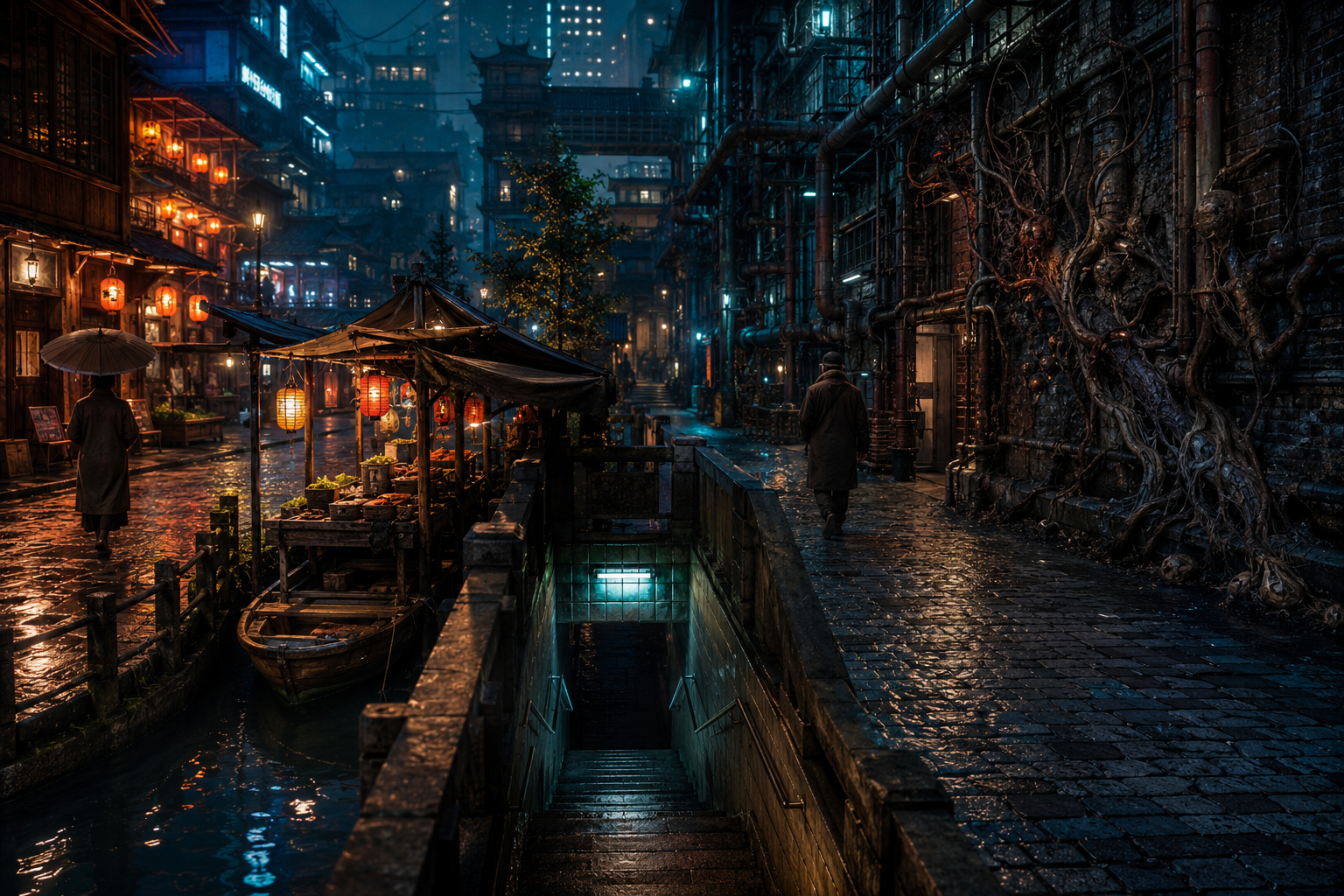
Cities in speculative fiction can be more than scenery; they behave like stubborn characters with habits, histories, and pockets of danger. Below are six novels where the urban landscape does heavy lifting—shaping mood, politics, and the kinds of stories that can be told within their streets. These picks range from subterranean tube-stations to biotech ruins. Light spoilers only when necessary and clearly marked.
The City & The City — China Miéville
Miéville stages an idea-driven mystery in two overlapping cities whose citizens are trained to ignore each other. The bureaucratic, uncanny rules about crossing borders make the municipal world itself into the puzzle you’re trying to solve. It’s a detective story that refuses to let the setting be merely a backdrop.
Neverwhere — Neil Gaiman
London Below is a shadow-city of forgotten stations, odd markets, and creatures that thrive beneath commuters’ feet. Gaiman writes it like a fairy tale for grown-ups: vivid locales, memorable minor characters, and a sense that the city remembers who has been polite and who has not.
The City We Became — N. K. Jemisin
Here a metropolis literally develops personhood through borough-born avatars defending New York from a strange invasion. The book turns neighborhoods into voices and textures—subway screech, brownstone stoops, and borough pride—so the city’s survival feels urgent and intimate. (Minor spoiler: the boroughs’ identities matter to the plot.)
Perdido Street Station — China Miéville
New Crobuzon is dense, grotesque, and endlessly inventive: markets, factories, canals, and grotesqueries all rubbing against one another. The novel glories in the city’s grime and its histories, so much so that even small alleys seem to hum with past violence and stubborn industry.
Borne — Jeff VanderMeer
Set among the ruins of a city reshaped by corporate biotech and monstrous creations, VanderMeer’s world feels claustrophobic despite its open, ruined vistas. The urban wreckage—towering buildings reclaimed by strange organisms—creates an ecosystem of its own that keeps threatening to upend the human stories within it.
The Windup Girl — Paolo Bacigalupi
Set in a future Bangkok reworked by climate change and biotech firms, this novel makes canals, markets, and corporate power central to every tension. The city’s food systems, reputations, and physical geography influence who survives and who gains leverage—an unsettling portrait of urban adaptation.
Neuromancer — William Gibson
Gibson’s sprawl—equal parts seedy, neon, and wired—established much of cyberpunk’s urban vocabulary. Chiba City, Night City, and the corporate towers are not only settings; they’re the electrical heartbeat of a story about hackers, artificial intelligences, and the mercantile forces that shape modern life.
Conclusion
If you enjoy cityscapes that press on characters instead of merely surrounding them, any of these novels will reward you with streets that remember, markets that judge, and neighborhoods that refuse to be ignored.