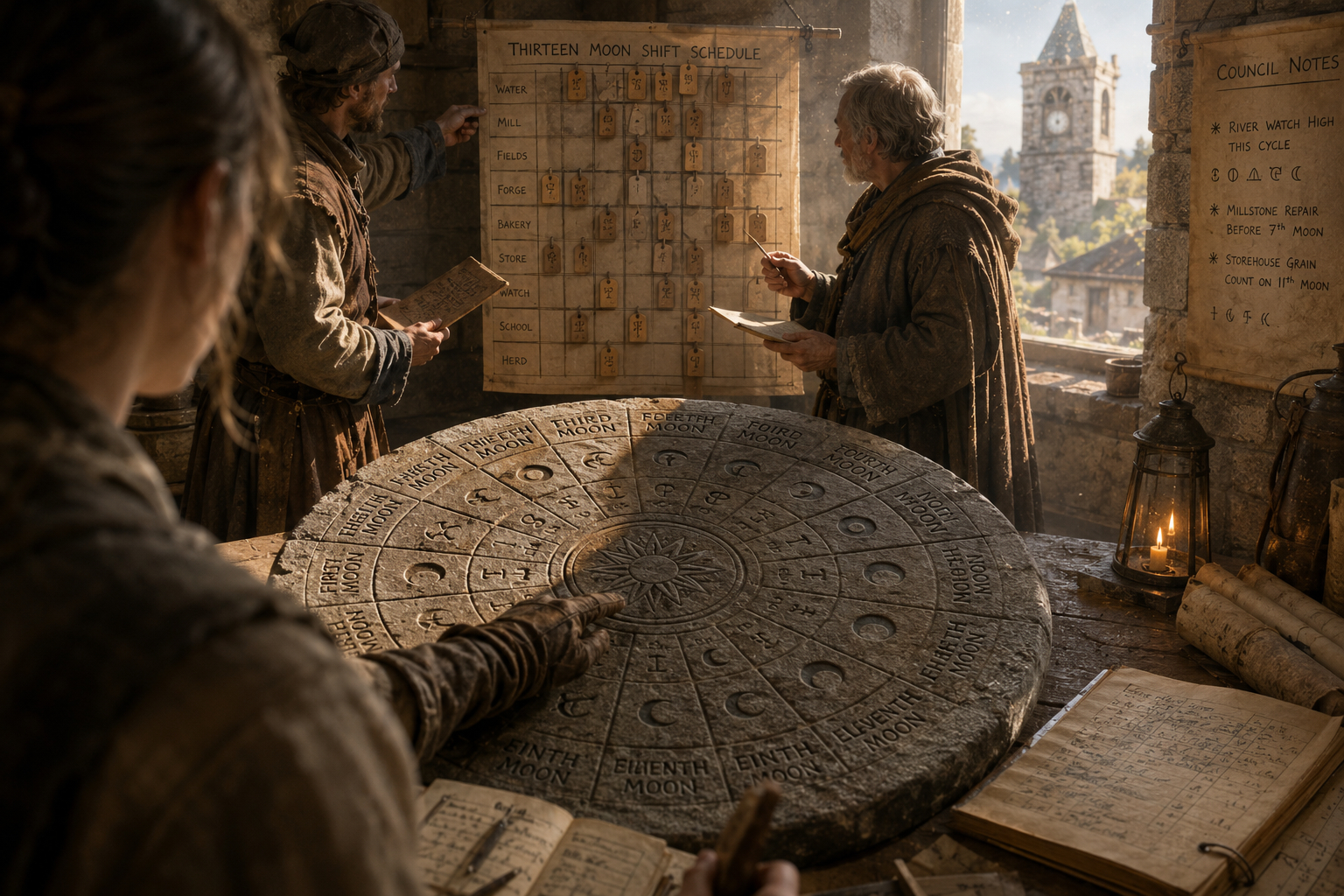
In speculative fiction, timekeeping is more than a backdrop: it organizes belief, labor, and memory. A calendar can encode triumphs and traumas, mark seasons of scarcity or abundance, and define who counts as an insider. Schedules structure daily life and can reveal power relations when access to time itself is regulated. Thinking about temporal architecture gives writers practical levers to deepen world logic and character motivation.
Calendars as Cultural Code
Calendars carry embedded histories and priorities that characters take for granted. Festivals, mourning periods, and fiscal years imply what a society values or fears, and altering when those fall can shift political rhythms. A 13-month calendar, a lunar-industrial cycle, or a ritual day of rest will shape how communities plan agriculture, warfare, and diplomacy. Use calendar design to hint at past cataclysms or technological constraints without exposition.
Grounding a calendar in sensory and institutional detail makes it feel lived-in. Have characters reference dates casually and let holidays affect commerce and travel. Small, repeated calendar references help readers internalize an alternate temporal logic.
Daily Routines That Reveal Power
Who controls the clock often controls resources and status: factory shifts, prayer times, curfews, and ritual watches all structure inequality. A ruling class that sets working hours or controls light sources can shape labor patterns and social mobility. Conversely, marginalized groups craft subversive schedules—sneaking meetings at odd hours or trading services when oversight is thin. Detail routines to show rather than tell societal hierarchies.
Show routines through character actions—preparing a morning ration, timing a signal, or missing a mandated bell—and let those small behaviors accumulate into broader social truths. Routines also offer plot hooks when disrupted.
Plotting with Temporal Disruption
Disruptions to established temporal systems create dramatic tension and narrative opportunities. A lost month, an errant clock, or a new calendar reform can catalyze unrest, reveal hidden histories, or complicate romance and migration. Temporal anomalies also let you explore subjective time—how grief slows days or how urgency compresses months into moments. Use disruptions to force characters to negotiate meaning and memory.
Design disruptions with consequences: transport delays affecting supply lines, festivals canceled to hide secrets, or synchronized alarms that fail at a crucial moment. These choices convert abstract time into immediate stakes.
Conclusion
Designing calendars and schedules gives speculative worlds internal logic and cultural texture. Thoughtful temporal architecture reveals power, shapes plot, and deepens character life. Use time itself as a tool to make imagined societies feel coherent and alive.