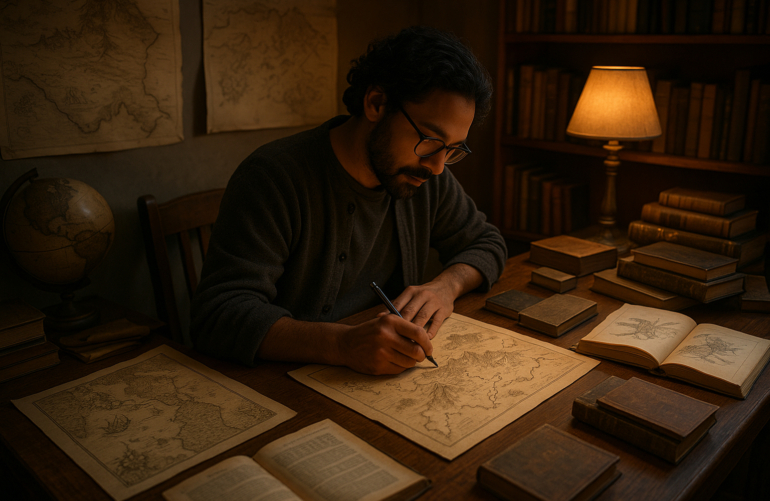
Fantasy and science fiction have long been genres that stretch imagination beyond the limits of the known world — but behind their most visionary ideas stand women who dared to redefine what stories could be. From mythical realms to distant galaxies, female authors have shaped the landscape of speculative fiction with creativity, intellect, and courage. These pioneers not only expanded the genres but also challenged societal norms, proving that imagination knows no gender.
Breaking Barriers in a Male-Dominated Field
For much of literary history, fantasy and science fiction were seen as male-dominated spaces. Yet, women have been part of these genres since their earliest days. Mary Shelley, often called the “mother of science fiction,” wrote Frankenstein in 1818 — a tale that questioned science, morality, and the essence of humanity long before the modern age. Her work set the tone for generations of writers who followed, blending emotion and intellect to explore what it means to create and to be human.
Expanding Universes and Imaginations
As the 20th century unfolded, women writers began to shape entire universes. Ursula K. Le Guin redefined both science fiction and fantasy through works like The Left Hand of Darkness and A Wizard of Earthsea. Her stories questioned power, gender, and society while crafting worlds as vast as any in the genre. Similarly, Octavia E. Butler brought new depth to science fiction by weaving themes of race, identity, and survival into her narratives. Her groundbreaking Parable series and Kindred not only expanded the genre but also gave voice to perspectives often overlooked.
The Rise of Diverse Storytelling
Today’s fantasy and sci-fi landscapes are richer than ever thanks to women who continue to push boundaries. Authors like N.K. Jemisin, the first writer to win the Hugo Award for Best Novel three years in a row, challenge conventions with stories that explore inequality, resilience, and the human spirit. Margaret Atwood, known for The Handmaid’s Tale, blurred the line between dystopian fiction and social commentary, reminding readers that speculative storytelling can be both imaginative and profoundly relevant. These voices have inspired a new generation to see speculative fiction not as escapism, but as reflection — a mirror held up to the possibilities and perils of the future.
Shaping Modern Fantasy
Women have also reimagined what fantasy can look like. From Robin McKinley’s retellings of classic myths to Naomi Novik’s richly detailed magical worlds, female authors have infused the genre with empathy, emotional depth, and complexity. Their characters often blend strength with vulnerability, showing that heroism takes many forms. These stories have expanded the notion of who can be a hero — and who can write one.
Legacy Beyond the Page
The influence of women in fantasy and science fiction extends beyond literature. Their stories inspire films, video games, and cultural movements that champion creativity and inclusion. By challenging stereotypes and offering fresh perspectives, these authors have ensured that the genre continues to evolve. They remind us that imagination, when combined with courage, can change how we see the world — and ourselves.
Conclusion
The women pioneers of fantasy and science fiction didn’t just tell stories — they changed the narrative. Through their vision, they transformed speculative fiction into a space for exploration, empathy, and empowerment. Their legacies continue to inspire dreamers, writers, and readers alike to imagine without limits. In worlds filled with dragons, starships, and endless possibility, their voices remind us that the greatest adventure is the freedom to create.