Short personal essays rely on a clear path that guides readers from moment to meaning. Designing narrative flow means choosing what to show, what to summarize, and where to pause. That shape reduces reader work and highlights the essay’s purpose without forcing artificial invention. A compact essay benefits when each scene serves a single through-line. That discipline lets the essay live within a compact frame while still earning its insights.
Choose a guiding thread
Start by identifying the central question, image, or emotional shift you want the essay to answer. That guiding thread should be narrow enough to travel through scenes without branching into unrelated digressions. When it is clear, editing choices become simpler because you can test every detail against that thread. A strong thread helps preserve momentum and clarifies transitions between moments. Let those tests guide cuts and expansions during revision to keep the essay lean.
Write a one-sentence statement of the thread to keep drafts focused. Refer back to it during revision to avoid stray material.
Select and shape scenes
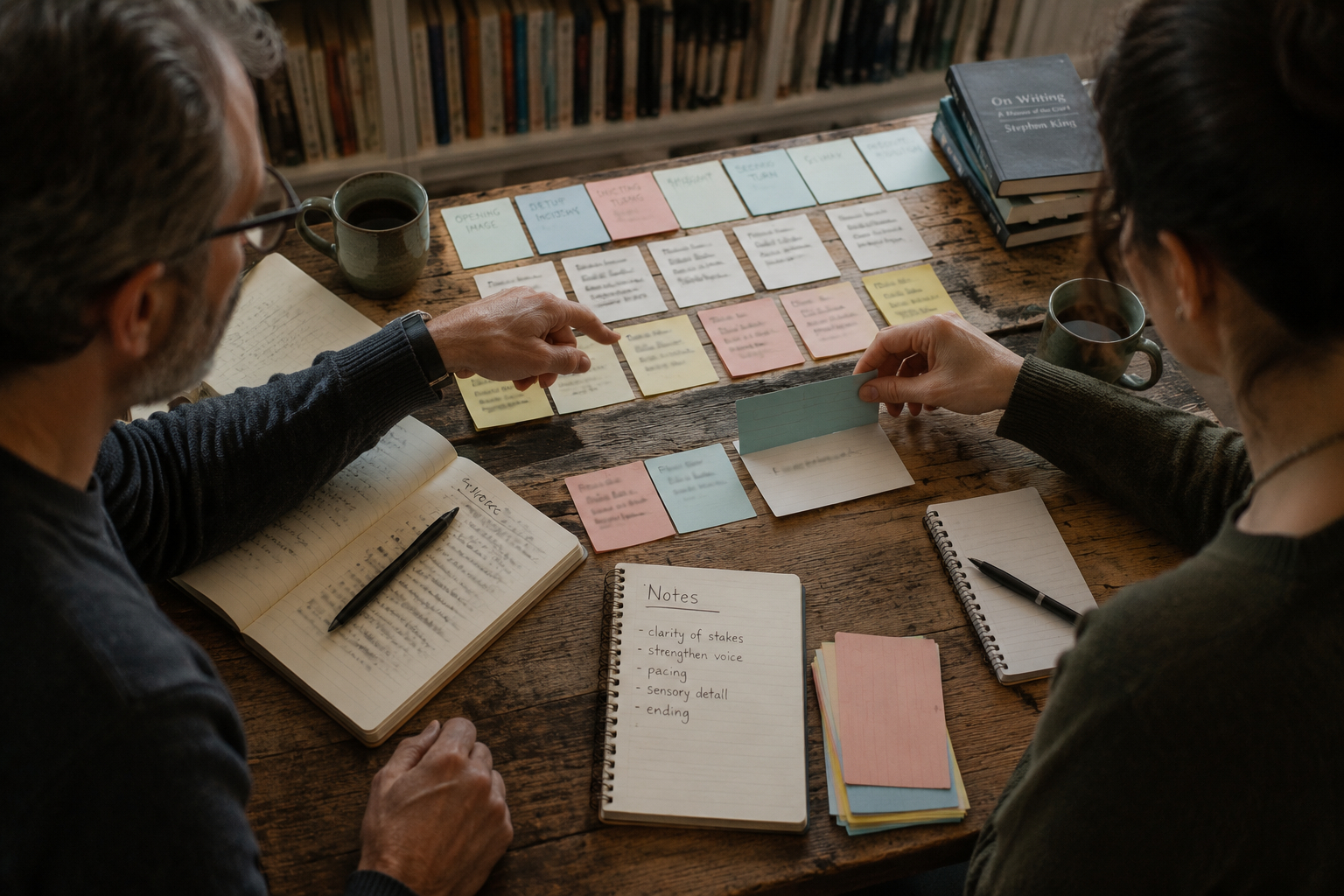
Pick a few scenes that visibly change something — perception, situation, or feeling — rather than piling up anecdotes. Show sensory detail that anchors the reader but avoid exhaustive cataloguing; selective concrete images create intimacy and economy. Use short scenes to build contrast, then place a fuller scene where the essay needs breathing room. Scene choice determines pacing as much as sentence length. Balance sensory specifics with narrative movement so description supports argument, not replaces it.
Choose scenes that move the thread forward and let other’s moments fall away. This keeps the essay tight and purposeful.
Arrange and trim for emotional logic
Order scenes not by chronology alone but by the logic of feeling and insight. Sometimes beginning with the most revealing moment then circling back can give the essay traction; other times a chronological build creates necessary suspense. During revision, ruthlessly trim anything that doesn’t alter the reader’s understanding or emotional stance. Tightening sentences often reveals what the essay truly wants to say. If a scene does not shift perspective or advance the thread, consider removing or condensing it.
Consider paragraph breaks and sentence rhythm as tools to guide attention. Small structural edits can dramatically clarify the flow.
Conclusion
A clear narrative flow does more than organize events; it guides the reader to meaning. Start with a single thread, choose scenes that serve it, and keep editing with that aim. The result is an essay that feels inevitable rather than random.