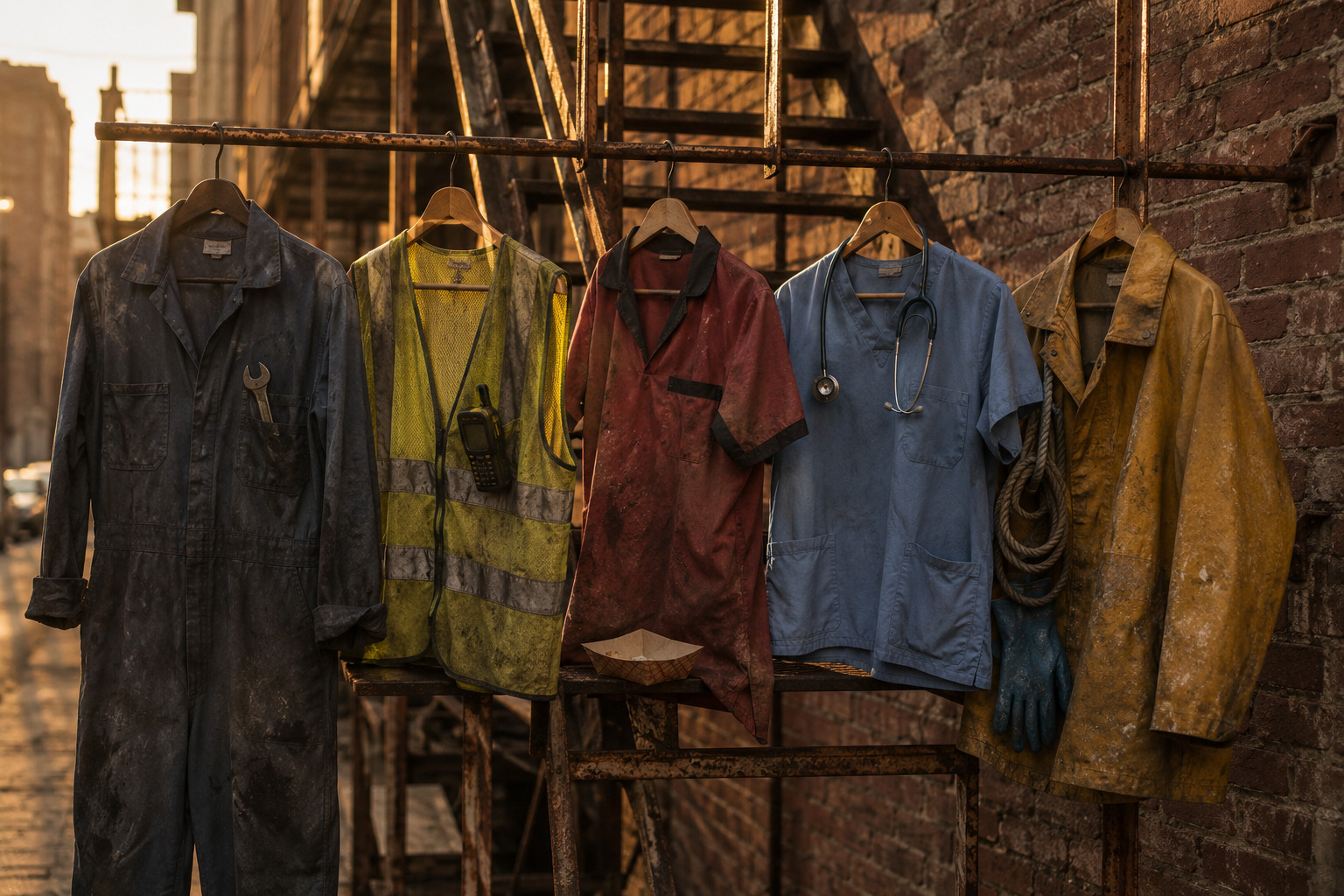
Work shapes daily rhythms, private anxieties, and whole communities—sometimes in ways we barely notice. The five nonfiction books below lift the curtain on ordinary jobs and hidden workplaces, from hospital nights to offshore vessels, from motorcycle garages to fast-food counters. If you want reading that connects the personal and the structural, with vivid scenes and real people, any of these will send you home thinking differently about the hours you keep.
Nickel and Dimed — Barbara Ehrenreich
Ehrenreich’s classic exposes the realities of low-wage survival by living it herself. She tries housecleaning, waitressing, and retail work, and the sharp, sometimes wry reporting reveals how tight budgets and unpredictable schedules squeeze dignity and choice. Read this if you want vivid, on-the-ground journalism that shows how employers, towns, and labor conditions interact to shape everyday life.
On the Clock — Emily Guendelsberger
Guendelsberger spent time inside several modern workplaces—call centers, fulfillment warehouses, fast-food chains—to understand how contemporary management and technology affect workers’ bodies and minds. Her reporting is immediate and often unflinching; it’s useful for readers curious about algorithmic scheduling, surveillance at work, and what “efficiency” feels like from the inside.
Working — Studs Terkel
This oral-history landmark stitches together interviews with miners, teachers, waiters, and CEOs. The charm is in the voices: people speak plainly about pride, boredom, and the small rituals that make a shift bearable. Terkel’s book is a reminder that a job is more than pay—it’s identity, social life, and memory. Dip into individual interviews or read straight through; either way the human variety is striking.
Shop Class as Soulcraft — Matthew B. Crawford
Crawford, who runs a motorcycle-repair shop, argues for the intelligence of hands-on, mechanical work. Part memoir, part philosophy, the book considers satisfaction, competence, and autonomy found in tangible tasks. If you’re drawn to essays that celebrate craft and query why certain kinds of labor are undervalued, this one offers both thought and concrete scenes from a busy garage.
The Outlaw Ocean — Ian Urbina
Urbina’s reporting shifts the frame to the seas, where fishing fleets, cargo ships, and floating labor markets operate with little oversight. These are often extreme stories—violence, lawlessness, environmental harms—but they’re also stories about livelihoods and the people who keep global trade moving. The narrative stretches your sense of what “work” can be and why distant labor practices matter on shore.
Conclusion
Each of these books turns routine labor into compelling narrative, whether through immersive reporting, interviews, memoir, or philosophical reflection. Together they offer a fuller picture of how work shapes who we are and the societies we build.