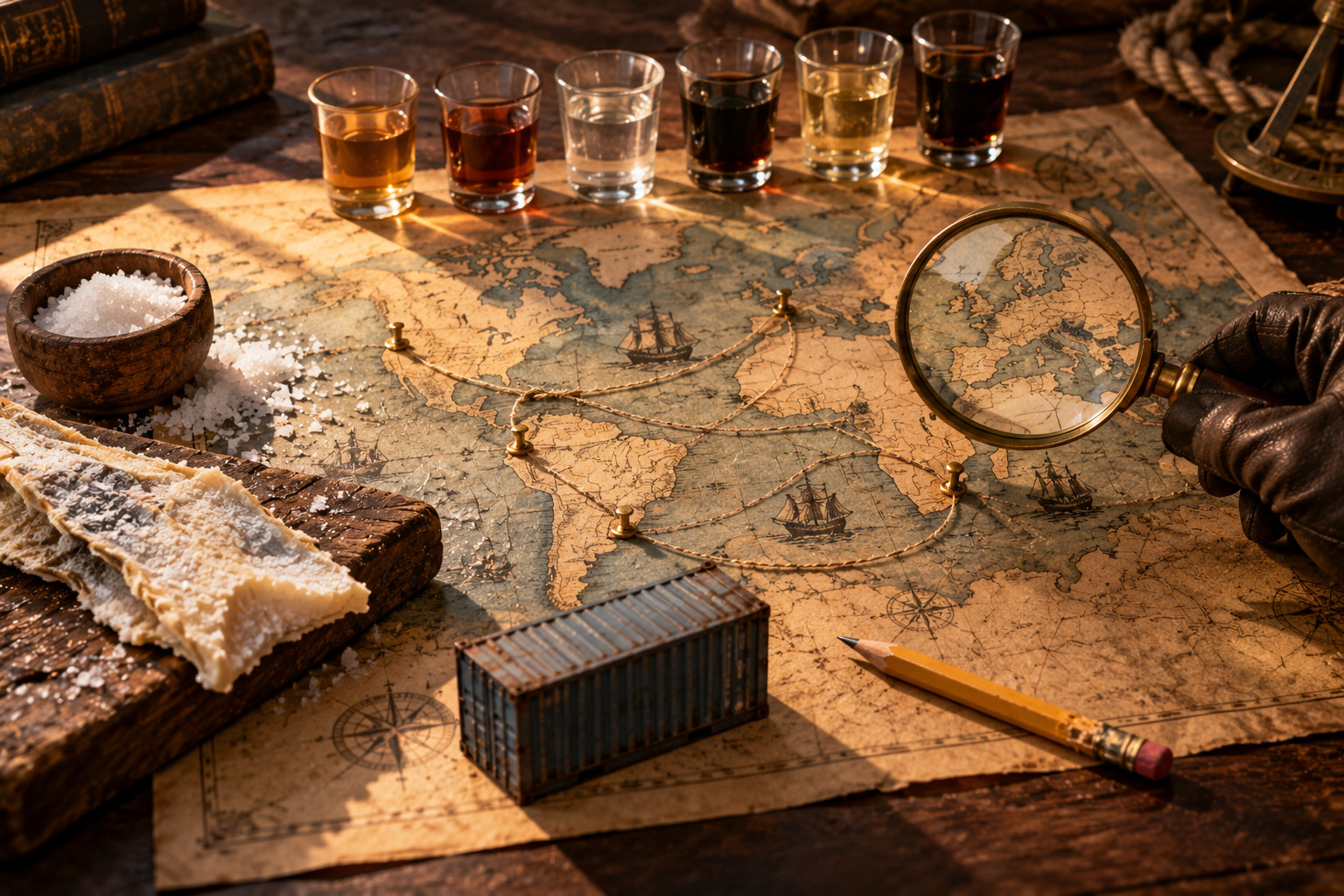
There’s a stubborn pleasure in picking up an ordinary object and finding an entire past inside it. Microhistories do that work: they follow a single thing and, in the process, reveal trade routes, political ambitions, everyday habits and surprising shifts in power. Below are five readable, surprising books that begin with a simple object and end by changing how you see whole periods of history.
Salt: A World History — Mark Kurlansky
Kurlansky’s classic takes a table staple and shows how extraction, preservation and taxation shaped empires. The book moves from ancient salt roads to modern industry, mixing lively anecdotes with clear explanations of why a mineral mattered to soldiers, merchants and cooks alike. Read it if you want a single thread that ties food, economy and war together.
Cod: A Biography of the Fish That Changed the World — Mark Kurlansky
Another deep dive by Kurlansky, this one follows saltfish across oceans and centuries. Cod becomes a lens on migration, colonial competition and the diets that fed entire nations. The narrative is surprisingly global: fisheries, markets and kitchens are all part of the same story.
The Box: How the Shipping Container Made the World Smaller and the World Economy Bigger — Marc Levinson
Levinson shows how a steel box and a simple idea—standardization—remade the global economy. The book reads like an engineering and economic detective story: ports, trucking, labor disputes and supply chains fall into place around one innovation. It’s the kind of history that explains why something technical changes everyday life everywhere.
The Pencil: A History of Design and Circumstance — Henry Petroski
Petroski examines design through the humblest of tools. The pencil’s evolution—materials, manufacturing, even the shape of the eraser—becomes an argument about creativity, failure and incremental improvement. If you enjoy histories that find philosophy in the workshop, this one rewards close attention.
A History of the World in 6 Glasses — Tom Standage
Standage threads six beverages—beer, wine, spirits, coffee, tea and cola—through economic and cultural history. Each drink stands for a set of institutions and ideas, offering a brisk, readable tour from ancient Mesopotamia to twentieth‑century consumer culture. It’s conversational, wide-ranging and often illuminating.
Conclusion
Pick any of these and you’ll find a compact, surprising route into larger forces: trade and empire, technology and taste, labor and design. Microhistory asks you to look closer, and then rewards you with a broader view of how the ordinary things around us carried the weight of history.