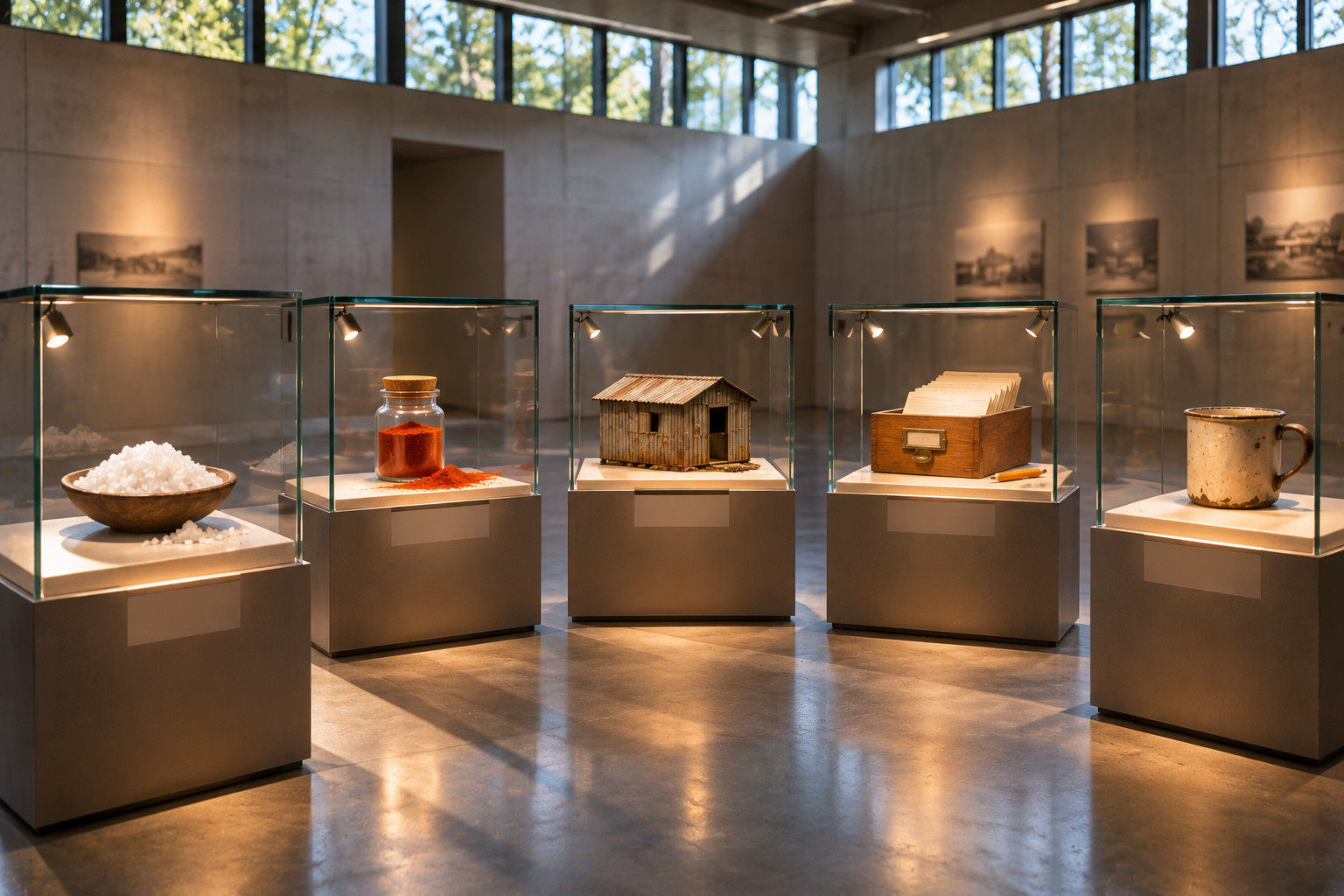
You don’t need a palace or a battlefield to find sweeping stories. Everyday objects and common places often carry the imprint of trade, taste, power, and accident. The five books below each take a single slice of the ordinary — salt, color, libraries, containers, and museum objects — and show how those slices refract much larger human stories. If you like narrative history that starts with a concrete thing, these reads make the familiar feel newly strange and revealing.
A History of the World in 100 Objects — Neil MacGregor
MacGregor uses artifacts from the British Museum to sketch broad historical arcs. Each short chapter centers on a single object — from a carved ivory to a clay seal — and uses that object as a doorway into trade networks, belief systems, and everyday life across centuries. It’s an anthology of attention: small, vivid lenses that add up to a surprisingly generous portrait of global history.
Salt: A World History — Mark Kurlansky
Kurlansky turns a pantry staple into a moving narrative about economy, diet, and state power. Salt’s materiality — how it’s produced, taxed, and prized — becomes a way to follow migrations, wars, and cuisines. The book reads like a guided tour through maps of appetite and authority, making the crystalline familiar suddenly central to political and social change.
The Box: How the Shipping Container Made the Modern World — Marc Levinson
This is the history of a rectangle. Levinson shows how the standard shipping container quietly rearranged global trade, labor, and city ports. It’s a reminder that design decisions about mundane tools ripple outward: faster movement of goods reshapes factories, neighborhoods, and the geography of jobs. The world looks different when you trace it from a corrugated steel box.
The Library Book — Susan Orlean
Orlean’s portrait of Los Angeles’s Central Library mixes a mystery about a 1986 fire with a loving examination of why libraries matter. Libraries are public, everyday spaces many of us take for granted; in her hands they become civic organisms, repositories of memory, and sites of social change. The book feels both intimate and civic, a study of place that depends on ordinary objects — books, cards, stacks — to tell its story.
The Secret Lives of Color — Kassia St. Clair
St. Clair treats individual hues as entry points into art, commerce, and symbolism. Each color’s history — from the extraction of pigments to their cultural meanings — reveals episodes of trade, chemistry, and creativity. It’s a lively reminder that what seems aesthetic often has a practical, sometimes fraught past.
Conclusion
Pick any of these and you’ll find a patient curiosity at work: attention to small things that reveals how people lived, worked, and imagined the world. These books are invitations to look more closely at the ordinary around you — and to see history waiting in plain sight.