Change can feel overwhelming when goals seem distant, but small consistent actions bridge that gap.
By focusing on manageable steps you reduce friction and build momentum that compounds over time.
This method works with busy schedules and helps maintain motivation without dramatic upheaval.
Below are practical ways to design, track, and sustain micro-actions that reshape daily life.
Why small actions matter
Small actions change the energy around a habit without demanding perfect performance, and that matters for long-term follow-through. When a task is easy to start, you remove the primary barrier: inertia. Small wins create immediate feedback loops, and those positive signals encourage repetition. Over weeks and months, the accumulated effect of modest behaviors can produce measurable improvements in health, focus, and wellbeing.
These shifts are less about willpower and more about environment and repetition. Aiming for gradual consistency often outperforms sporadic intensity because it becomes part of identity and routine.
Designing micro-habits
Design begins with clarifying the smallest possible step that still moves you forward, then tying it to a specific cue. Use time, location, or an existing habit as a trigger and decide on one action that takes two to five minutes. Make the cue obvious and the reward immediate to reinforce the loop.
– Examples: place a water bottle on your desk, write one sentence after lunch, do five minutes of stretching before bed.
– Keep each step predictable so decision fatigue doesn’t stop you.
Start tiny, celebrate the routine, and gradually expand the action once consistency is established.
Tracking progress and staying flexible
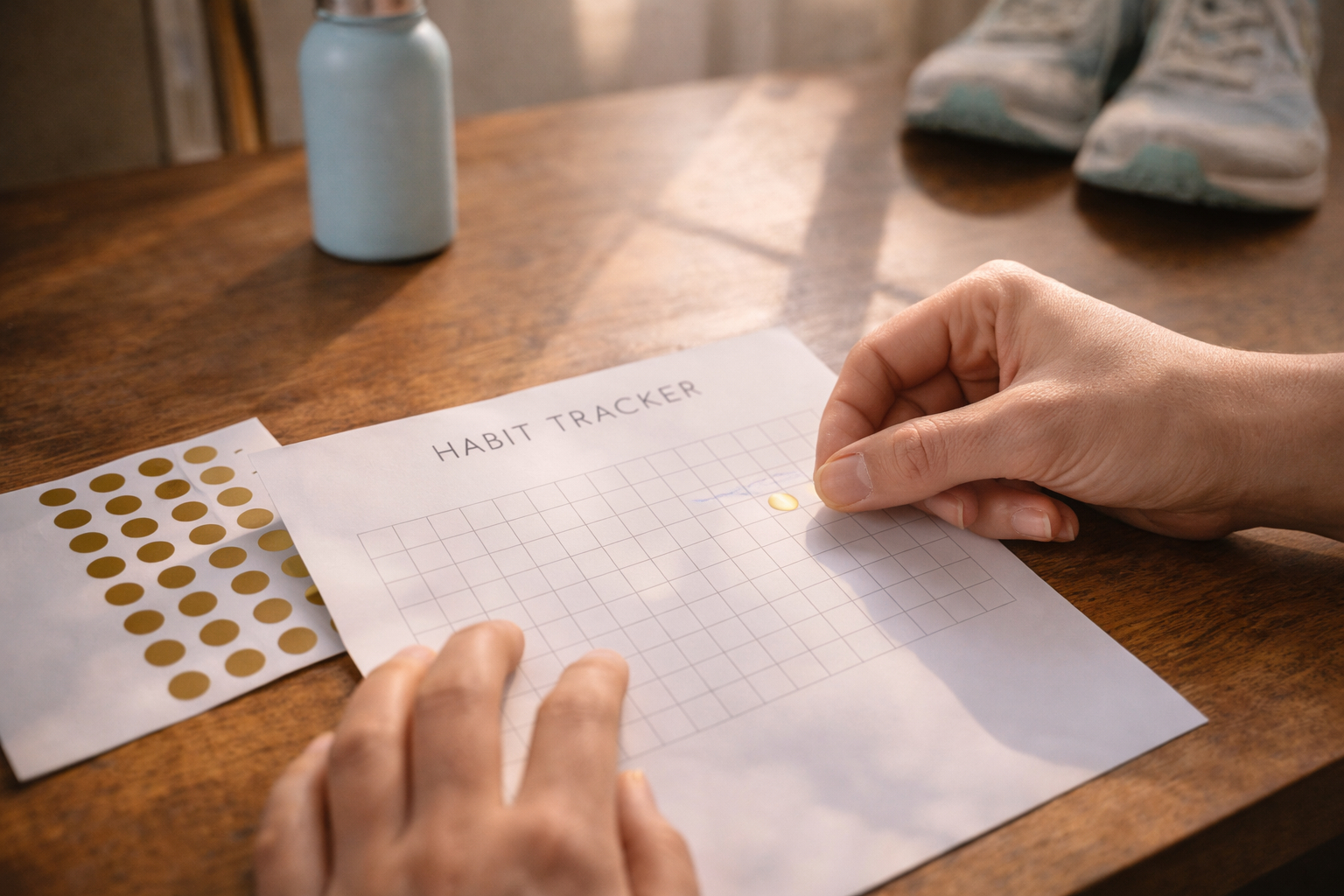
Simple tracking sustains momentum because it externalizes progress and highlights patterns. A brief daily log, a habit app, or a mark on a calendar gives visual proof of consistency and helps identify when adjustments are needed. Review weekly to see what’s working and where friction appears.
If a habit stalls, pause to reassess the cue or reduce the step even more; flexibility keeps the system resilient and prevents abandonment.
Overcoming common obstacles
Resistance often shows up as all-or-nothing thinking, time scarcity, or unrealistic expectations. Tackle these by reframing success as showing up rather than perfect output, and by shortening the required time to make the first step trivial. Create contingency plans for busy days and build accountability through brief check-ins with a friend or a tracker.
– Quick fixes: halve the time requirement, change the cue, or pair the action with something enjoyable.
– Avoid scaling too fast; premature expansion increases friction.
Adopt an iterative mindset: small experiments reveal what sticks, and repeated refinement leads to durable habits.
Conclusion
Micro-actions compound into meaningful change when practiced reliably over time.
Start with the smallest feasible step, attach it to a clear cue, and track consistency.
Over months, these modest behaviors reshape routines and create lasting momentum.