Personal experience is the heart of powerful non-fiction writing. It bridges the gap between facts and emotions, transforming information into stories that connect with readers on a deeper level. When authors draw from their own lives, they invite readers to see, feel, and understand the world through their eyes — making truth not just told, but felt.
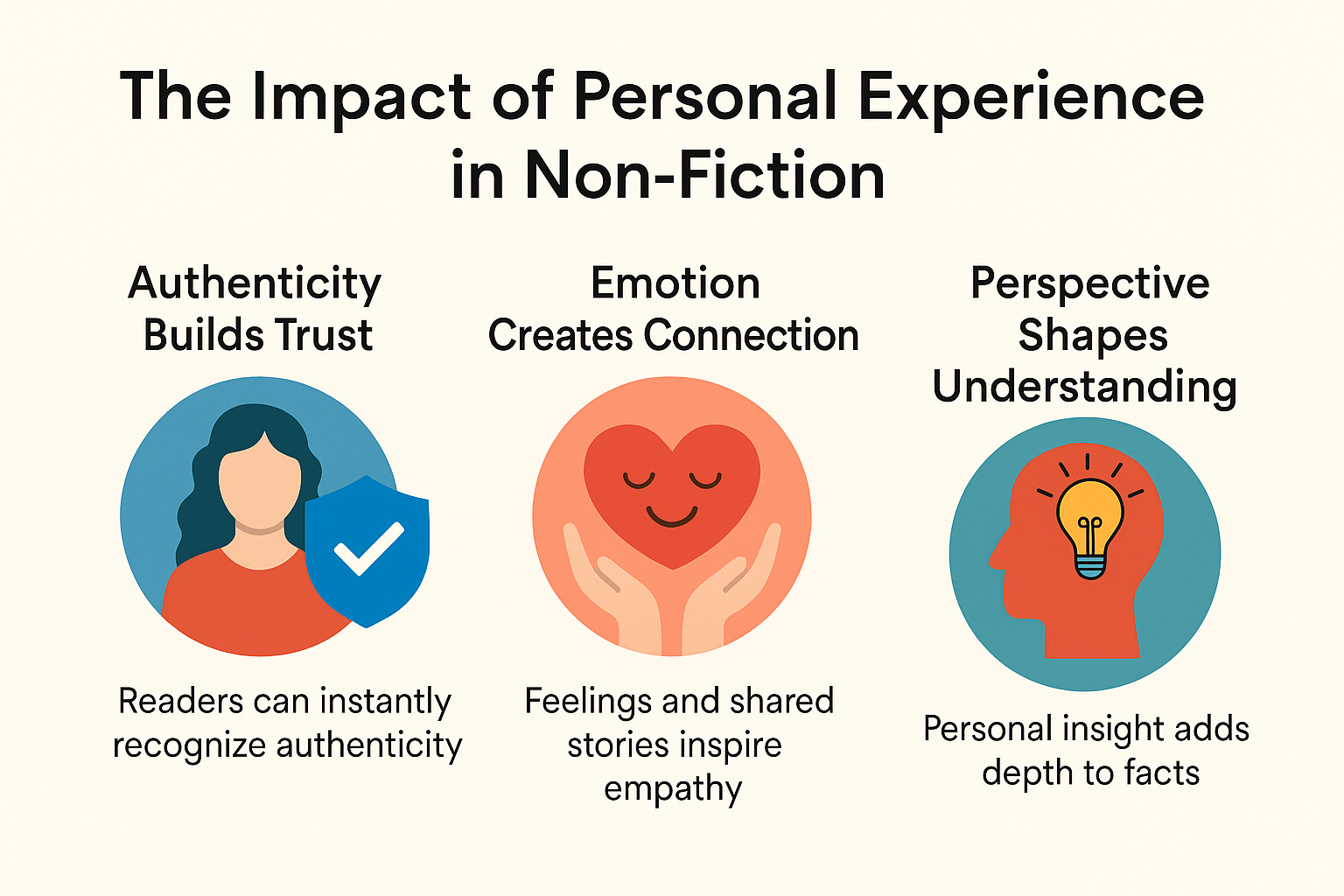
Authenticity Builds Trust
Readers can instantly recognize authenticity. When a writer shares genuine experiences, even small moments of vulnerability or struggle, it builds credibility and trust. This openness makes the story more human, allowing readers to relate and reflect on their own experiences.
Emotion Creates Connection
While facts inform, emotions inspire. Personal experiences add color and depth to non-fiction, turning data and events into meaningful narratives. Whether it’s a memoir, essay, or investigative piece, emotions serve as the link that helps readers empathize and stay engaged.
Perspective Shapes Understanding
Every person’s experience offers a unique lens through which the world can be interpreted. Writers who share their journey don’t just tell a story — they shape the reader’s understanding of complex issues like identity, resilience, or social change. Personal insight adds nuance that pure analysis often can’t achieve.
Conclusion
Personal experience transforms non-fiction from mere storytelling into truth-telling. It allows writers to weave facts with feelings and turn lessons learned into wisdom shared. In the end, it’s our lived experiences that give non-fiction its soul — reminding readers that every story, no matter how personal, can hold universal meaning.