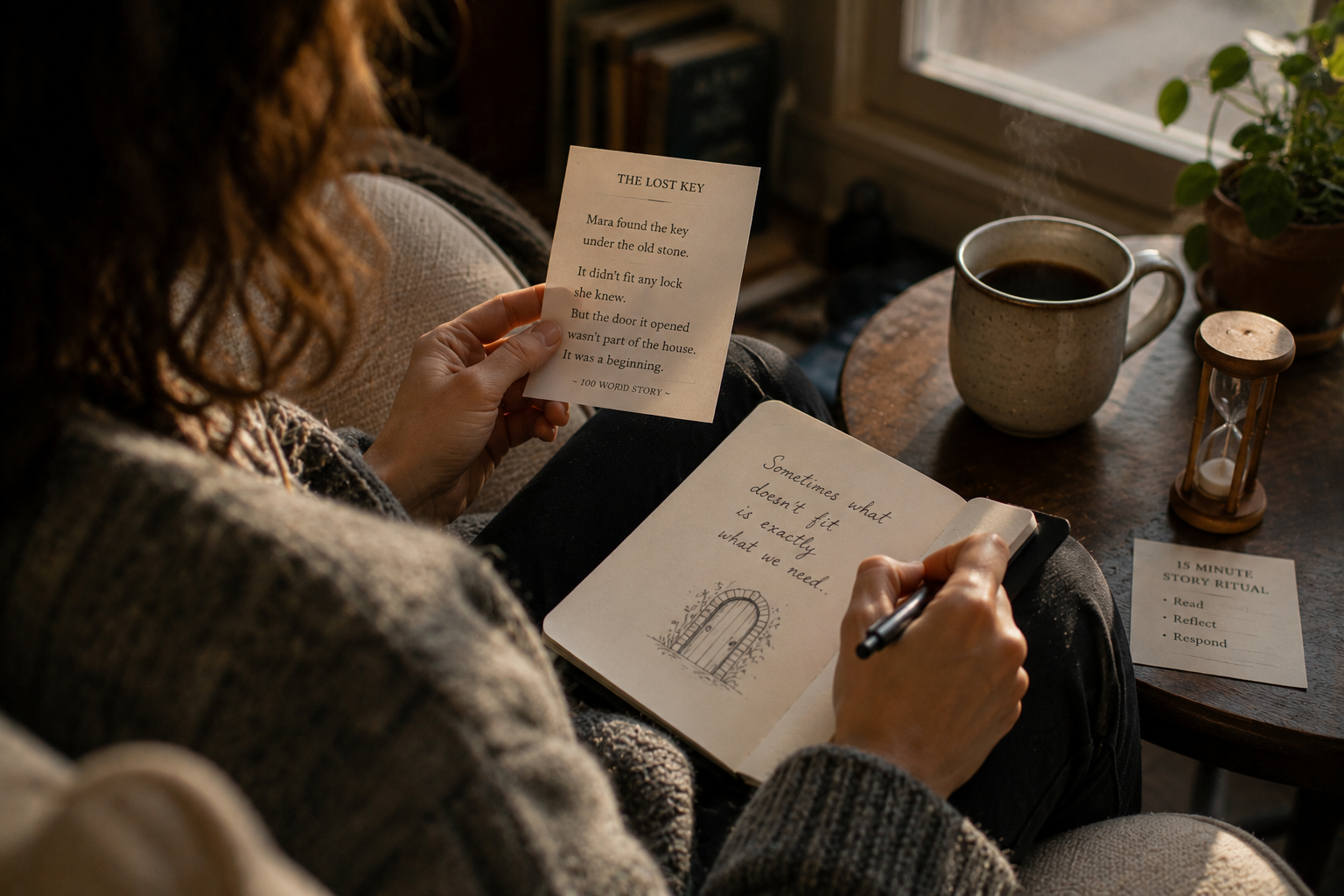
Short stories offer a concentrated space for imaginative work, making them ideal for busy readers who still want to nurture creativity. A compact reading ritual turns brief narratives into deliberate practice: a way to reset attention, encounter strange perspectives, and gather mental material for later use. When practiced regularly, these short engagements can sharpen observation and reduce the friction of starting creative projects. This piece outlines practical steps to design a reliable, low-pressure reading habit that supports sustained creative thinking.
By keeping the ritual short and structured you avoid decision fatigue and create an inviting entry point for daily imagination. The suggestions that follow are flexible and meant to be adapted to individual schedules and tastes.
Why Short Stories Shift Perspective
Short fiction compresses character, setting, and conflict so that each image and sentence carries more weight than in longer forms. That density forces readers to fill in gaps, exercise inference, and practice empathy within minutes rather than hours. These micro-experiences stimulate associative thinking, often offering unexpected linkages that can seed new ideas. Regular exposure trains the mind to recognize narrative cues and metaphorical potential in everyday observations.
Because a short story can be finished in one sitting, it also completes a cognitive arc quickly, delivering satisfaction and a sense of progress. That completion helps maintain momentum when used as a creative warm-up.
Designing a Five- to Fifteen-Minute Ritual
Choose a predictable time and place for your ritual so it becomes automatic: morning coffee, a midday pause, or an evening unwind are all effective anchors. Keep a small selection of stories on hand—printed slips, a dedicated folder, or a bookmarked list—so you never spend effort deciding what to read. Pair the reading with one simple response: a sentence, a sketch, or a note about a striking image to translate the experience into practice.
- Set a timer for 5–15 minutes to frame the session.
- Select a single short story and read deliberately, not speedily.
- Capture one line of response immediately after reading.
These constraints make the ritual manageable and meaningful, encouraging consistency without pressure. Over time those brief responses form a personal archive of literary prompts.
Tracking Benefits Without Pressure
Instead of measuring output by page count or productivity, track small qualitative shifts: moments of surprise, new metaphors, or ideas you return to. A simple habit tracker or a weekly review of responses reveals patterns and creative growth without turning the practice into another chore. Notice how your attention and associative fluency change, particularly on days you maintain the ritual.
Keeping the tone curious rather than evaluative preserves the ritual’s value as nourishment rather than obligation. Let it be a steady source of inspiration rather than a metric-driven task.
Conclusion
A short, repeatable reading ritual lowers the barrier to daily creative work and feeds idea generation with minimal time investment. By anchoring sessions, capturing one immediate response, and tracking gentle benefits, readers turn brief stories into sustained creative practice. Over weeks, these compact encounters compound into a richer imaginative habit that supports projects of all sizes.