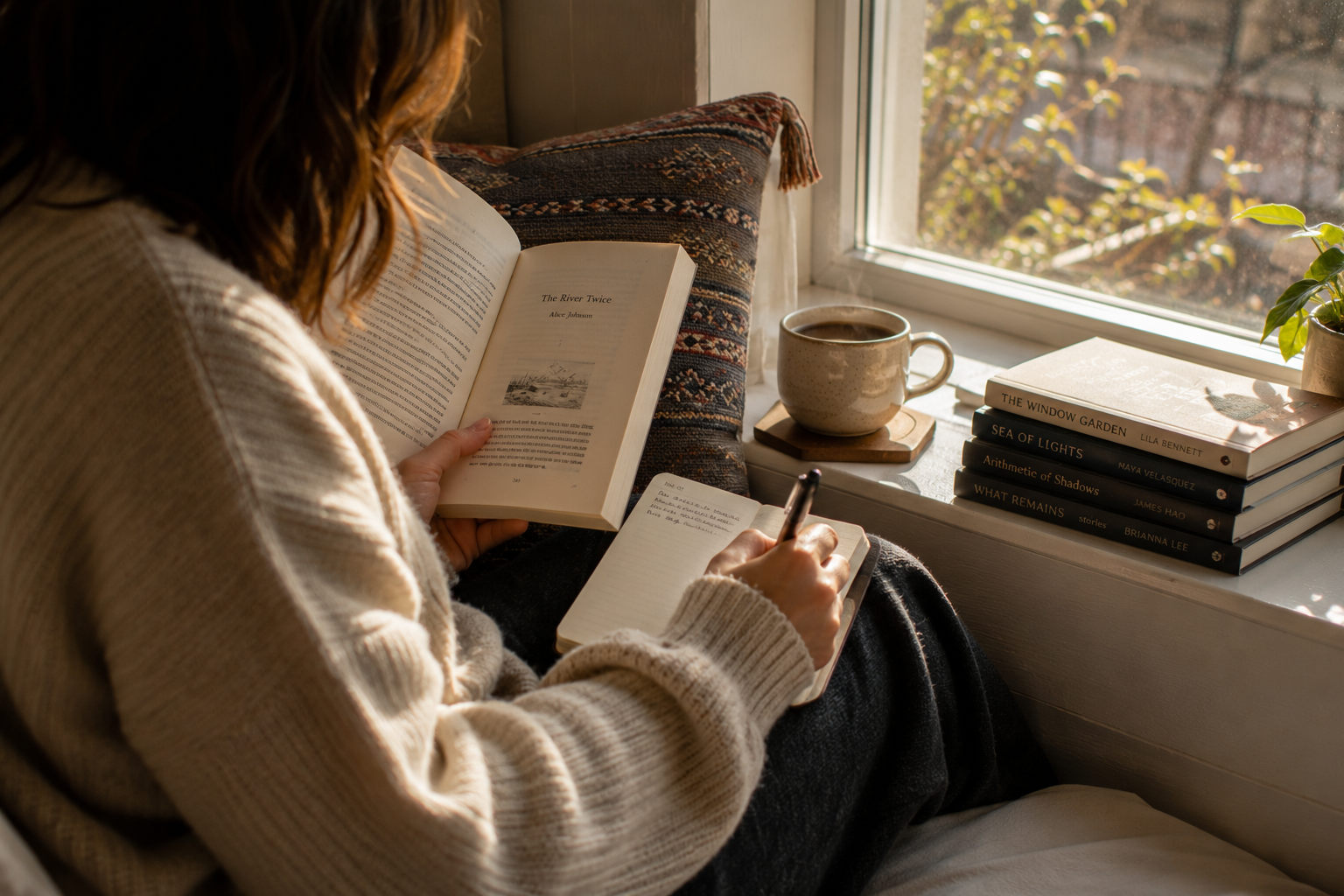
Short stories are ideal for focused creative practice because they fit into small windows of time between other commitments. They offer complete arcs and concentrated language that train attention, empathy, and imaginative play. A brief, repeatable routine can turn reading a single story into a habit that refreshes thinking, surfaces ideas, and improves craft. This article outlines a simple, adaptable framework to make short fiction a consistent tool for creative clarity and daily inspiration.
Why short stories make effective micro-practices
Short stories compress narrative elements—character, conflict, and resolution—into a compact form that rewards close reading and quick analysis. That compression forces readers to attend to language, nuance, and structure in ways longer works sometimes dilute, sharpening perception. Regularly exposing yourself to these condensed choices helps you recognize effective narrative moves, internalize patterns, and borrow rhythms into your own work. Beyond craft, the emotional range of short fiction provides quick, meaningful experiences that can reframe a problem, clarify a feeling, or supply a fresh metaphor.
In practice, this makes short stories a practical tool for both targeted craft study and quick mental reset. You can notice tangible benefits in just fifteen to thirty minutes of focused reading and reflection.
A simple three-step session
Design a brief ritual you can repeat reliably: select with intention, read attentively, and reflect with purpose. Consistency matters more than length, so keep sessions manageable, specific, and forgiving to encourage continuity. Below is a compact, flexible sequence to follow whenever you open a story during a short slot of time.
- Select a story that fits your available time—anything from a microfiction to a three-thousand-word piece—and aim for variety over similarity.
- Read once for enjoyment, then a second pass noting striking language, pivotal character moments, and any structural or tonal turns you hadn’t noticed before.
- Capture one practical takeaway: a line worth memorizing, a scene shape to emulate, or a specific strategy to try in your next draft or exercise.
Over several weeks, the repeated attention builds discernment, idea accumulation, and a mental library of techniques. Treat each session like a micro-practice rather than a performance, which keeps the habit sustainable and low-pressure.
Adapting the habit to your daily life
Anchor the session to an existing routine—morning coffee, a commute, or an evening wind-down—to turn it into an automatic habit rather than extra work. Rotate authors, forms, and tones so you train varied senses: voice, pacing, dialogue, and image-making. If time is scarce, read a single page and jot one reaction; if you have more time, annotate, outline, or discuss the story with a peer or group. Keeping a simple log of titles, notes, and one-line takeaways helps you notice progress, spot patterns, and maintain momentum over months.
The aim is cumulative improvement and recurring inspiration drawn from compact experiences. Small, steady practice yields disproportionate creative returns when sustained.
Conclusion
Short stories are a practical, scalable way to sharpen craft, refresh thinking, and encounter diverse voices.
A compact routine—select, read, reflect, record—fits into busy schedules and compounds into meaningful creative growth.
Start small, stay consistent, and let brief fiction reshape how you notice language, structure, and fresh ideas.