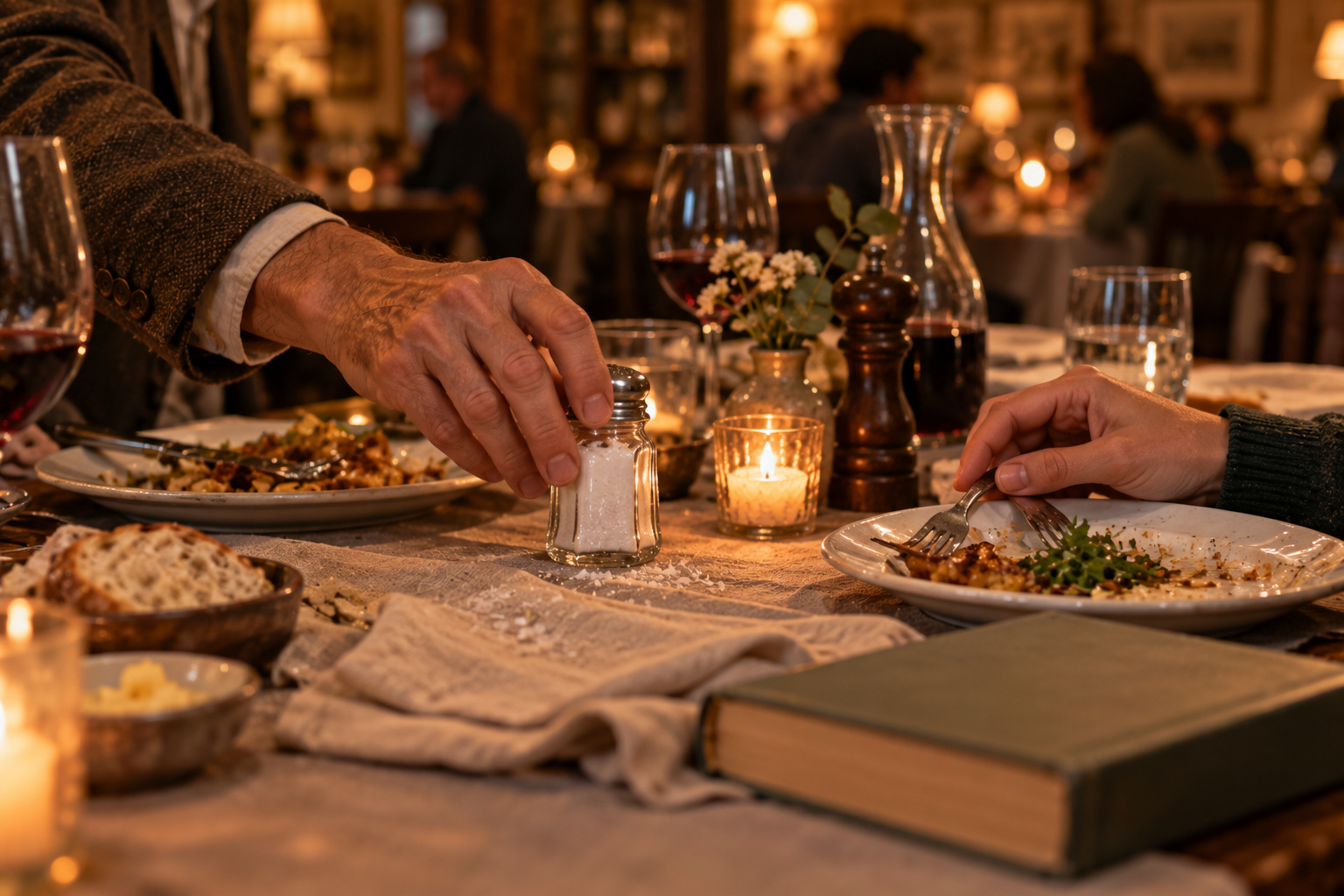
Meals are often the stage where ordinary life grows dramatic: someone passes the salt and a lifetime of grievance is handed across the table. If you like fiction that lets food do heavy lifting—holding memory, revealing character, or carrying a small impossibility—these titles make good company for a slow lunch or a quiet evening.
Like Water for Chocolate — Laura Esquivel
A classic of magical realism where recipes and feeling are braided together. Each chapter opens with a recipe that mirrors the lover, longing, or rebellion at its center. It’s passionate and immediate; readers who enjoy emotion folded into domestic detail will find its ritual pleasures hard to forget.
The Dinner — Herman Koch
Not subtle, but brilliantly surgical: a tense moral drama played out over one restaurant meal. Koch uses the formal setting of courses and polite conversation to expose what people will excuse when family is at stake. Short, disturbing, and propulsive—read it when you want something that moves fast and lingers slow.
Kitchen — Banana Yoshimoto
Quiet and luminous, this novella centers on a young woman and the small sanctuary that a kitchen can provide after loss. Yoshimoto’s writing is airy yet precise; the book is both consoling and slightly strange, perfect for readers who like tenderness served without drama.
The Particular Sadness of Lemon Cake — Aimee Bender
What if a child could taste the emotions baked into every dish? Bender’s novel keeps its speculative element close to the domestic and uses it to examine family secrets and the lonely work of paying attention. It’s uncanny, gentle, and often achingly funny.
The School of Essential Ingredients — Erica Bauermeister
An ensemble novel set around a weekly cooking class where recipes become a way to learn about one another. Each student arrives with private wounds and leaves with practical lessons about food and life. Think of it as communal warmth—comforting, human, and nourishing.
Salt: A World History — Mark Kurlansky
Switching to nonfiction, this bracing little history reads like a series of short stories about trade, taste, and power. Kurlansky traces how a single mineral shaped economies and cuisines around the world. Read a chapter between courses to appreciate how something as simple as salt has quietly steered human lives.
Conclusion
These books offer different ways to let food anchor a story—magical, moral, consoling, or historical. Pick one depending on mood: something to warm you, unsettle you, or teach you a small new fact while you finish your meal.