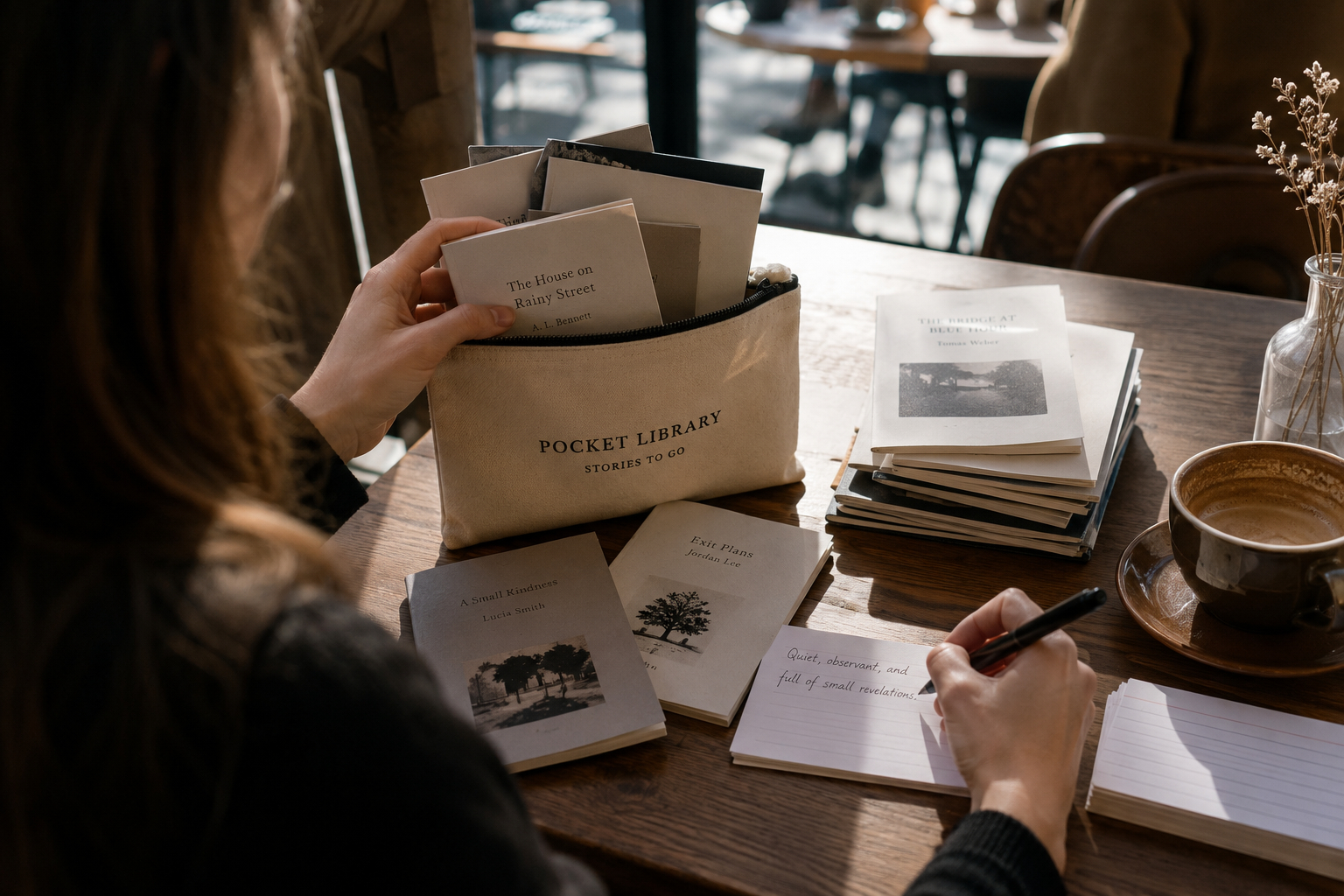
Short stories are compact opportunities to exercise attention and spark ideas. They fit into pockets of time and offer complete emotional arcs without a heavy commitment. A small, well-chosen collection becomes a toolkit you can turn to for quick resets or creative jumpstarts. This piece outlines how to assemble and use a pocket library that fuels daily momentum.
Why a Curated Pocket Collection Helps
A curated set of short stories reduces decision fatigue and makes reaching for meaningful reading automatic. When you limit choices to a balanced mix of tones and lengths, each selection serves a clear purpose: inspiration, comfort, provocation, or craft study. Repeatedly encountering compact narratives trains your attention to notice detail, rhythm, and voice more readily. Over time those micro-practices sharpen your sensitivity to storytelling and everyday observation.
Start small and treat the collection as experimental rather than permanent. Keep items rotating so the library stays surprising and useful rather than stale.
Building a Compact Collection: Sources and Criteria
Begin by choosing about a dozen pieces that vary in length and theme, from microfiction to longer short stories. Include a range of moods—humorous, melancholic, surprising—and a few pieces that highlight craft choices you want to study. Select texts you can finish in roughly ten to thirty minutes so they align with common breaks in the day. Prioritize clarity and emotional specificity over complexity when building a pocket library for daily use.
Use anthologies, literary journals, free online archives, and recommendations from trusted readers to diversify sourcing. Tag each piece with a quick note about why it belongs in the collection.
Daily Practices to Turn Reading into Momentum
Adopt simple, repeatable rituals: a timed reading window, a one-paragraph jot of reaction, and a tiny creative exercise inspired by the story. For example, after a ten-minute read, write one sentence continuing an image, or list three sensory details that stood out. These micro-activities reduce friction and extend the story’s influence into your own practice. Consistency matters more than duration: even brief, daily engagement compounds into stronger observation and narrative fluency.
Rotate through prompts so the practice remains generative. Over weeks, notice which prompts amplify your ideas or your focus and refine the routine accordingly.
Conclusion
Curating a small, varied short-story collection makes regular literary engagement realistic and rewarding. Daily micro-rituals built around that collection foster creative momentum and sharpen attention. Start with a handful of pieces and let your pocket library grow with intention.