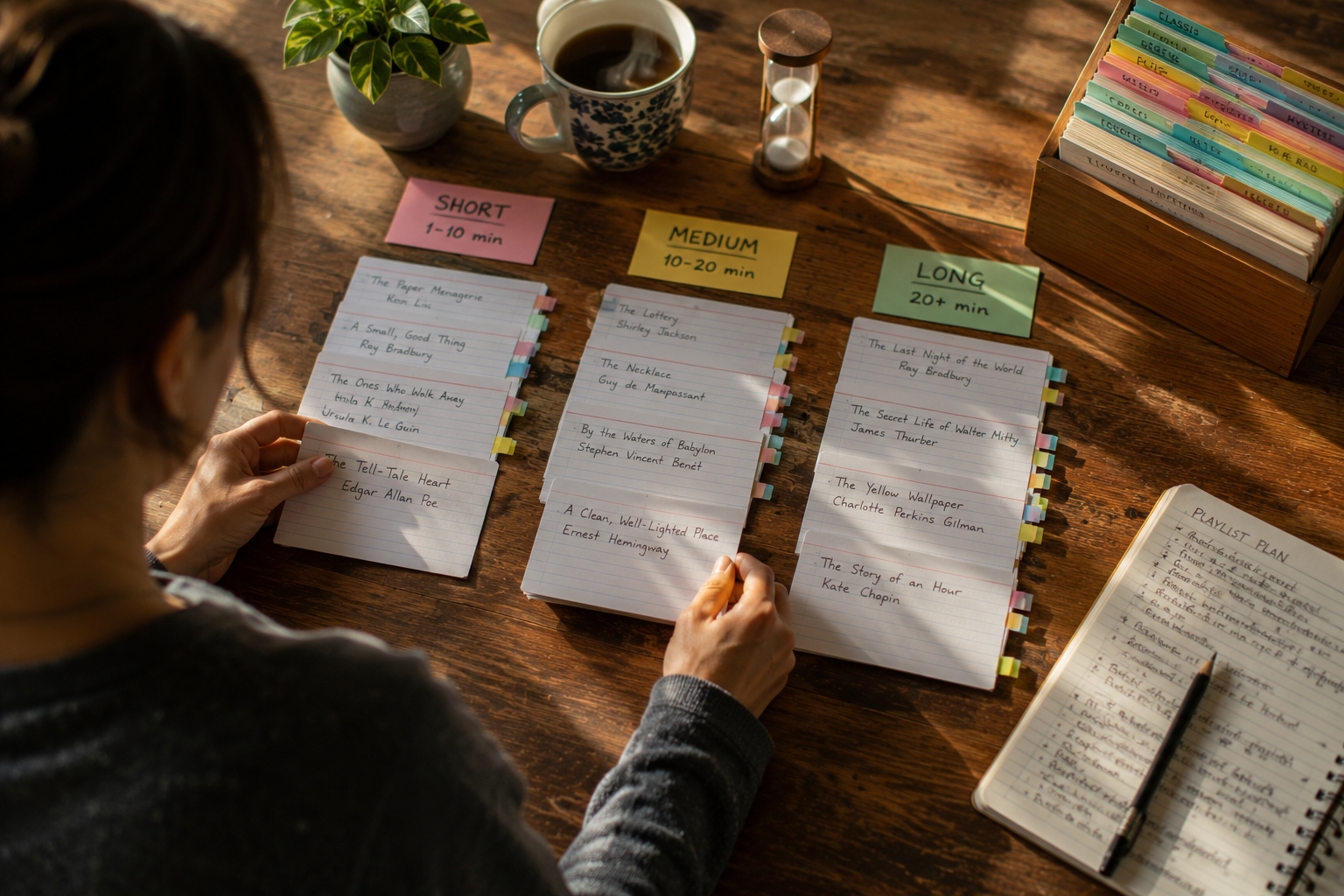
Short stories are ideal for compact, restorative reading sessions that sharpen attention without demanding long stretches of time. A deliberate short-story playlist groups brief works by mood, theme, or pacing so you can move through focused mini-sessions consistently. This approach helps turn scattered reading into a reliable creativity and reflection tool that fits into busy days. The playlist concept also makes selection easier, reducing decision fatigue and encouraging regular engagement.
By treating short stories like curated tracks on a listening list, you create predictable rituals that support concentration. The rest of this article outlines practical steps to build and use such a playlist.
Curating a Short-Story Playlist
Start by deciding what you want each session to achieve: a mental reset, imaginative expansion, emotional resonance, or quick craft study. Collect stories of varying lengths and tones so you can match a piece to the time and mood available. Organize entries by estimated reading time, central theme, or the specific craft element you want to observe, such as voice or scene economy. Keep a running document or a simple index card system to record titles, authors, and brief notes about each selection.
- Short and brisk for five- to ten-minute breaks.
- Moderate-length pieces for longer reflection sessions.
- Thematically grouped lists for targeted practice.
Minimal categorization and a quick annotation for each story make selection faster and more satisfying. Over time, your playlist becomes a personal resource tuned to your rhythms.
Timing and Setting for Mini Sessions
Schemas that work well include a morning concentration boost, an afternoon reset, or a pre-sleep wind-down. Aim for consistent slots: even ten minutes a day can build momentum and enhance focus. Match the story length to the available time and choose a setting free from common distractions. A deliberate transition—closing a tab, setting a timer, or making a cup of tea—signals the brain to shift into attentive reading.
Small, repeatable routines reduce friction and reinforce the habit. Adjust timings and locations as you learn what best supports your attention.
Reading and Reflection Practices
Active reading can be brief but purposeful: underline a line, note an effective image, or jot a question the piece raises. Use two or three quick prompts to guide reflection, such as identifying the anchoring detail, the emotional turn, or one technique you admired. These micro-observations train perception and can feed creative work or conversation. If you prefer, record a short voice memo summarizing your impression to revisit later.
Keeping reflections concise makes it easier to maintain regular practice and to build a richer internal library of techniques and responses. Over time, small notes reveal larger patterns in the stories you choose.
Conclusion
Designing a short-story playlist is a practical way to make brief, focused reading part of your routine. Small selections and consistent rituals reduce friction and improve attention across creative tasks. With minimal upkeep, the playlist becomes a portable toolkit for refreshment, study, and imaginative renewal.