Short, concentrated pieces of fiction can be powerful tools for sharpening attention and fueling creative work. Reading a compact story requires little time but invites sustained focus, narrative thinking, and emotional engagement. When used intentionally, these brief encounters become rituals that reset mental energy and open small corridors for insight. This article outlines why miniature fiction works and how to turn a few pages into a consistent creative practice.
Why short fiction improves attention
Short fiction compresses character, setting, and conflict into a small span, asking readers to hold complex information and emotional nuance in a concentrated way. That compression exercises working memory and encourages close reading, both of which translate to heightened attention in other tasks. The narrative arc gives the mind a contained goal—follow, interpret, and resolve—which is easier to complete between other commitments. Regularly practicing that kind of focused engagement can strengthen the cognitive muscles that sustain longer creative efforts.
Because the investment is modest, resistance to beginning is lower, so practice frequency tends to be higher. Those repeated, short acts of attention compound over weeks and build a reliable pathway back to work.
Simple daily habits to create momentum
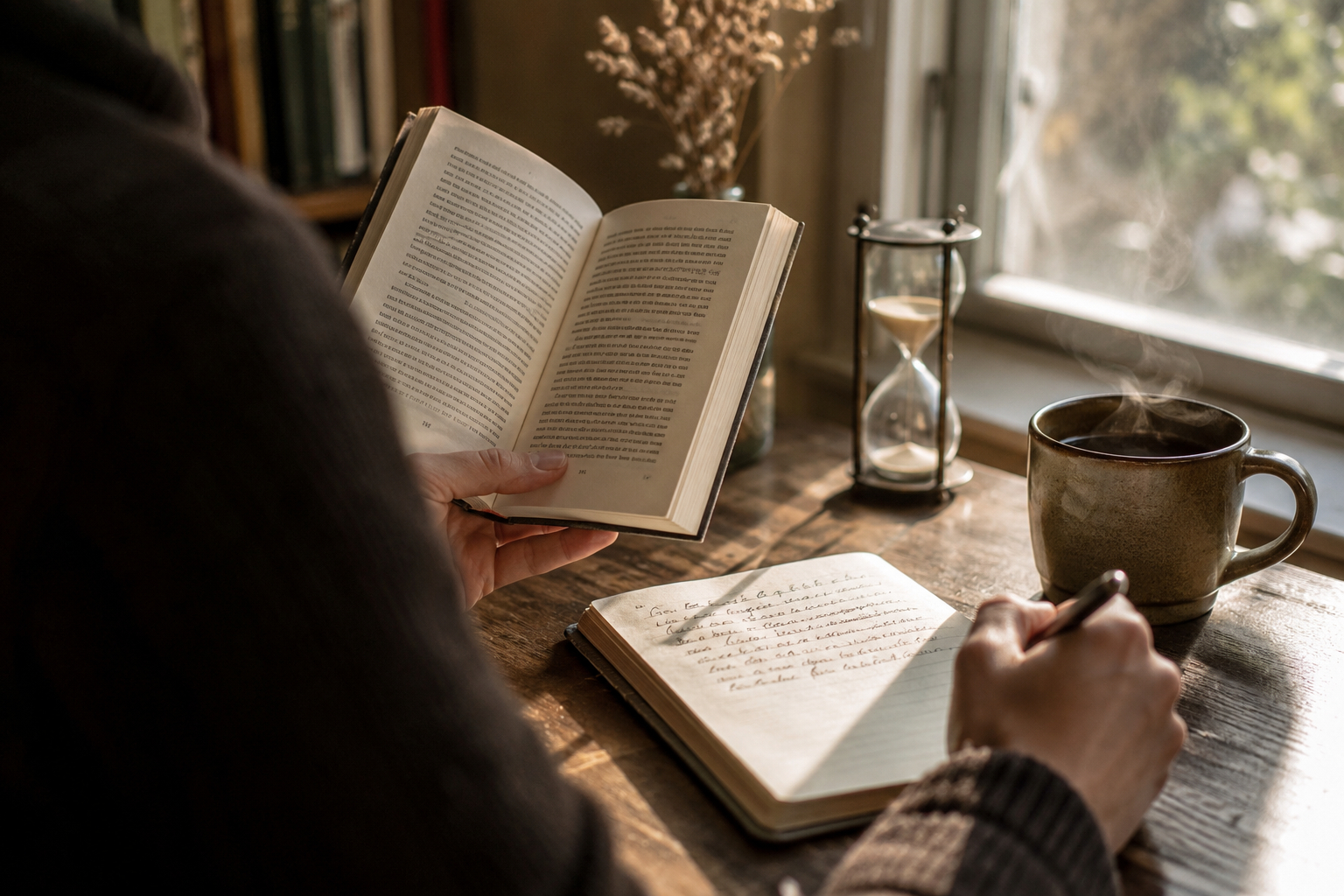
Start with a small, repeatable ritual: select a few pocket-sized story collections, set a timer for fifteen minutes, and read one piece without distraction. Follow the read with a quick note—one paragraph about an image, a line of dialogue, or a question the story raised—to anchor the experience. Consistency matters more than duration; design the habit to fit existing rhythms such as morning coffee or an afternoon break. Over time, you’ll find the habit becomes a dependable reset point between heavier tasks.
Keep a running list of favorite pieces and rotate selections to avoid stagnation. Variety in voice and style keeps the practice stimulating and broadens the kinds of attention you practice.
Using brief stories as creative prompts
Short fiction is also a compact prompt generator: a single character choice or striking image can seed an idea for a project, a scene, or a new approach to a problem. Try converting one element into a small exercise—rewrite an ending, sketch a missing scene, or write a paragraph from another perspective. These mini-derivative practices translate the receptive act of reading into active making, reinforcing both comprehension and production skills. The low stakes of these experiments makes them easy to repeat and iterate.
Over time, this pairing of reading and micro-creation builds both confidence and a portfolio of quick experiments that can inform larger work. Treat each short story as both a lesson and a prompt.
Conclusion
Miniature fiction habits give creatives a manageable path to sharpen attention and sustain curiosity. By pairing short reads with small acts of reflection or creation, you convert brief pauses into meaningful practice. Regularly repeating that cycle helps attention become more durable and creative thinking more fluid.