Short story sessions can be a focused way to sharpen creative thinking and reset attention.
With a little structure, brief readings become practical exercises rather than passive escapes.
This article outlines a simple session design that fits into a busy schedule and supports idea generation.
You will learn steps to set goals, choose passages, and reflect productively after each read.
Why short sessions work
Short story sessions capitalize on attention cycles and the brain’s appetite for coherent, compact narratives. Reading a focused narrative in a brief window reduces decision fatigue and creates a predictable frame for creative thinking. Brief, intentional encounters also make it easier to notice stylistic choices, emotional beats, and surprising details that can spark new ideas. Over time these small sessions build pattern recognition that transfers to other creative tasks.
- They fit into busy days without major disruption.
- They encourage attentive, rather than distracted, reading.
- They surface compact examples of craft to imitate or adapt.
Adopting short sessions is less about the length of the text and more about deliberate attention. Consistency turns occasional insight into a reliable creative habit.
Designing a 20-minute story session
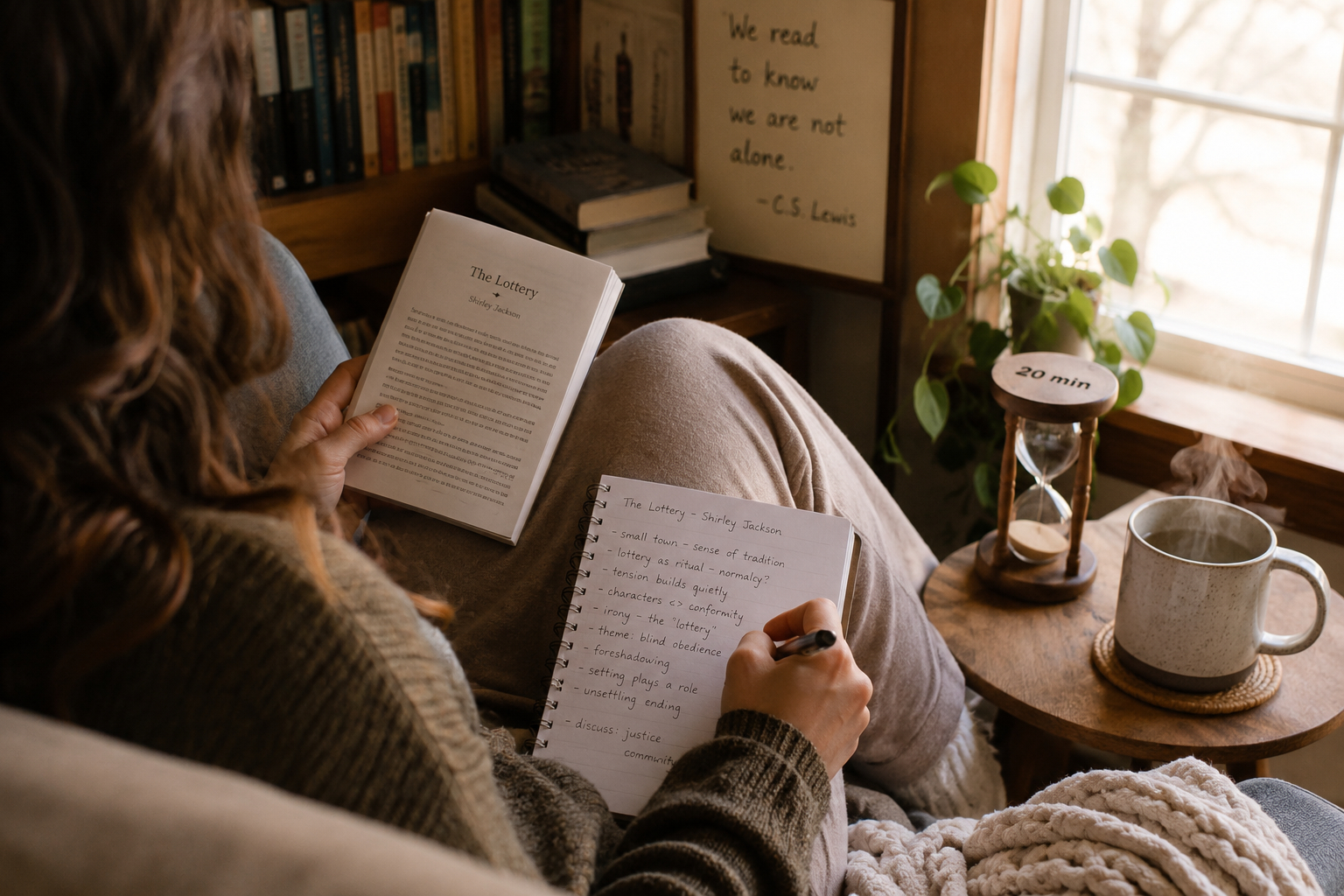
Begin by setting a clear intention: do you want inspiration, technique study, or emotional refreshment? Allocate time blocks—five minutes to choose and set context, ten minutes to read, and five minutes to reflect or jot ideas. Select stories or excerpts that can be completed in the allotted reading time to avoid fragmented engagement. Keep a log or notebook nearby to capture immediate reactions and lines that stand out.
- Minute 0–5: pick a piece and name your intention.
- Minute 5–15: read with focus, noticing craft elements.
- Minute 15–20: write two to four quick observations or prompts.
This template is flexible; you can expand reflection time on days when a piece demands deeper thought. The key is maintaining a compact, repeatable rhythm.
Techniques to deepen creative thought
After reading, apply one deliberate technique to deepen insight and make the session generative. Try rewriting a striking sentence in a different voice, sketching a scene inspired by a single line, or turning an emotional beat into a quick dialogue. Use constraints—an odd viewpoint or time limit—to push your thinking into new territories. Reflective questions like “What surprised me?” or “Which image stuck with me?” help turn responses into material for future work.
- Rewrite a sentence in another tense or voice.
- Turn a single image into a micro-outline for a scene.
- Ask one focused question and freewrite for five minutes.
These techniques translate reading into active practice rather than passive consumption. Over weeks they accumulate into a richer creative toolkit.
Conclusion
Short, organized story sessions offer a practical way to sharpen creative faculties and harvest ideas.
A simple structure—intention, focused reading, and brief reflection—keeps the practice sustainable.
When repeated, these small rituals build both attention and a steady source of creative prompts.