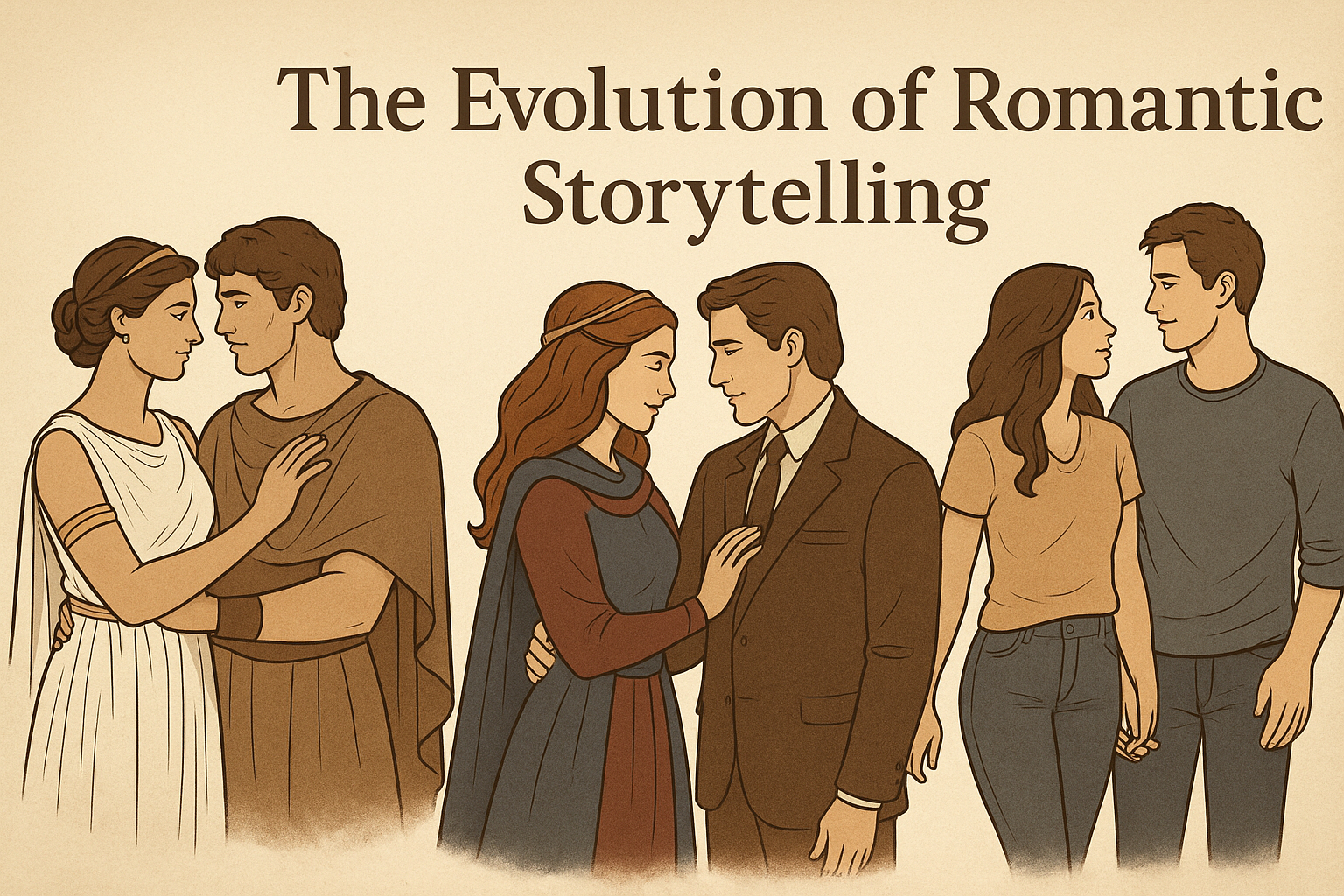
Romantic storytelling has been a cornerstone of human expression for centuries, evolving with every generation while maintaining its timeless appeal. From ancient love poems to modern cinematic universes, romance reflects the emotional heartbeat of each era. As society changes, so too does the way we tell love stories — revealing shifting ideals of connection, equality, and what it means to truly love and be loved.
Ancient Tales of Passion and Tragedy
Romantic storytelling began long before novels and films. In ancient times, love was often depicted as divine or tragic — a force that could unite kingdoms or destroy heroes. The legendary love stories of Cleopatra and Antony, Helen and Paris, or Orpheus and Eurydice blended passion with fate, illustrating love as both powerful and perilous. Poetry and mythology painted romance as something beyond human control — a spark from the gods, capable of beauty and chaos alike.
The Age of Chivalry and Courtly Love
During the medieval and Renaissance periods, romance took on a more refined form through the ideals of courtly love. Knights and poets celebrated devotion, loyalty, and unattainable affection. Works like Romeo and Juliet or Tristan and Isolde reflected an age where love was noble yet forbidden — an emotional struggle between duty and desire. This era romanticized sacrifice, presenting love as something to die for rather than live with.
Romanticism and the Power of Emotion
By the 18th and 19th centuries, the Romantic Movement transformed love stories into emotional explorations of the human soul. Authors like Jane Austen, Emily Bronte, and Leo Tolstoy brought realism to romance, portraying love as both joyous and painful. It was no longer just about destiny or honor — it was about self-discovery. These stories gave rise to enduring archetypes like the brooding lover, the independent heroine, and the power of love to heal or destroy.
Modern Love: Realism, Complexity, and Change
In the 20th and 21st centuries, romance adapted to a rapidly changing world. Films, literature, and television began exploring diverse relationships, imperfect characters, and evolving social roles. From Casablanca to Before Sunrise, modern love stories became less about “happily ever after” and more about the journey itself. Themes like long-distance love, emotional vulnerability, and self-growth reflected the complexities of contemporary life. Technology, too, brought a new chapter — from online dating to digital heartbreak.
The Future of Romantic Storytelling
Today, romantic storytelling is more inclusive and self-aware than ever. Stories celebrate all kinds of love — same-sex, cross-cultural, long-distance, and even self-love. Writers and filmmakers are redefining what “romance” means, shifting from grand gestures to authentic connections. The evolution continues, reminding us that while the forms may change, the essence of romance — the yearning to connect — remains eternal.
Conclusion
From mythical passions to modern love stories, romance has evolved alongside humanity itself. Each era has added new layers to how we understand intimacy, longing, and devotion. What once was sung by poets is now streamed across screens — yet the message endures: love, in all its forms, remains the greatest story ever told.