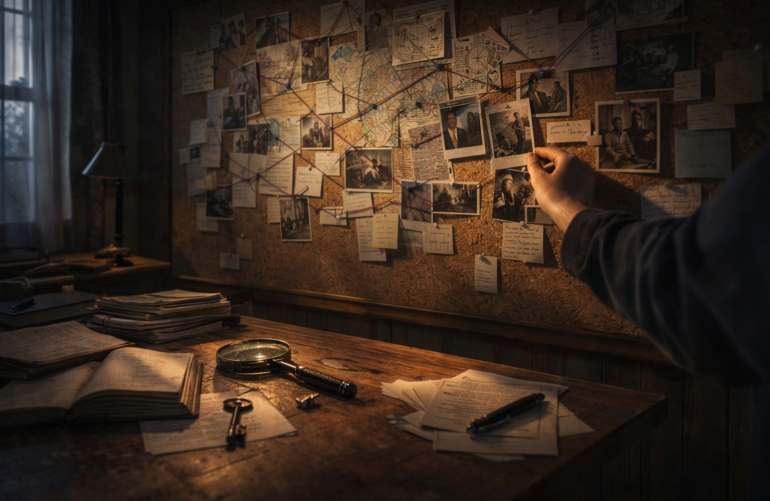
Short fiction thrives on precision and emotional impact. By concentrating atmosphere and tension, a story can feel larger than its length. This article outlines practical methods to build mood and escalating stakes without excess exposition. Writers can apply these…
Short fiction depends on momentum: the forward motion that keeps readers invested in a compact space. Writers must make every sentence earn its place while balancing character, voice, and scene. Momentum in small-scale narratives arises from choices about what…
Worldbuilding should feel inevitable rather than announced, and one of the best ways to achieve that is to bake rules and rhythms into everyday moments. When readers encounter a world through routine actions—how people greet one another, how they…
Worldbuilding can rely on sweeping ideas and dramatic reveals, but readers most readily believe a setting when it contains small, deliberate details. Those particulars — a ritual, a mundane tool, an unexpected rule of etiquette — give texture and…
Nonfiction thrives when clarity meets curiosity. A compelling piece turns research into human moments and patterns. Readers stay when facts illuminate choices, costs, and consequences. Good nonfiction invites empathy without sacrificing accuracy or fairness. This balance makes complex topics…
Nonfiction gains power when facts are arranged with purpose and clarity. Readers are more likely to remember truth that has been shaped into a meaningful sequence. This short guide highlights practical ways to find a narrative thread in real…
Short stories occupy a distinct and valuable place in contemporary reading habits, offering a complete narrative in a compact frame that can be experienced in a single sitting. They encourage writers to practice economy of language and readers to…
Short fiction offers a compact way to explore character, voice and idea. It fits into busy schedules while still delivering emotional and cognitive richness. Regularly reading or writing brief stories trains attention to detail and narrative economy. This piece…
Psychological suspense relies on the gradual accumulation of unease rather than on frequent shocks. It pulls readers inside a character’s perceptions, inviting doubt about memory, motive, and truth. Small inconsistencies and withheld details seed questions that grow as the…
Great mysteries hinge on clues that feel inevitable in hindsight but surprising in the moment. Effective clue design aligns motive, opportunity, and consequence while respecting the reader’s detective work. When clues are purposeful, they deepen character and theme rather…