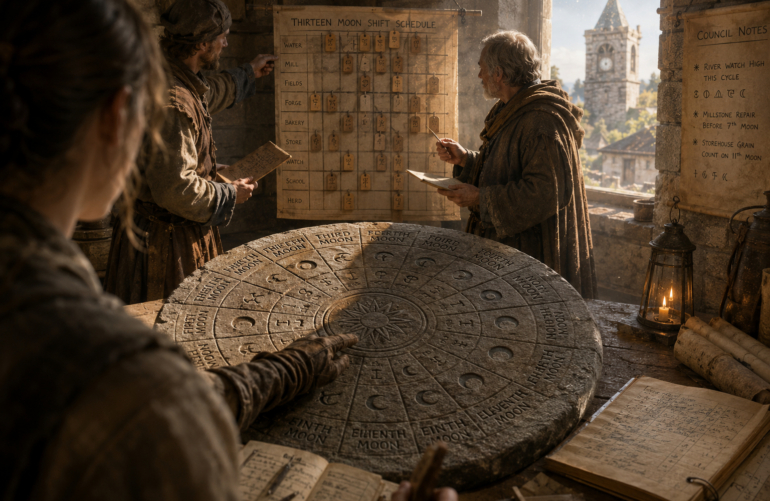
Worldbuilding often focuses on grand inventions, mythic histories, or dramatic politics, yet the routines and small offices of daily life are what make a setting feel lived-in and true. When services, records, and informal rules operate with coherent logic,…

In speculative fiction, timekeeping is more than a backdrop: it organizes belief, labor, and memory. A calendar can encode triumphs and traumas, mark seasons of scarcity or abundance, and define who counts as an insider. Schedules structure daily life…
Strong personal nonfiction often feels cohesive because it follows a single organizing thread. That thread can be an image, a question, an event, or a truth the essay uncovers. Choosing one guiding idea early helps you select scenes, trim…
Short nonfiction thrives when a clear intention guides every sentence. Begin by naming the question or truth you want the piece to reveal. Resist the urge to include every memory; select what serves that purpose. This focus helps readers…
Short stories are ideal for focused creative practice because they fit into small windows of time between other commitments. They offer complete arcs and concentrated language that train attention, empathy, and imaginative play. A brief, repeatable routine can turn…
Short, focused encounters with fiction can break patterns and sharpen creative attention. Small-story practices fit into pockets of time and require little setup, yet they yield disproportionate benefits for focus and perspective. This piece outlines three accessible routines you…
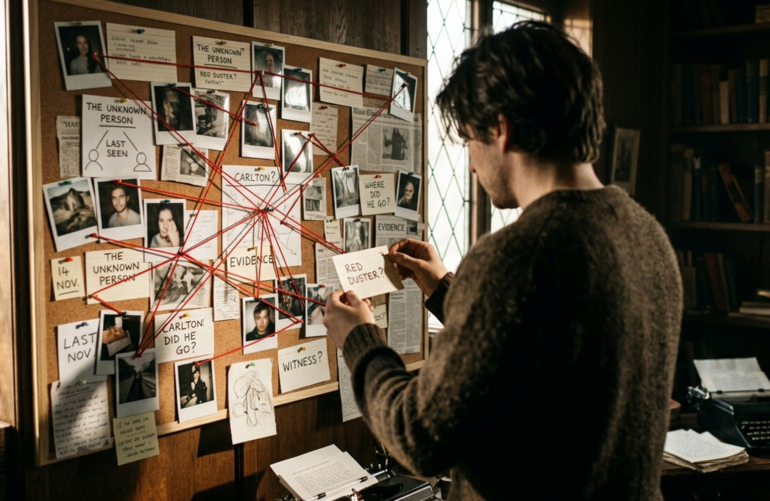
Every mystery thrives on the tension between what is known and what is concealed. Small, deliberate choices in setting, action, and point of view can extend that tension across a whole narrative. This piece shows practical techniques for keeping…
A strong mystery asks readers to want answers while withholding too much. Effective suspense balances revelation with restraint so every disclosure matters. Writing that balance requires planning the rhythm of clues, character reactions, and the environment around them. When…
Short fiction asks for compression without losing emotional weight. A compact story must establish mood, character, and stakes quickly and memorably. Developing a single strong image or moment helps focus the reader and gives the story momentum. These essentials…
Short fiction asks writers to make every word earn its place, and that constraint can produce stories of rare clarity and force. When plot, character, and image must coexist in limited space, choices about what to include and what…