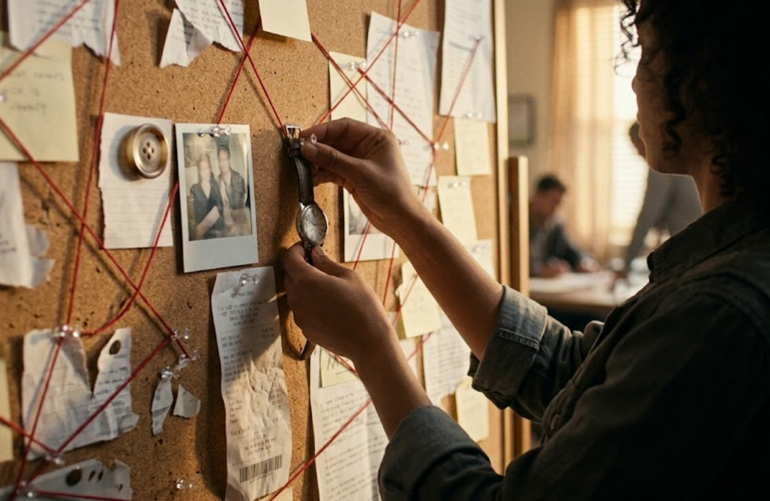
Introduction Small inconsistencies often arrive like stray threads in a narrative, easily ignored at first glance. A single misplaced receipt, an unexplained meeting, or an offhand remark can shift how a case is read. For writers and investigators alike,…

Introduction In mystery and thriller fiction, the smallest object can redirect the entire narrative and reveal a character’s hidden priorities. Investigators and readers alike learn to treat everyday items as clues that accumulate into motive maps. Observing patterns among…
Introduction A short story can live or die on a single chosen moment. When a writer centers the narrative on that moment, compression becomes an asset rather than a limitation. The task is to make compression feel expansive by…
Introduction Writing compact fiction asks an author to balance clarity with openness, giving readers enough to feel the world while leaving room for imagination. Short forms reward intentional choices: a single image, a focused conflict, or a crisp voice…
When small, persistent contradictions exist in a fictional everyday, they become natural levers for revealing deeper world rules. Noticing what doesn’t fit—an open market where currency is worthless, a tavern where no one sleeps—alerts readers that the world operates…
Small markets and daily exchanges quietly define how people live in any imagined setting. They determine what is scarce, what is valued, and how characters negotiate power. Paying attention to stalls, ledgers, and informal debts can reveal a society’s…
Good nonfiction often begins with an exacting question rather than a diffuse intention. That question works like a lens: it narrows what you record and what you omit. Early clarity about what you want to know keeps scenes purposeful…
Every effective nonfiction essay depends on a clear sense of purpose that shapes what the writer includes and what they leave out. Purpose is less a declaration than a design choice that determines which moments matter and how they…
Using short stories as prompt material is a practical way to keep a creative practice active without overwhelming your schedule. Read a brief piece, pause, and let one element—a line, character trait, or setting—become the seed for a fresh…
Short, concentrated stories offer a practical path into sustained attention and imaginative play. When you make a brief narrative part of your day, it becomes a lens for noticing detail, language, and mood. This article outlines why miniature fiction…