Every strong nonfiction piece begins with an opening that earns the reader’s attention and orients them to purpose. A good first line signals voice, stakes, and the kind of thinking the essay will perform. It should offer enough context…



Every strong nonfiction piece begins with an opening that earns the reader’s attention and orients them to purpose. A good first line signals voice, stakes, and the kind of thinking the essay will perform. It should offer enough context…

Every strong personal essay begins with a clear decision about what it intends to discover or show. That decision — whether framed as a question, an insight, or a tension — guides what details and scenes matter. Without it,…

Short stories are compact opportunities to exercise attention and spark ideas. They fit into pockets of time and offer complete emotional arcs without a heavy commitment. A small, well-chosen collection becomes a toolkit you can turn to for quick…

Short stories are ideal fuel for focused reading habits because they fit into fragmented schedules while offering narrative satisfaction. A modular routine treats each story as a distinct unit you can arrange, swap, and repeat according to time and…

Thrillers live in moments where little things tilt a scene from ordinary to dangerous. Small behaviors — a hesitation, a practiced smile, a habitual route — can accumulate until they reshape perception and stakes. When a character’s tiny decision…

In mysteries and thrillers, motive is more than a backstory detail; it is a mechanical force that can power plot momentum and justify shocks. When motives are treated as active levers, every choice a character makes feels earned and…

Short fiction often gains its power from a single, well-chosen moment that reveals much more than it shows. By focusing on one scene you can compress character, conflict, and theme into an immersive, economical experience. This approach asks writers…

Choose a single pocket of time and let it hold the weight of your story. This concentrated moment gives you a clear focal point for character choice, sensory detail, and narrative tension. By narrowing the lens you invite readers…
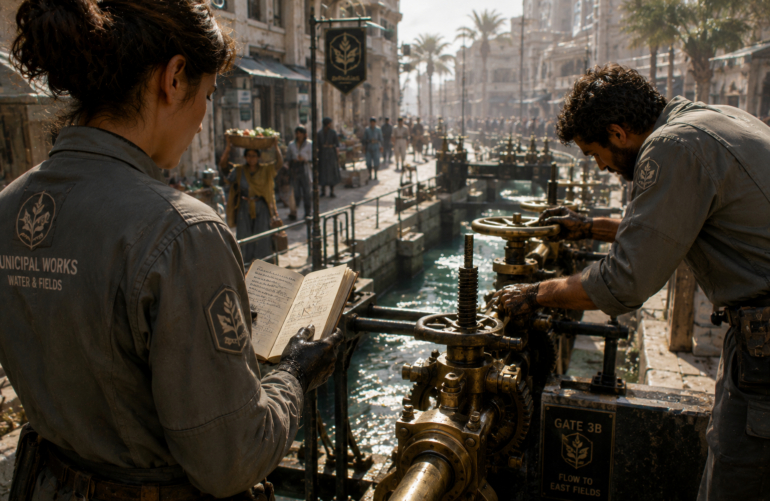
The most believable speculative worlds often hinge on quiet, repeatable systems that govern daily life. These routines — from waste collection to water rituals — give readers touchpoints amid wonder. When routine is consistent, the extraordinary feels anchored rather…

Every society keeps what it values — and the way people repair things reveals those values. From communal patchwork on river barges to clandestine spellwrights stitching torn wards, repair practices encode status, skill, and belief. As a writer, asking…